October 11, 2026
Bonus Content: A Solar Balloon Just Flew to Japan and Back
Fellow Investor,
I’ve never been so excited to share my favorite trading strategy…
Because the way the market is acting right now, plays directly into my hands…
And the investors who follow my lead.
In fact, based on everything I’ve seen over the past few weeks… this perfect storm of factors could help you create massive windfalls.
And you can do it without tying up your money for months on end waiting for an AI stock to take off…
Or getting involved with complex, risky cryptocurrencies.
I’ve put everything you need to know about how I trade the markets in a special guide called “How To Master The Retirement Trade.”
You can reserve a free copy here.
Just be sure to do it now.
Because every day you wait means another potential profit opportunity slipped by you…
To your investing success,
Dave Aquino
Partner, Base Camp Trading
A Solar Balloon Just Flew to Japan and Back
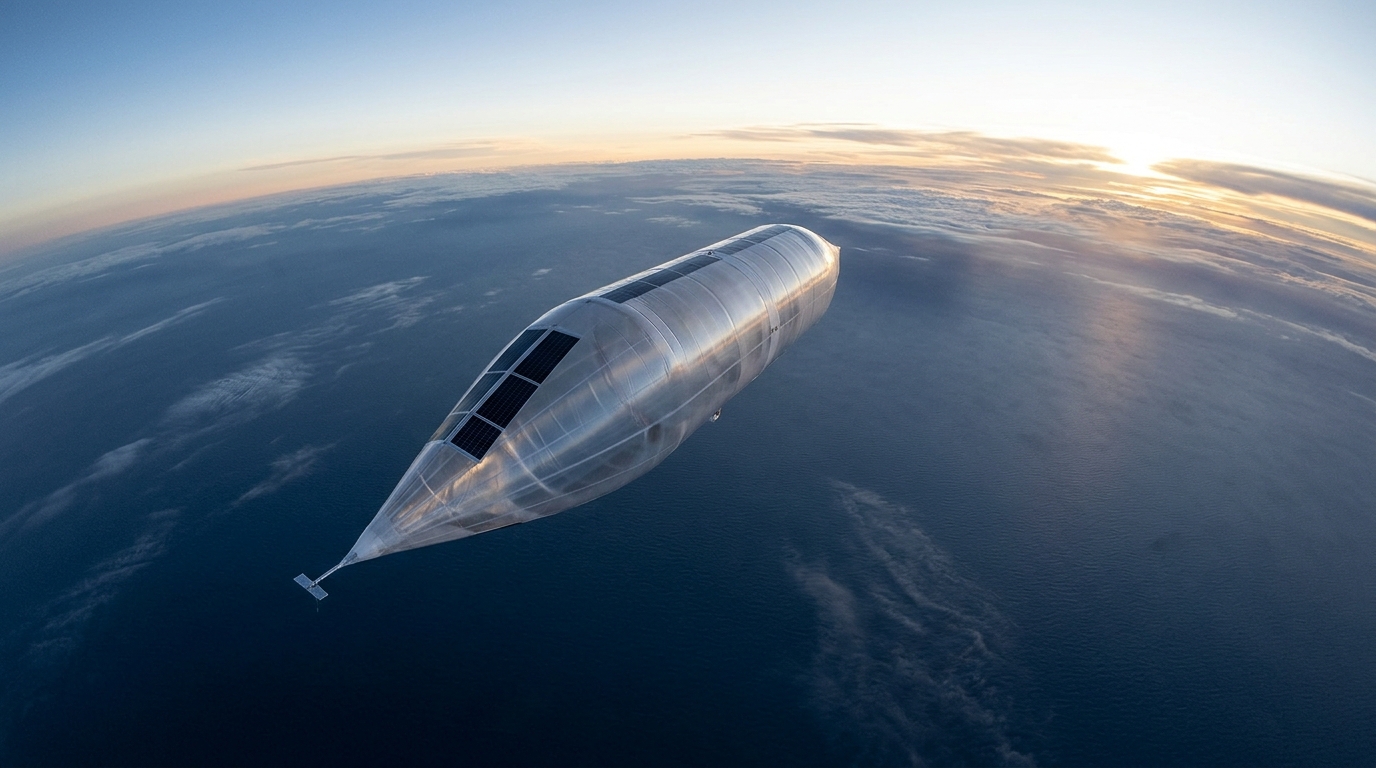
The standard pitch for high-altitude platform stations goes like this: park a solar-powered aircraft in the stratosphere, and it covers territory that cell towers cannot reach and satellites cover too slowly. Compelling enough. But the Sceye ST1 mission that landed back in New Mexico on September 9, 2026 shows the real prize is something bigger than a better cell tower.
The journey lasted about 30 days and traversed nearly 30,000 km. While over Japan, Sceye and SoftBank verified direct-to-device connectivity to unmodified devices, HAPS-based communications with drones, and edge computing from the stratosphere. That last item deserves a second look.
A server installed on the HAPS processed data locally rather than sending it to a cloud environment. SoftBank reported an average round-trip processing response time of 68 milliseconds, more than 40% lower than the cloud-processing configuration used for comparison. The company described the test as the first in which both a mobile core network and a web server were installed on a HAPS, allowing processing to take place onboard before the result was returned to smartphones.
This matters because it flips the model. A HAPS is no longer just a relay. It is an edge node that happens to float around 16.5 km, requiring no real estate, minimal ground support, and no grid connection. Sceye says one HAPS unit at full scale is designed to cover an area equivalent to approximately 500 terrestrial towers. Stack edge computing on top of that footprint and the economics start to look genuinely disruptive.
Why Wall Street Is Paying Attention
In June 2025, SoftBank made an equity investment in Sceye and signed an agreement that gives it exclusive rights to provide HAPS-based services in Japan using Sceye’s platform. SoftBank has said it is working toward commercialization in Japan from 2027 onward. Airbus is moving on a parallel track through its AALTO subsidiary: Zephyr completed a record 67-day, 6-hour, 52-minute continuous stratospheric flight that concluded on April 28, 2025, strengthening its readiness for commercial services. NTT DOCOMO and Space Compass have partnered with Airbus and invested in AALTO, supporting a roadmap that has targeted entry-into-service in 2026.
The publicly traded name closest to this buildout is AeroVironment (AVAV). The company co-founded HAPSMobile with SoftBank in 2017, and it built the Sunglider, a 78-meter wingspan solar-powered aircraft. AVAV has since shifted its center of gravity toward defense drones and counter-drone systems, where it recently secured a $500 million U.S. government contract tied to Titan counter-drone capabilities, with an estimated completion date of June 29, 2029. But it released fiscal Q1 2027 earnings on September 9, 2026, reporting $0.59 per share against a consensus estimate of $0.22.
What Could Go Wrong
The risks are real. Google spent years on Project Loon before shutting it down in 2021, saying it could not make the business model work. HAPS platforms still face regulatory fragmentation across jurisdictions, extreme engineering constraints at altitude, and a long path to the kind of fleet scale that makes unit economics attractive. At roughly 17 to 25 km, a HAPS platform must generate sufficient lift under ultra-low air density, manage extreme thermal cycling, harvest solar energy for 24-hour operations, and maintain near-stationary footprints over target geographies.
AVAV’s HAPS exposure is indirect at this point, and the stock is already pricing significant defense-contract upside. Analysts still tend to view the stock favorably, with recent consensus price targets clustered around the low $200s, implying meaningful upside from early-October 2026 levels.
The Bottom Line
The stratosphere is becoming infrastructure. The Sceye ST1 mission proved a solar platform can cross an ocean, hold position over a city, deliver broadband to an unmodified phone, and run a mobile core network onboard, all on a single flight. That is not a laboratory result. SoftBank is moving toward commercialization from 2027 onward, Airbus is building a services business around Zephyr, and the regulatory framework set at WRC-23 expanded the frequency bands identified for HAPS used as IMT base stations in certain regions. The pieces are aligning faster than most investors have noticed.