

On March 20, Ross Givens recommended a little-known “SpaceX stock”…
A stock that allows you to profit from SpaceX’s moves…
Even though the company itself is still private.
Less than 2 months after Ross recommended that stock…
It shot up over 180%…
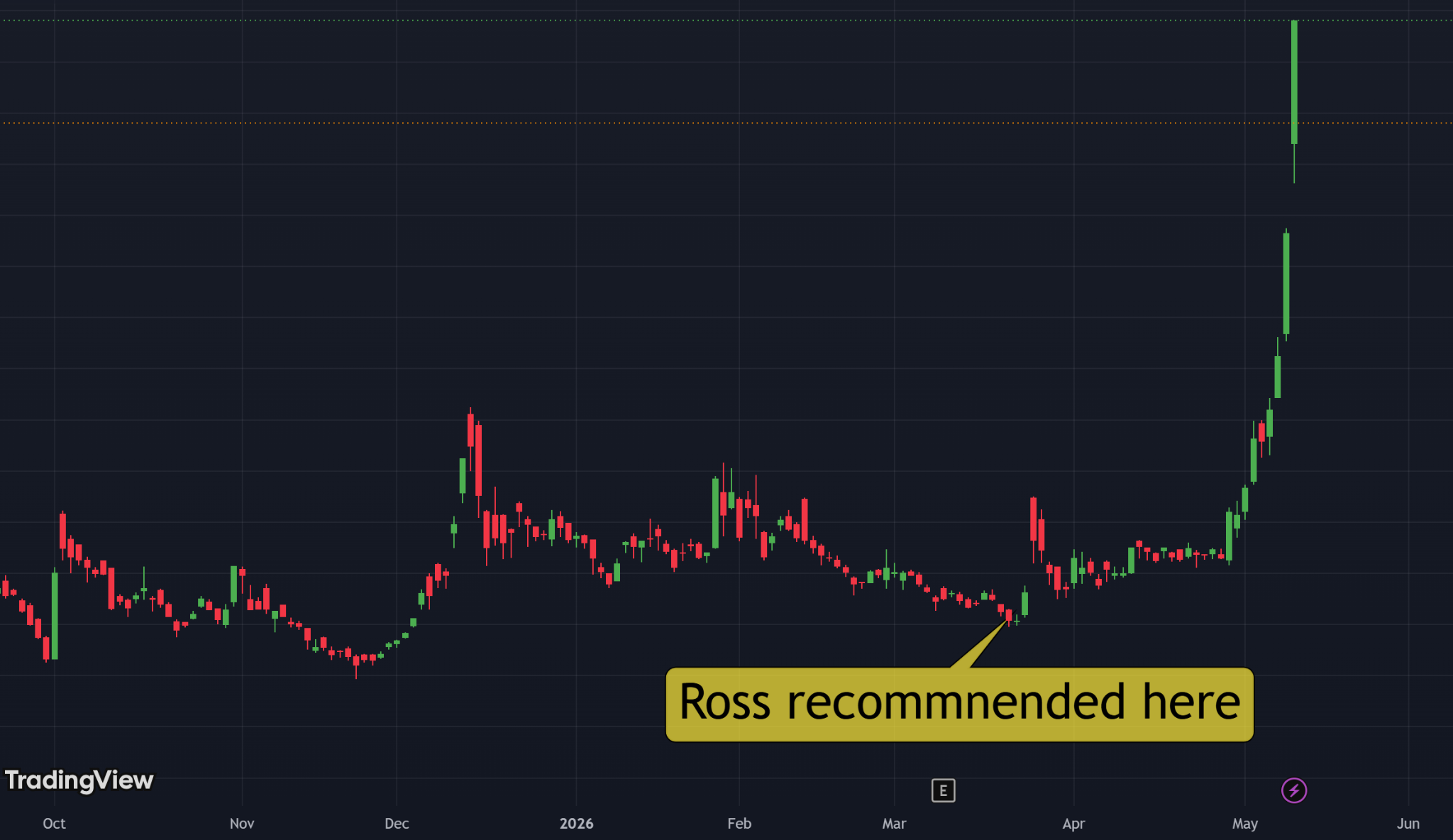
Enough to turn a $5,000 position into over $14,000.
And that’s not the only SpaceX-related stock Ross has recommended.
If you want to get stock recommendations like these…
Then you need to join Ross’ Black Ops Trading Club ASAP…
While the entry price is still $5.
That’s right – $5 to get stocks that could potentially hand you thousands in profits…
On top of LIVE market analysis twice a week.
For $5 you no longer need to navigate this market blindly…
But you can do so with a 20-year market veteran by your side.
We’re not sure how much longer we can keep the price at $5…
So click here to claim your $5 Black Ops Trading Club spot while you still can.
Visa Beat Earnings Again. The Stock Still Fell.

Here is the situation in plain terms. Visa reported fiscal fourth-quarter 2026 earnings that edged past Wall Street expectations, with adjusted earnings of $3.48 a share on revenue of $12.1 billion, while the stock slipped in after-hours trading. For the full fiscal year, net revenue was $45.9 billion, up 15%, with non-GAAP net income of $25.3 billion and non-GAAP EPS of $13.27. By any reasonable measure, this was a strong year. The market’s response was to sell it.
Visa’s adjusted EPS of $3.48 came in $0.04 above the consensus estimate of $3.44, a beat of about 1.16%. Revenue of $12.1 billion topped the $12.09 billion forecast by about $10 million. Those margins of outperformance are real, but they are thin. EPS was up 17% year over year, better than expected primarily due to a lower effective tax rate, which means the operating beat was smaller than the headline suggests.
Why Wall Street Is Paying Attention
The market’s reaction turned negative once investors digested the company’s fiscal 2027 guidance, which projected EPS growth in the low double digits to low teens, a meaningful step down from the 16% growth delivered in fiscal 2026. That is the real story here. The company expects a larger renewal cycle, with about 25% of payments volume up for renewal in 2027, compared with 20% in 2026, which will push client incentives higher and compress the spread between revenue growth and earnings growth.
The company faces a more intensive renewal environment in fiscal 2027, which could pressure margins through higher client incentives. Operating expense growth at the low-double-digit range represents an acceleration from the roughly flat year-over-year GAAP operating expenses reported in Q4 fiscal 2026. Add a normalized tax rate of approximately 19% and the math gets harder to love at current prices.
What’s Driving the Opportunity
The underlying business is genuinely excellent. The payment network’s results capped a milestone year, with full-year net revenue reaching about $46 billion, up 15%, the strongest annual growth in more than 15 years excluding the post-pandemic rebound and acquisitions. In fiscal 2026, the value-added services business grew revenue 30% in constant dollars to $14 billion, essentially double the 2023 VAS revenue. Cross-border volume increased 14% year over year excluding intra-Europe transactions, primarily due to travel.
The company returned $5.2 billion to shareholders through buybacks and dividends during the quarter, and the board increased the quarterly dividend by 16% to $0.780 per share. The company repurchased approximately 11 million shares for $4.0 billion during the quarter and spent $20.5 billion on share buybacks over the full year. Capital return discipline is not the problem.
What Could Go Wrong
Regulatory headwinds linger in the background, with Visa and Mastercard facing a potential £5 billion UK lawsuit over interchange fees. These are not new risks, but the UK lawsuit in particular has the potential to move from background noise to material liability.
Valuation is the most pressing concern. On October 27, Visa carried a P/E of about 34.2 and a market capitalization of about $750.3 billion. That multiple is demanding for a business guiding to low-double-digit EPS growth. The after-hours decline reflects a classic sell-the-guidance dynamic: a company that beat on the quarter but failed to fully reassure investors about its growth trajectory at a valuation that demands consistent double-digit expansion. Peer Mastercard carries a similar multiple; PayPal, by contrast, carried a P/E of about 10.7 on October 27, reflecting an entirely different risk and growth profile.
The Bottom Line
Visa is an exceptional business running into a valuation problem. Susquehanna recently raised its price target on the stock to $480, citing Visa’s potential in AI-driven commerce, and the long-term case for the network remains intact. But the post-earnings dip is not a reflexive overreaction to a clean beat. It is a rational response to a guidance range that implies the market was pricing in more. Three consecutive beat-and-fade quarters are the market’s way of telling you the multiple has already absorbed the good news. Until renewal headwinds clear and the VAS growth rate proves durable into fiscal 2028, Visa earns a watchlist position rather than an immediate buy at these levels.