Two separate geopolitical shocks landed on refiners Tuesday, and neither is priced in. At the UN General Assembly in New York, Treasury Secretary Scott Bessent confirmed that the Trump administration is weighing a diesel export ban, saying the team is “examining that, whether it’s feasible in terms of the overall refining capacity and whether a full or partial ban would work.” Trump separately confirmed he has pushed for it internally. In the same meeting, Ukrainian President Volodymyr Zelensky said Kyiv is ready for “any kind of format of energy ceasefire” if Russia stops targeting Ukrainian energy infrastructure. Moscow’s position remains unknown.
For traders in Valero (VLO), Marathon Petroleum (MPC), and Phillips 66 (PSX), that is two margin compression catalysts arriving simultaneously, and they happen to point the same direction.
The Setup in Refiner Stocks
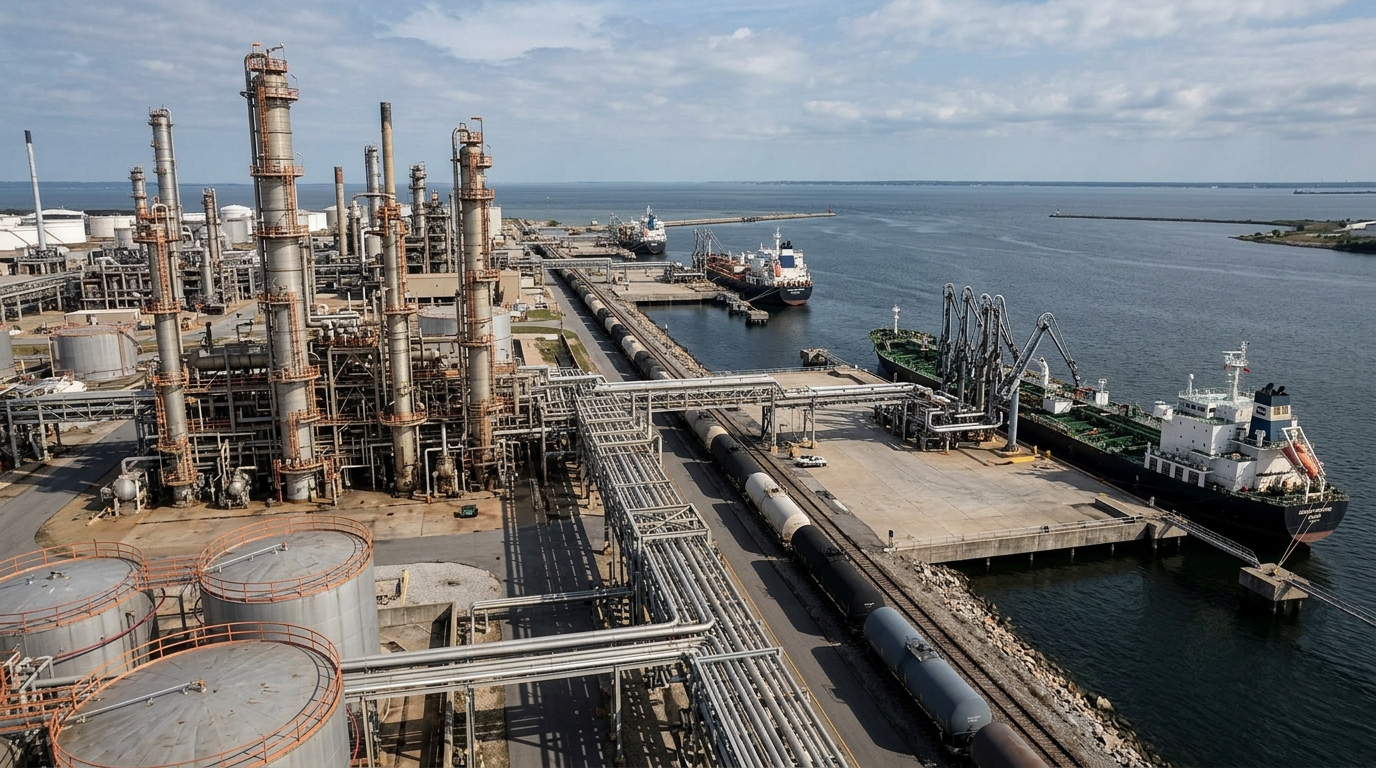
The refiner trade has been exceptional in 2026. Shares of Marathon Petroleum, Valero, and Phillips 66 have gained 110%, 98%, and 75%, respectively, driven by a diesel crack spread that hit an all-time high of $102.20 per barrel earlier this month. The fuel economics behind those moves are real: Marathon posted $36.33 per barrel in refining and marketing margins, while Valero’s Gulf Coast ultra-low-sulfur diesel margin reached $43.52 per barrel. Phillips 66 reported second-quarter adjusted earnings of $9.41 per share, nearly tripling year-over-year and beating the $7.68 consensus.
The gains rest on a foundation of global scarcity. Diesel prices surged amid supply disruptions from Ukrainian strikes on Russia’s refineries and the US-Iran war, which disrupted trade along major routes including the Strait of Hormuz. US distillate exports averaged a record 1.6 million barrels per day in August, up from about 1 million bpd in February, before the conflict escalated, as buyers in Brazil, Chile, France, and the UK turned to American refiners to fill the gap left by Russia and the Middle East.
Why Both Policy Paths Hurt
A domestic export ban is the more direct threat. US refineries produce roughly 5.3 million barrels of distillates per day against domestic demand of about 3.6 million barrels per day. That 1.5-to-1.8-million-barrel daily surplus is the entire export business. Block it, and refiners face a stark choice: flood domestic storage at depressed prices or cut crude runs. Analysts and industry groups warn that refiners would reduce production, which, since gasoline and diesel are co-products, would tighten gasoline supply simultaneously and push both prices higher, the opposite of the policy’s intent. The American Petroleum Institute notes that of the roughly 8 million barrels of diesel traded globally by sea each day, the US supplies about 1.5 million, or 20%. Removing that share from the global market does not stay contained to the Gulf Coast.
A Ukraine-Russia energy ceasefire is a softer but structurally similar blow. Kyiv has been reluctant to abandon its deep-strike campaign, viewing damage to Russia’s refining sector as its strongest leverage to force Moscow to negotiate. If that restraint takes hold, Russian refinery throughput recovers, global diesel supply eases, and the crack spreads underpinning VLO, MPC, and PSX compress from the other side. Trump said on September 14, 2026 that both sides had agreed to stop striking energy targets, but both Ukraine and Russia indicated no deal was in place and strikes continued, so treat any ceasefire as fragile rather than confirmed.
Trading Plan
The refiner rally is extended by any reasonable measure: the S&P 500 Oil and Gas Refining and Marketing sub-industry group has jumped 104% this year and sits 41% above its 150-day moving average, a condition that has appeared only five times historically. That does not require an immediate short, but it means the risk-reward of holding into a ban decision is asymmetric to the downside.
The highest-conviction trade is to reduce or hedge existing long exposure in VLO and MPC ahead of a policy announcement that Trump says will come “one way or another” within days. Both names carry the most direct export revenue exposure. PSX has midstream and chemicals segments that provide partial insulation, making it the most defensible hold in a ban scenario.
The bull case requires one of two things: a ban that gets blocked by Bessent’s feasibility review, which several major operators suggest would trigger production cuts that boomerang on prices; or a ceasefire that collapses quickly, as recent ceasefire talk has. Neither is a low-probability outcome. Watch Thursday’s EIA inventory data as the near-term margin signal: on-road diesel inventories are already nearly 13% below the five-year seasonal average, which tells you the physical market is tight regardless of what Washington decides.
Monitor crack spreads in real time. If the ban is imposed and spreads collapse below $60 per barrel from current levels, that is the signal that institutional money is rotating out of the refining sector entirely. If the ceasefire fails to hold and Russian refinery attacks resume, spreads may recover toward $100, and the long trade reopens with less political overhang.