
September 23, 2026
Bonus Content: Lockheed Martin Is Down 25% From Its High and Carries a $230 Billion Backlog
D.C. Just Gave America’s Drone Industry a Powerful Tailwind. Who Rides It?
The U.S. has spent decades leading the world’s greatest technology revolutions.
And Washington isn’t ready to give up its number one spot, especially not to China.
Today, Chinese manufacturer DJI controls roughly 70% of the U.S. civilian drone market. That leaves much of the manufacturing, technology and supply chain behind this important industry overseas.
Now Washington and the Pentagon are moving to bring it home.

New federal policy calls for expanded domestic production, faster approvals and greater military adoption of drones made by U.S. companies.
When Washington decides an industry matters, money, contracts and Wall Street attention have a way of following.
One overlooked Nasdaq company has already spent more than 25 years developing professional drone technology. It is not starting from scratch. It already has patented technology, a broad product lineup and experience in real world missions.
As America challenges China’s lead, this quiet company looks to become increasingly difficult for Wall Street to ignore.
Lockheed Martin Is Down 25% From Its High and Carries a $230 Billion Backlog
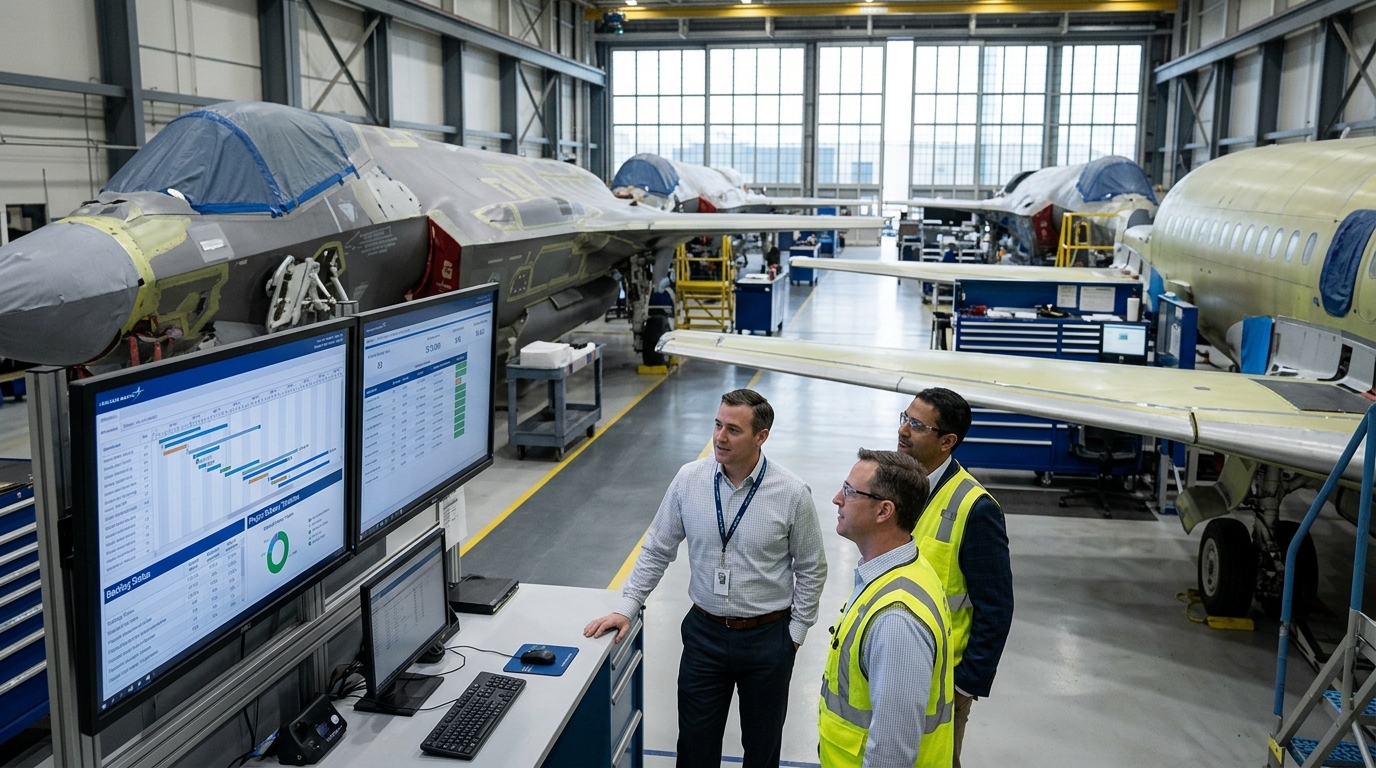
Lockheed Martin closed Monday at $535.40, down about 1.1% on a day the S&P 500 gained 1.5%. The stock is now roughly 23% below its 52-week high of $692 and trades at less than 18 times forward earnings. The disconnect between that price and what the company is actually delivering is the argument here.
Why This Stock Now
Defense stocks pulled back broadly through September as the Fed hiked rates and commodity-driven inflation renewed pressure on government budget assumptions. Lockheed fell harder than the sector. Yet the business got materially stronger. Second-quarter 2026 sales increased 11% to $20.1 billion, with cash from operations of $3.2 billion and free cash flow of $2.9 billion, while backlog reached a record, inclusive of a multiyear contract to produce THAAD interceptors.
The Business
Lockheed is the world’s largest defense contractor by defense-specific revenue. Its four segments, aeronautics, missiles and fire control, rotary and mission systems, and space, each contribute meaningfully. No single contract win or program problem sinks the stock. The company derived 72% of its $75.0 billion in 2025 sales servicing U.S. government contracts, and it operates the largest defense procurement program ever awarded, the F-35, through the 2060s.
The growth engine right now is missiles. Missiles and Fire Control showed the strongest growth, with a 19% increase driven by ramped-up production for THAAD and Patriot PAC-3. Globally, governments are replenishing inventories drawn down by the wars in Ukraine and the Middle East. That demand is not discretionary, and Lockheed is the primary supplier for many of the platforms NATO allies are ordering.
Why Wall Street Is Paying Attention
In early September, UBS upgraded the stock to Buy with a $674 target. UBS based its upgrade on the belief that Lockheed’s F-35 franchise, plus missile sales, will result in stronger and more durable earnings growth than investors currently expect. The analyst consensus price target now sits around $640, roughly 20% above the latest close.
As of June 28, 2026, the ending backlog was $230.4 billion. The increase of $36.8 billion during the first half of 2026 was primarily due to an undefinitized contractual action awarded for the THAAD program. A $230 billion backlog is nearly three years of revenue at the current run rate. That is visibility that most companies in any sector cannot match.
What’s Driving the Opportunity
Within the last week alone, Lockheed secured a $1.2 billion IDIQ contract from the U.S. Army, and received U.S. government approval for a potential F-35 sale to Saudi Arabia. Contract flow continues even as the stock trades down. Q3 earnings are confirmed for October 27, before the open. Consensus estimates call for about $7.25 in EPS and roughly $20.35 billion in revenue, both representing year-over-year growth.
What Could Go Wrong
Lockheed agreed to acquire Ultra Maritime for $3.45 billion, a deal that would expand its undersea and anti-submarine warfare capabilities; that transaction remains subject to regulatory approvals and is not incorporated into current financial guidance. Execution risk on scaling missile production from the current output levels to the contracted targets is real. Any F-35 delivery delays, as happened in Q1, can hit quarterly results quickly. And a sustained U.S. government budget resolution fight could delay contract definitization.
The Bottom Line
Lockheed trades at a discount to the analyst consensus target, pays about a 2.6% dividend, and is projecting more than $7 billion in free cash flow this year. The backlog is at a record. Missile demand is structural. The October 27 earnings report is the next chance for the market to revisit those numbers. Few large-cap defense stocks offer this much concrete visibility at this valuation right now.