September 21, 2026
Bonus Content: FedEx Just Bought Europe’s Biggest Parcel-Locker Network. Does It Change the Stock?
If you still haven’t downloaded my “Simple Options Trading For Beginners” book…
…please take a few seconds and download it right now before your new temporary download link expires.
I eventually plan to charge for this book, so do yourself a favor and download it now…
That way, no matter how much it is in the future, you’ll have a copy on your computer already.
Make sense?
FREE: Simple Options Trading For Beginners << Download Now
Good Trading,
Bill Poulos
P.S. Go here to save a copy of my “Simple Options Trading For Beginners” book to your computer before I start charging for it.
FedEx Just Bought Europe’s Biggest Parcel-Locker Network. Does It Change the Stock?
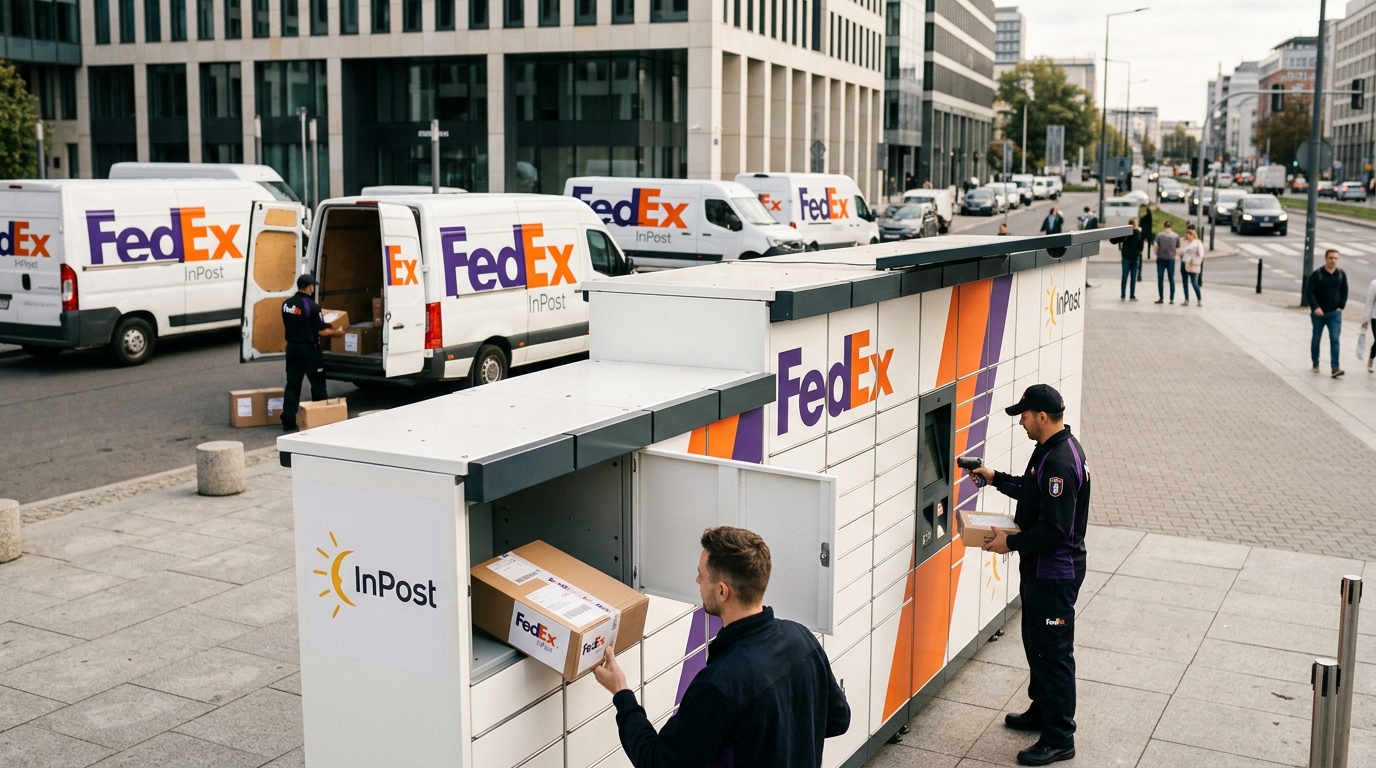
The paperwork is signed, the threshold is cleared, and the delisting clock is ticking. A consortium led by FedEx and Advent International acquired InPost after completing its tender offer, with roughly 89.81% of shares tendered by the September 18, 2026 deadline, clearing the 80% minimum. The consortium is paying €15.60 in cash for each InPost share, a 50% premium to InPost’s undisturbed closing price of €10.40 on January 2, 2026. The deal values the Polish company at €7.8 billion, or roughly $8.9 billion.
The Business FedEx Just Bought
InPost operates across nine countries including Poland and has one of Europe’s largest networks of automated parcel lockers. The company handled 1.4 billion parcels in 2025 and has grown aggressively since its 2021 Amsterdam listing. That growth came at a cost: since its listing, InPost’s shares faced pressure from intensifying competition in its home market and heavy investment spending to support rapid expansion. Taking it private removes quarterly reporting pressure and lets the business invest for scale without public shareholders voting with their feet every 90 days.
After settlement, FedEx and Advent will each hold 37% of the consortium, with A&R Investments, the vehicle of founder and CEO Rafał Brzoska, owning 16% and PPF holding the remaining 10%. Brzoska is expected to remain CEO, with InPost retaining its brand, headquarters in Poland, and existing management structure.
Why Wall Street Is Paying Attention
FedEx’s European operations have long been the weakest part of the business: high cost, fragmented market, and perpetually outgunned by DHL on its home turf. InPost changes that geometry. The commercial agreements between FedEx and InPost will connect FedEx’s global network of 3 million businesses and 225 million recipients worldwide with InPost’s locker network and B2C last-mile operations, while also allowing FedEx to accelerate growth of out-of-home parcel delivery across key European markets, improving profitability and returns.
The structure matters. The two companies will remain separate businesses and competitors, with no operational integration planned. FedEx is not absorbing InPost, it is buying privileged access to a last-mile network that would have taken a decade and several billion dollars to replicate organically.
What Is Driving the Opportunity
FedEx has delivered a genuine turnaround, with its DRIVE restructuring program generating about $4 billion in structural cost reductions through FY25, and fiscal 2026 adjusted EPS continuing to run ahead of prior expectations. It finalized the spin-off of its freight business into an independent public company on June 1, 2026, and reported a 6.2% operating margin for the quarter ended May 31, 2026. That spin-off matters: following the June 2026 spinoff of FedEx Freight, the firm’s Federal Express segment now makes up more than 95% of total revenue. The remaining core is a cleaner, faster-growing business.
FDX currently trades around $304, with a market capitalization near $72.5 billion and a P/E ratio of about 16.2x.
What Could Go Wrong
Three risks deserve honest weight. First, the InPost deal is a minority stake with commercial agreements attached, not a full acquisition. Because InPost will continue to operate as a standalone company, FedEx will not control the entity and must rely on the actions of other investors and InPost’s management. Strategic misalignment is a real possibility over a multi-year horizon.
Second, valuation. GuruFocus currently flags FDX as modestly overvalued by about 28% on its proprietary GF Value metric. Third, JPMorgan cut its price target to $400 on September 8, 2026, citing network cost pressures. Separately, Morgan Stanley has maintained an Underweight rating on the stock this year.
At current prices, UPS offers a dividend yield in the mid-6% range and trades at a lower forward earnings multiple than FedEx. For pure income investors, UPS is cheaper. But UPS is going through the largest network reconfiguration in its history, shedding about $5 billion in Amazon revenue, closing buildings, and cutting tens of thousands of positions. That recovery is still mid-execution.
The Bottom Line
FedEx is not a perfect stock. It trades at a premium to UPS, carries execution risk on the InPost integration, and its European business has disappointed before. But the InPost deal gives FedEx something UPS cannot currently offer: a credible, funded path into Europe’s fastest-growing last-mile segment, bolted onto a domestic operation already proving it can expand margins. FedEx is the one actually executing right now, and that matters more than a discounted yield on a business still restructuring. For investors who want logistics exposure with visible catalysts and less turnaround risk, FDX is the stronger buy today.