September 21, 2026
Saudi exports climbed back above 4 million bpd in September as Houthis hit Riyadh.
Saturday’s images were striking enough: black smoke rising near King Khalid International Airport after Yemen’s Houthis claimed missile and drone strikes on Riyadh and on an Aramco facility in Yanbu. Yanbu is Saudi Arabia’s primary Red Sea export hub. On Monday morning, Brent fell anyway.
Former CIA Analyst: “These Are Elon’s Next Three Moves”
The man who called the SpaceX IPO almost to the exact day says Elon is about to spend his $2.1 trillion war chest on three publicly traded companies.
By 02:13 GMT on September 21, Brent had touched $101.71, its lowest since September 10, completing a fourth consecutive daily decline and sitting roughly $6 below the September 14 high near $108. WTI broke below the $100 psychological threshold to $98.15, off 2.14% on the session. The war premium, in other words, is being systematically unwound regardless of what lands in Riyadh.
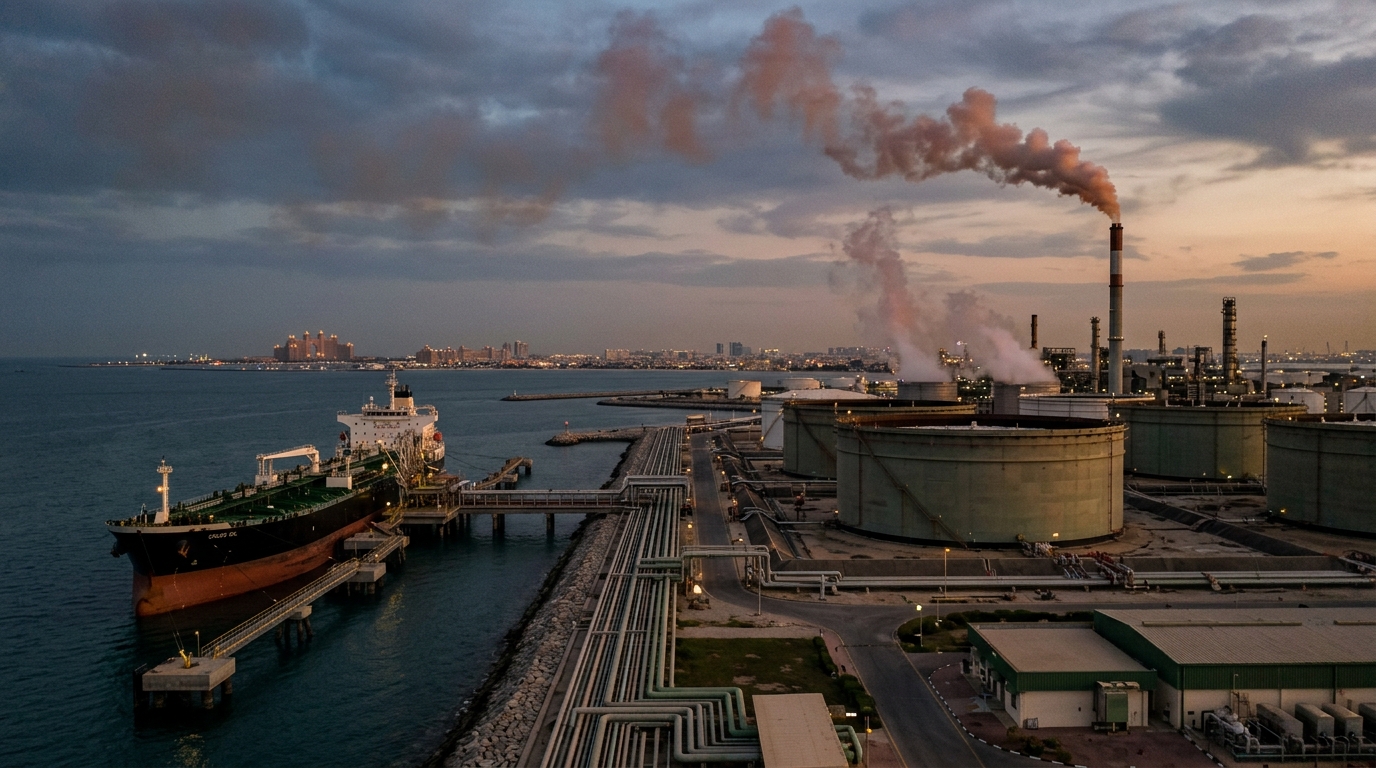
The reason is visible in the tanker data. Provisional Kpler export figures show Saudi crude shipments recovering to just over 4 million barrels per day so far in September, up sharply from 2.4 million bpd in August, the lowest reading since at least 2013. Aramco achieved that recovery by rerouting through the Persian Gulf and the Strait of Hormuz after Houthi attacks disrupted East-West pipeline flows and complicated Red Sea shipments through Yanbu. Satellite data cited by JPMorgan showed Saudi crude moving through Hormuz averaging 2.9 million bpd over the past six days, compared with just 700,000 bpd in August.
In a September 18 note, JPMorgan’s commodities team said total Middle East oil flows averaged about 17 million bpd over the prior 10 days, roughly 6 million bpd below the 2025 average, a gap that is meaningful but far smaller than the disruption headlines implied. “Middle East oil flows remain surprisingly strong despite the disruption to Saudi Arabia’s East-West pipeline,” the bank wrote. The market read those numbers and sold the geopolitical premium, not the pipeline headlines.
The Playbook Every Options Trader Should Have!
Do you dream of retirement but it seems like an impossibility? Wish you knew the best moves to get you there sooner?
It’s closer than you think and you won’t have to work overtime to get it!
Hi! I’m Dave Aquino, expert options trader and my e-book, “How To Master the Retirement Trade” has helped thousands reach their goals!
Follow the link to get your copy and see what you’ve been missing!
This creates a specific framework for energy stocks. Refiners and integrated majors are not in the same trade right now.
Refiners including Marathon Petroleum and Valero have been standout performers in 2026, benefiting from crack spread expansion when supply fears spike crude input costs while refined product demand holds. At $102 and declining, Brent is the relative friend of that trade today. But the dynamic cuts both ways: a sustained crude spike above $105 risks margin compression for both names faster than they can pass costs through. With crude retreating, refiners carry the cleaner risk profile this session. XOM and CVX are the harder call, their upside tied more directly to crude recovering than to the current drift lower.
A second force is working alongside the physical data: diplomacy. President Trump told Fox News he is open to meeting Iranian President Masoud Pezeshkian on the sidelines of the UN General Assembly’s high-level week in New York, with the General Debate beginning Tuesday. Pezeshkian is traveling to New York to address the assembly, with Iran having submitted a list of seven conditions for ending the conflict via Qatar ahead of the session. KCM Trade’s chief market analyst Tim Waterer put it plainly: “It seems that a degree of risk premium is being removed from oil prices on hopes that a diplomatic path to de-escalate the US-Iran war may arrive this week.”
The $40 Trillion Warning Most Retirement Savers Scrolled Right By
America’s debt has reached a level no nation has ever seen, and every dollar of a paper retirement account depends on the currency backing it. A government this deep in debt rarely defaults loudly. It quietly pays its bills with dollars that buy a bit less each year. A free Precious Metals Retirement Guide explains what that has historically meant for savings, and how prepared savers respond well.
Request your FREE Precious Metals Retirement Guide today and see how prepared savers stay protected.
Whether UNGA produces anything lasting is genuinely uncertain, and the prior record warrants caution. The US and Iran agreed to an April ceasefire, then signed a June 17, 2026 Memorandum of Understanding to formally end the conflict. The MoU collapsed within weeks amid renewed fighting and formally expired in August. That cycle of premature optimism followed by resumed hostilities is now established enough that traders should price any UNGA framework against it.
Two live scenarios define the week ahead. If Saudi export recovery plateaus and UNGA diplomacy stalls without progress, crude firms and integrated majors are the first beneficiaries. If Pezeshkian and Trump reach even a framework for renewed talks, the risk premium compresses further, and refiners widen their advantage over upstream names. The key data to track is not the diplomatic communiques from New York. It is Aramco’s pipeline restoration timeline, the weekly Kpler and satellite flow numbers, and whether Hormuz throughput holds at its recovered levels. The barrels have been setting the price all month. That is unlikely to change this week.