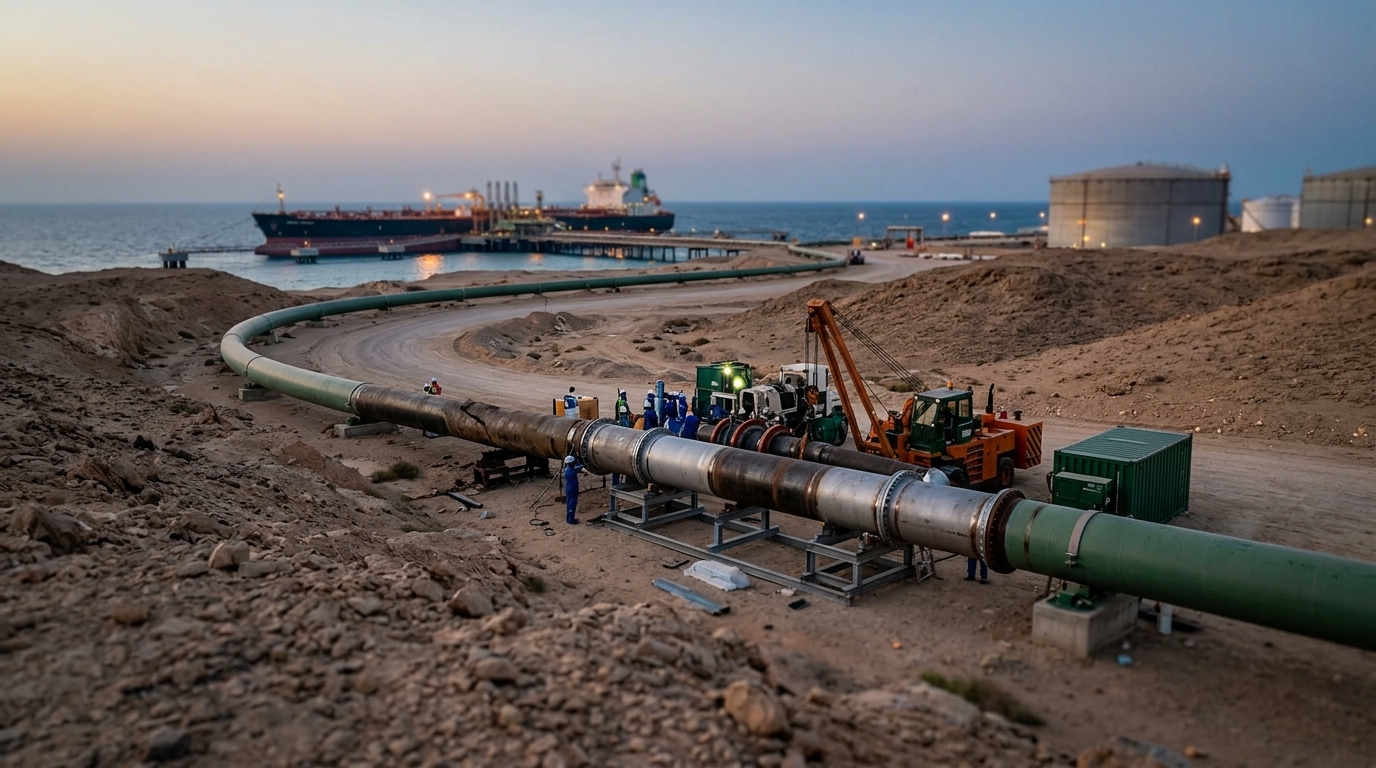
The $20-a-barrel ride that crude staged since mid-August is giving back ground faster than most traders expected. Brent futures were slightly lower at about $105.8 per barrel Thursday morning, while WTI was around $102.2. That is roughly $3 to $4 below Tuesday’s $109 area close, and the move started the moment Bloomberg reported Wednesday that Saudi Aramco had a plan.
Saudi Arabia aims to restore about half of the East-West pipeline’s capacity within days after drone attacks halted the route on September 10, with full capacity targeted in about six weeks as Aramco bypasses the damaged section. The 1,200-kilometer pipeline carries crude from Saudi Arabia’s eastern production areas to the Red Sea port of Yanbu, providing an export route that bypasses the Strait of Hormuz entirely. Before the drone attacks forced its shutdown, the pipeline had been carrying roughly 4 to 5 million barrels per day, equivalent to about 4% to 5% of global supply.
That is a meaningful number to bring back. The question for traders today is not whether the restoration matters. It clearly does. The question is which parts of the energy trade were priced on pipeline-down risk specifically, and which were priced on something more durable.
Two Different Trades Inside the Same Sector
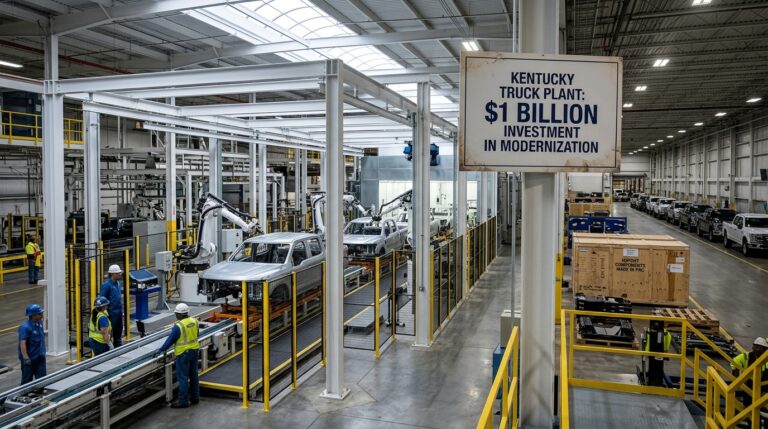
ExxonMobil and Chevron have each gained roughly 40% in 2026, but U.S. refiner stocks have outperformed the majors because the global fuel market is far tighter than crude oil markets. Phillips 66, Valero, and Marathon Petroleum have more than doubled this year, as fuel markets tighten with millions of barrels per day of refined product flows constrained across the Middle East and Russia.
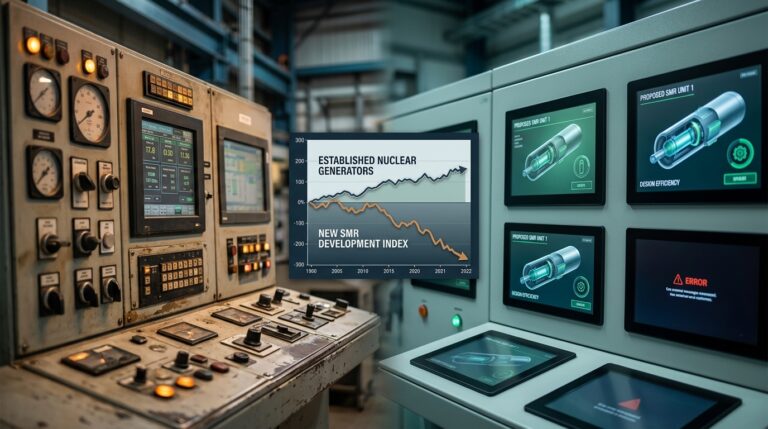
That distinction matters now. Upstream producers like XOM, CVX, and COP carry direct crude price exposure. When Brent retreats from $109 to $105, their near-term cash flow math gets revised downward, even if the structural oil price thesis remains intact. Refiners operate on a different set of inputs. Phillips 66 captures margin on both ends of the barrel through its integrated refining and midstream footprint, and that margin calculus depends on the spread between crude costs and product prices, not crude’s absolute level. With global refined product supply still deeply constrained, crack spreads have not collapsed alongside the Brent spot price.
Where the Unwinding Stops
The Aramco plan covers the pipeline. It does not cover Hormuz. Vice President JD Vance said this week that the Iran conflict will enter a different phase within months, and he claimed Hormuz shipping has recovered to more than half of normal levels. Independent shipping trackers and public updates cited in recent weeks have generally put daily transits at a much smaller share of pre-war volumes. The supply disruption that preceded the September 10 drone attack has not resolved. Aramco getting half its pipeline back removes one acute risk layer. The deeper structural tightness persists.
This shapes the trade. COP and XOM benefit most from a sustained triple-digit crude environment, and both have rewarded shareholders aggressively in 2026. Exxon has cited growing volumes in Guyana and the Permian. The company’s buyback pace remains large, but the specific claim that it authorized $20 billion in 2026 repurchases is not the clean way to frame it. That capital return story does not break at $102 WTI. It compresses slightly.
Trader’s Action Plan
The highest-conviction position in energy right now is not a bet on crude recovering to $109. Refiners such as MPC, VLO, and PSX remain the most direct expression of product-market tightness, and that tightness has a longer timeline than pipeline repair. Watch whether Brent can hold $104 as Aramco restores partial capacity over the coming days. A break below $104 would signal the market is pricing a faster-than-expected supply normalization, which would pressure upstream names most and spare refiners the most. Above $106, the fear bid is reasserting itself, which favors adding upstream exposure on dips. The six-week window to full pipeline restoration sets the clock. Until then, de-escalation trades are partial, not complete.