The headline this morning reads like a disappointment. ExxonMobil missed the consensus estimate by roughly 6%. Scheduled refinery maintenance blunted what could have been a spectacular downstream quarter. Shares sold off. The reaction was predictable.
What the headline skips is the structural story underneath, and that is the one a professional investment committee would spend its time on today.
The Current Environment
July 2026 has been a geopolitically dense month for energy markets. The ongoing U.S.-Iran conflict has kept Hormuz risk premiums embedded in crude prices. CEO Darren Woods noted on the Q2 call that Middle East disruptions, Russian refinery outages, and broader market dislocations tightened global product markets and sustained elevated margins across the industry. That context matters when reading ExxonMobil’s results, because it explains both the opportunity the company captured and the maintenance decision that cost it the EPS beat.
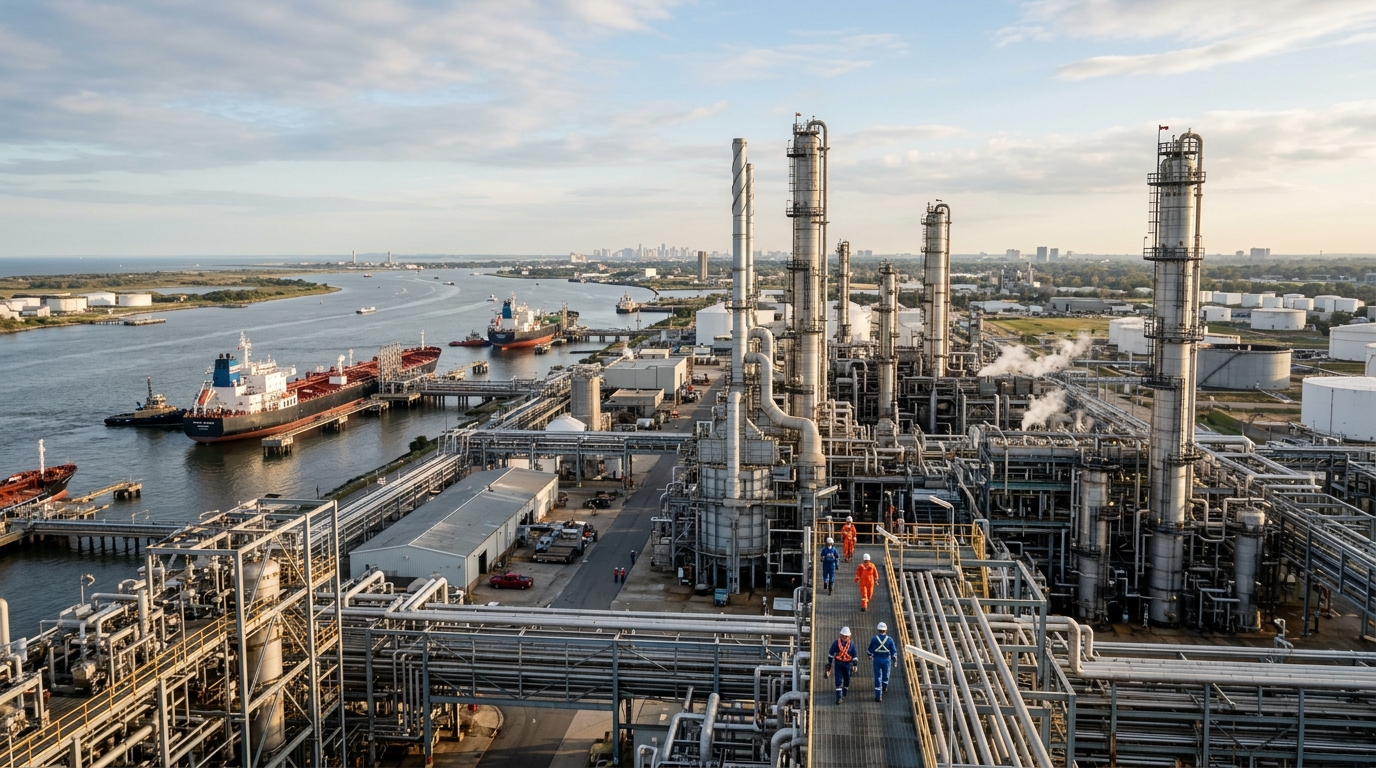
Refinery maintenance weighed on results, preventing the company from fully capturing stronger fuel margins even as oil prices surged amid the ongoing U.S.-Iran conflict. That maintenance was scheduled, not reactive. The company made a deliberate capital allocation call to honor its turnaround schedule rather than run equipment hot in a tight market. Whether that was the right call depends on what you think happens to margins from here.
The Investment Thesis
Strip away the downstream noise, and Q2 revealed a company executing its long-term portfolio transformation at a pace most analysts were not modeling.
Upstream production is the real story. The company reported total production of about 4.51 million oil-equivalent barrels per day. That is not a number driven by commodity prices. It is a number driven by capital allocation decisions made years ago, in Guyana and the Permian Basin.
Permian Basin production set a record of more than 1.8 million oil-equivalent barrels per day. The mechanism behind that record is worth understanding. In the first half of 2026, ExxonMobil highlighted its continued shift toward longer laterals and advanced completion designs in the Permian as a driver of productivity and cost performance. That advantage compounds over time in ways that do not show up in a single quarter’s EPS.
Guyana is where the more consequential shift is unfolding. Faster production growth and higher prices are pulling forward cost recovery under the Stabroek production sharing framework, which can change the timing of cash flow between partners and the government. This is not a future promise. The inflection is happening now, accelerated by faster-than-expected production ramp. The company said its fifth Guyana floating production vessel set sail in Q2, with startup still planned for the fourth quarter of 2026, adding about 250,000 barrels per day of capacity.
The cost discipline behind all of this is equally striking. The company continues to point to a structural cost savings program and a target of approximately $20 billion in cumulative structural cost savings by 2030 versus 2019 levels. Cash operating expenses have held essentially flat since 2019, even as the production base has expanded substantially.
Taken together: production at multi-decade highs, Guyana’s cash flow step-up arriving earlier than expected, and a cost base that is structurally lower than many peers. Cash flow from operating activities was $23.6 billion and free cash flow was $17.2 billion in a single quarter. That is the business the market is reacting to today.
Portfolio Implications
Industry-leading shareholder distributions totaled about $9.4 billion in Q2, including roughly $4.3 billion of dividends and $5.1 billion of share repurchases. Against a $17.2 billion free cash flow quarter, that distribution is fully funded with room remaining. ExxonMobil has grown its annual dividend per share for 43 consecutive years, making it one of the longest dividend growth streaks in the S&P 500. The current annualized dividend of $4.12 per share yields roughly 2.7% at current prices.
XOM reached a 52-week high of $176.41 in March 2026, and the stock recently traded in the mid-$150s, roughly 11% below that peak. The gap opened during the quarter’s volatility, including weeks when Middle East disruption fears first compressed production estimates and then reversed as prices surged. Today’s initial selloff on the earnings release keeps the stock in that same trough.
For a portfolio context: ExxonMobil belongs in the core energy allocation of a diversified portfolio, not the speculative energy sleeve. The company remains on track to deliver approximately $25 billion in earnings growth and $35 billion in cash flow growth between 2024 and 2030, on a normalized basis. The company plans to repurchase $20 billion of shares through 2026, assuming reasonable market conditions. That buyback has not been perfectly smooth quarter to quarter, but the program remains a central pillar of the capital return framework.
The Permian production target of roughly 2.5 million oil-equivalent barrels per day by 2030 and eight Guyana FPSOs online by the same year represent a production growth profile unusual for a company this size. Most integrated majors are managing declining legacy assets. ExxonMobil is not.
Risks
The committee would not approve this position without working through the counterarguments seriously.
Oil price risk. Everything above assumes crude prices remain supportive. In Guyana, entitlement volumes can shift as cost recovery and profit oil proportions evolve under the production sharing agreement. That technical transition can reduce reported net volumes without changing asset quality, but it can confuse the next earnings read.
Geopolitical risk cuts both ways. The Hormuz disruption helped margins this quarter. A resolution of the U.S.-Iran conflict would compress energy prices across the board. The company has said Middle East assets represent approximately 20% of its global oil-equivalent production, and war-related disruptions shaved about 6% off first-quarter production relative to the preceding quarter. A normalized Hormuz would restore those volumes, but at lower prices than the current environment reflects.
Downstream execution. Q2’s maintenance miss was not catastrophic, but it was real. The company said Energy Products results benefited from strong Gulf Coast performance and record diesel production, but were offset by scheduled maintenance impacts. If the Q3 maintenance schedule normalizes as guided, this is a one-time drag. If execution slips again, it compounds.
Valuation. At roughly $157 per share, ExxonMobil is not cheap on trailing earnings. The bull case rests on the 2030 production and cash flow targets being achieved, which requires five years of continued flawless execution in two frontier basins and a stable geopolitical environment for shipping. That is a manageable risk for a patient investor, but it must be priced into position sizing.
Committee Decision
The Investment Committee’s read on ExxonMobil today is not about this quarter. A small EPS miss driven by scheduled maintenance at a company generating $17.2 billion in quarterly free cash flow is noise, not signal.
The signal is the structural transformation that Q2 confirmed: Permian production at a record level, Guyana’s cash flow step-up arriving earlier than expected, a multi-year structural cost savings drive, and a shareholder distribution program fully funded by operations. Management continues to frame the plan around advantaged assets and a growing mix of higher-value products within Product Solutions.
If the committee had fresh capital to deploy in energy today, it would add ExxonMobil at current prices as a core holding, sized at 4% to 6% of a diversified portfolio’s energy allocation. The thesis is not a trade on oil prices. It is a thesis on portfolio quality, cost structure, and production growth from assets that remain profitable across a wide range of commodity outcomes. The stock’s discount from its March peak creates an entry that the underlying business does not justify, and the multi-decade dividend growth record provides a floor most energy positions cannot claim.
The market is selling a headline. The committee is reading the balance sheet.