November 4, 2026
Bonus Content: Uber’s $10 Billion Robotaxi Bet Meets Q3 Day

Dear Reader,
My name is Jeff Brown, founder and CEO of Brownstone Research.
Something could happen on November 11 that catches most investors completely off guard.
A tiny stock – trading at under $1 – could announce a supply deal with Elon Musk.
If that happens, the move could be fast.
Similar partnership announcements have sent Musk suppliers soaring…
By as much as 395% in a single day.
And the insider I recently interviewed believes that if you hold a little longer…

You could potentially see 39x your money in under two years.
This isn’t a guess.
On page 37 of the SpaceX IPO filing, Musk names the exact sector this company operates in.
And with $85.7 billion from the IPO and another $25 billion from bonds…
Musk is about to go on a huge spending spree.
This company holds the keys to the future of Musk’s AI masterplan.
It’s even helping roll a new Cybercab off the line every 10 seconds.
Including turning $13,140 of his own money into around $1.85 million in under a year.
We put everything in an urgent strategy session…
Including a free ticker you can act on right away.
But you need to see it before November 11.
After that, you could miss out entirely.
Click here to watch the strategy session now.
We have so much to look forward to,
Jeff Brown
Founder & CEO, Brownstone Research
Uber’s $10 Billion Robotaxi Bet Meets Q3 Day
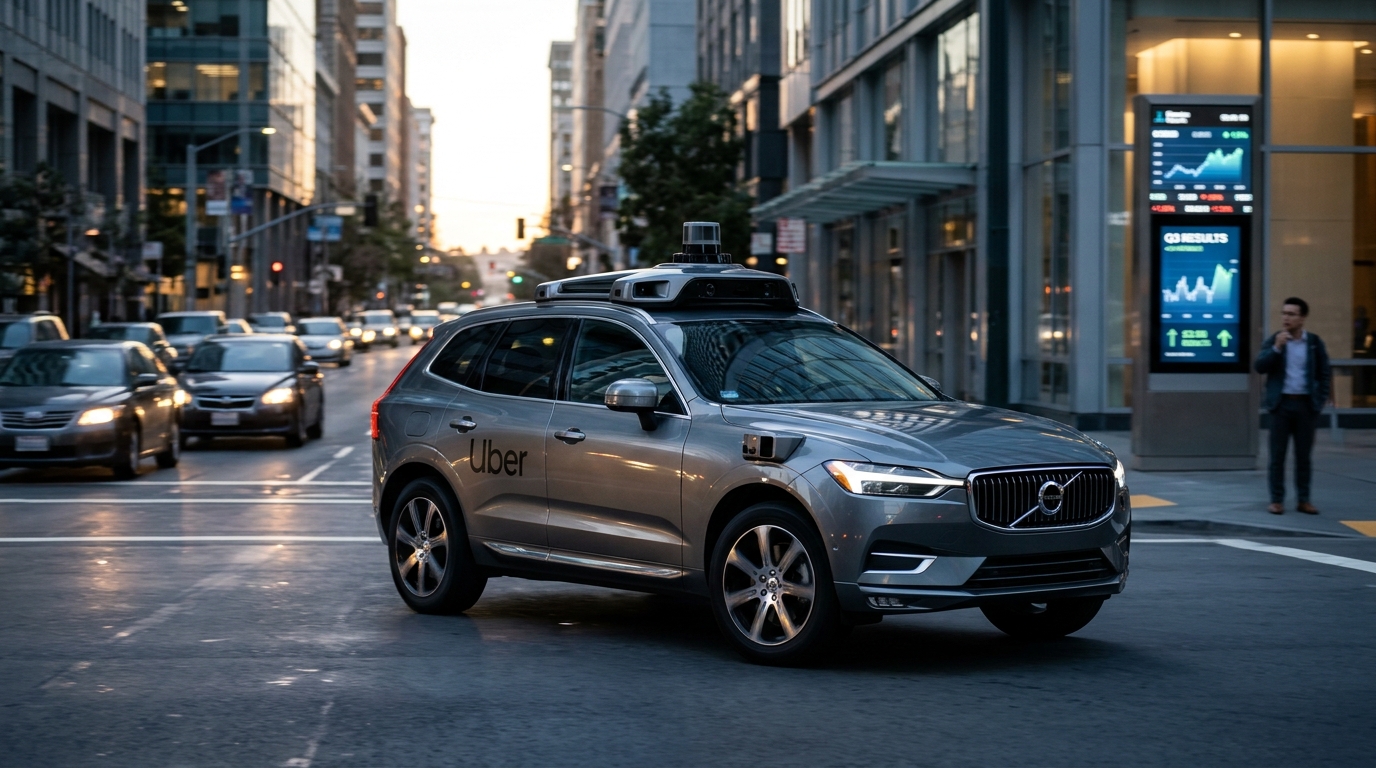
Uber is reporting third-quarter results this morning, and the numbers investors will read first are not the ones that matter most. Gross bookings of roughly $59.8 billion, up 20% year over year, would clear guidance comfortably. Bloomberg’s consensus sits at $59.8 billion, above the $59.25 billion midpoint of Uber’s own guidance range of $58.25 billion to $60.25 billion. Those are the kind of numbers that keep the platform story intact. What actually moves the stock is what comes after them on the earnings call.
The Business
Uber’s core operation has been compounding quietly all year. Through the first half of 2026, gross bookings grew 22%, non-GAAP EPS grew 35%, and trailing twelve-month free cash flow exceeded $10 billion for the first time in the company’s history. Monthly active platform consumers hit 208 million in Q2, up 16% year over year, and analysts are watching for 215 million this quarter, up 14% from 189 million a year ago. EBITDA margins have expanded every quarter since late 2024. This is not a growth story at the expense of profitability. It is both.
Why Wall Street Is Paying Attention
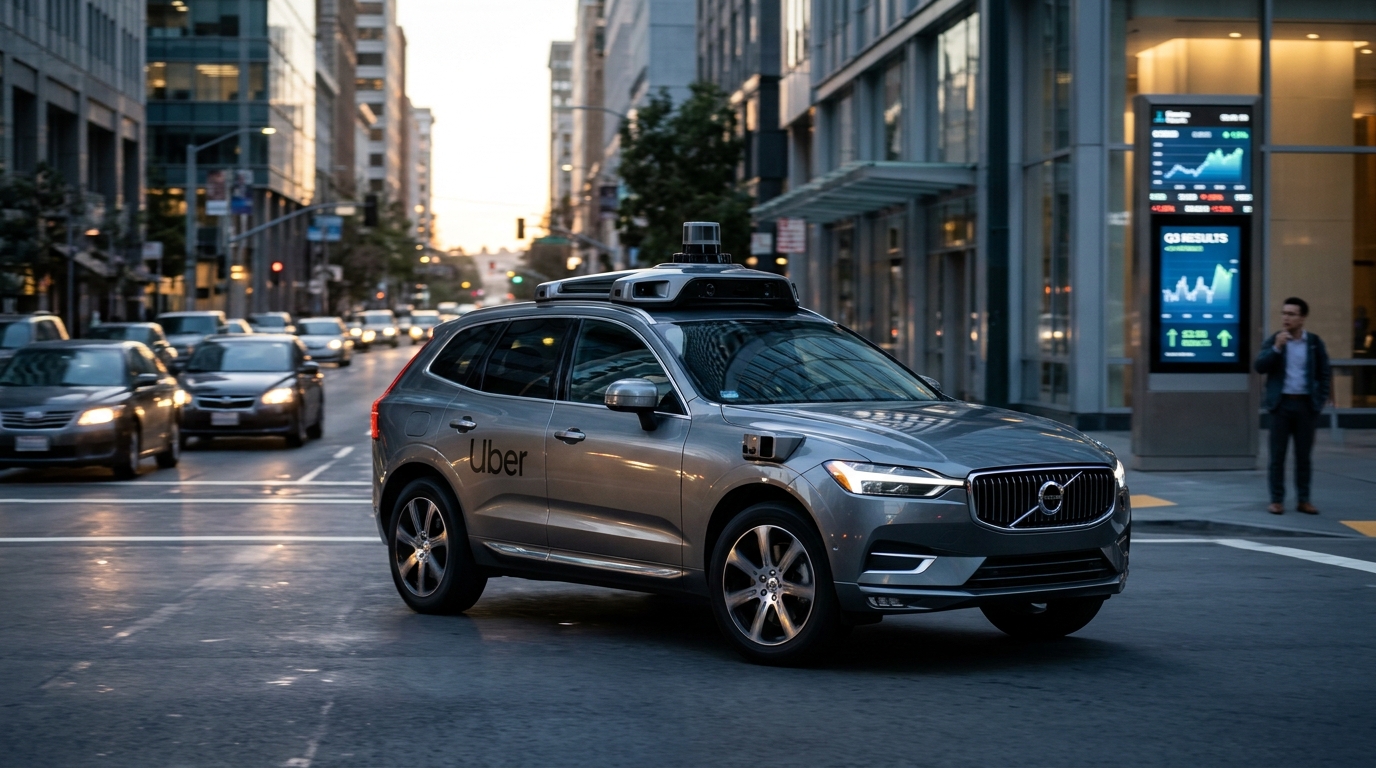
The bigger question on today’s call is what Uber intends to do with the balance sheet. In its Q2 2026 prepared remarks, the company said that across equity investments, infrastructure, and vehicle offtake commitments, it expects to commit over $10 billion of capital over the coming years to bring autonomous vehicles to market at scale, and that partners across its ecosystem have committed approximately 120,000 vehicles to the Uber network over the coming years. Uber also said AVs are live on Uber in seven cities, on track for as many as 15 by year end. Management has also said autonomous trips are under 0.5% of overall trip volume. That gap between capital committed and revenue recognized is exactly the kind of thing that makes investors nervous during a period when big-tech AI spending is already under scrutiny.
Uber has an agreement with Rivian that contemplates deploying 10,000 fully autonomous R2 robotaxis in the first phase. Separately, Uber, Lucid, and Nuro have said they plan to build and deploy 20,000 or more Lucid vehicles equipped with Nuro’s driver over six years, with the first launch in a major US city targeted for 2026. Investors will look for an update on the 15-city target and want to know how Uber navigates a changing relationship with Waymo, which has already ended robotaxi availability through Uber in Phoenix and has publicly discussed the current Waymo-Uber contract in Austin and Atlanta running through May 2028. These are not theoretical concerns. They affect the capex line and the free cash flow investors built their thesis around.
What’s Driving the Opportunity
The core argument for owning Uber is structural. Rather than bearing the capital-intensive cost of building autonomous technology, Uber is positioning as the platform that commercializes it, focusing on integration, rider experience, and scaling operations. Every robotaxi partner needs demand, dispatch, payments, and consumer trust. Uber supplies all of it. If autonomous ride-hailing scales anywhere close to the timelines management describes, Uber’s take rate on those trips requires almost no incremental cost.
Looking ahead, analysts tracking Uber project fiscal 2026 EPS declining 40% annually to $3.20, then rising 43% year over year to $4.57 in the following fiscal year. The EPS decline reflects year-ago comparisons that included large one-time gains. The underlying earnings power is growing. The recovery in fiscal 2027 is what the valuation is really pricing.
What Could Go Wrong
The robotaxi commitment is real money, and it is arriving during a period when the market is demanding near-term returns on AI investment. Reuters has reported repeatedly this year that investors have been scrutinizing whether massive AI spending can generate returns quickly enough, with free cash flow pressure and financing costs in focus. If the 15-city target slips, or if Waymo expands its direct consumer app aggressively, the cost structure looks different. The stock is also sitting well below its 2026 high, suggesting the market already has doubts about execution.
That scrutiny is not unique to Uber. Amazon’s free cash flow compressed sharply while running a $200 billion capex budget, and the market punished the gap between spending and returns.
The Bottom Line
Uber enters today’s report with a profitable, growing core business that generated more than $10 billion in trailing twelve-month free cash flow for the first time in its history. The robotaxi investment complicates the near-term earnings picture but does not undermine it yet. If gross bookings clear $59.8 billion, margins hold near 4.9% of bookings, and management provides credible timelines on the autonomous city rollout, this quarter is a reaffirmation. The stock’s discount to its high reflects uncertainty about spending, not about demand. Today’s numbers decide which story holds into year end.