
Let’s be real for a second.
While most traders are still squinting at lagging indicators and trying to “guess” where the next move is coming from…
My top AI trading engine is already light years ahead.
I’ve spent months and a small fortune making sure this engine outclasses any other trading tool you’ll find out there.
And right now, it’s flagging the kind of setups that typically stay hidden behind the velvet ropes of hedge funds and institutional banks.
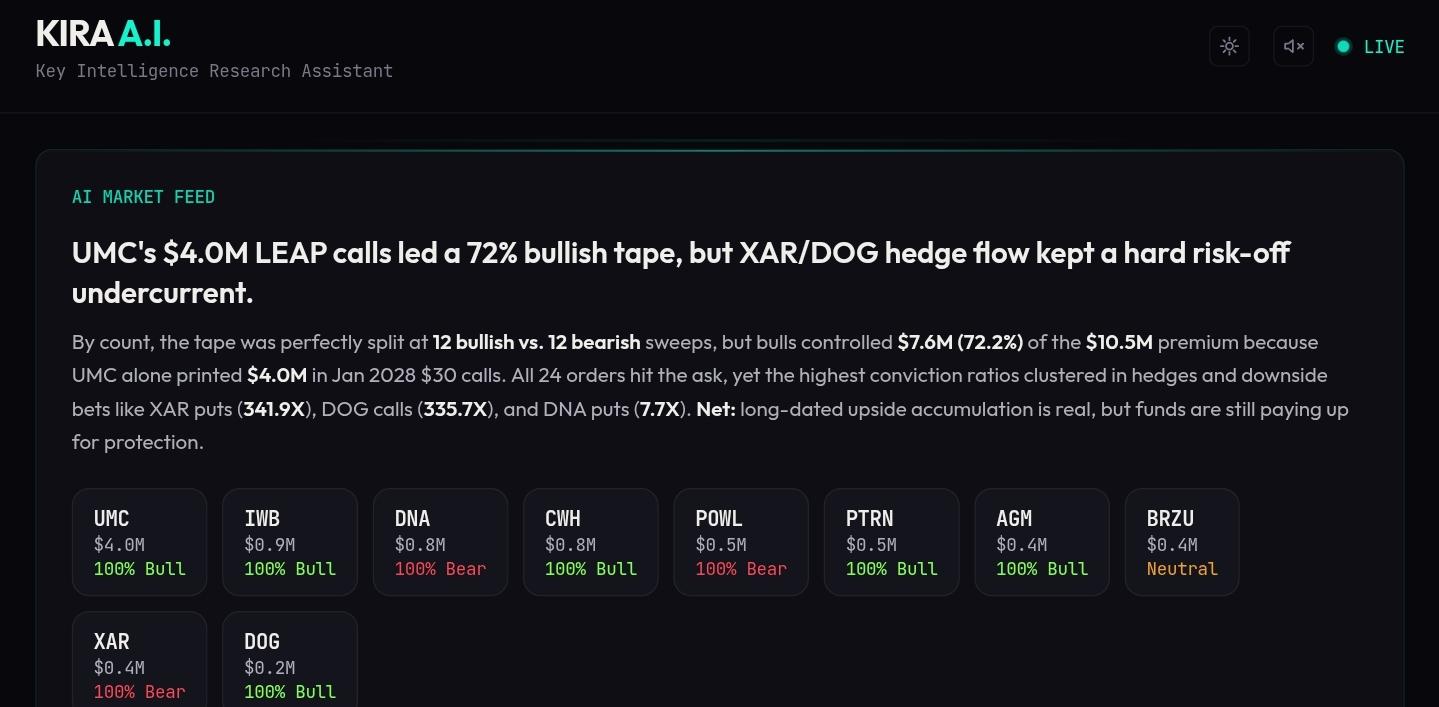
I’m talking about the ability to:
- Identify moves before they even register on a standard chart.
- Target “time-warp” returns that can compress years of gains into days.
- Choose your own risk so you never have to “bet the farm” to see results.
If you still haven’t grabbed your free access, I have to ask… What are you waiting for?
The market isn’t going to slow down for you. The robots running the show today certainly won’t wait for you to catch up.
You can keep doing things the hard way… dealing with the stress, the overthinking, and the emotional roller coaster…
Or you can let AI do the heavy lifting for you.
Claim your FREE access to the AI engine right here (No credit card required)
The proof is waiting inside.
Till the next trade,
Lance Ippolito
Marvell Cut in Half. Its Amazon and Microsoft Chip Deals Say That Is Wrong.
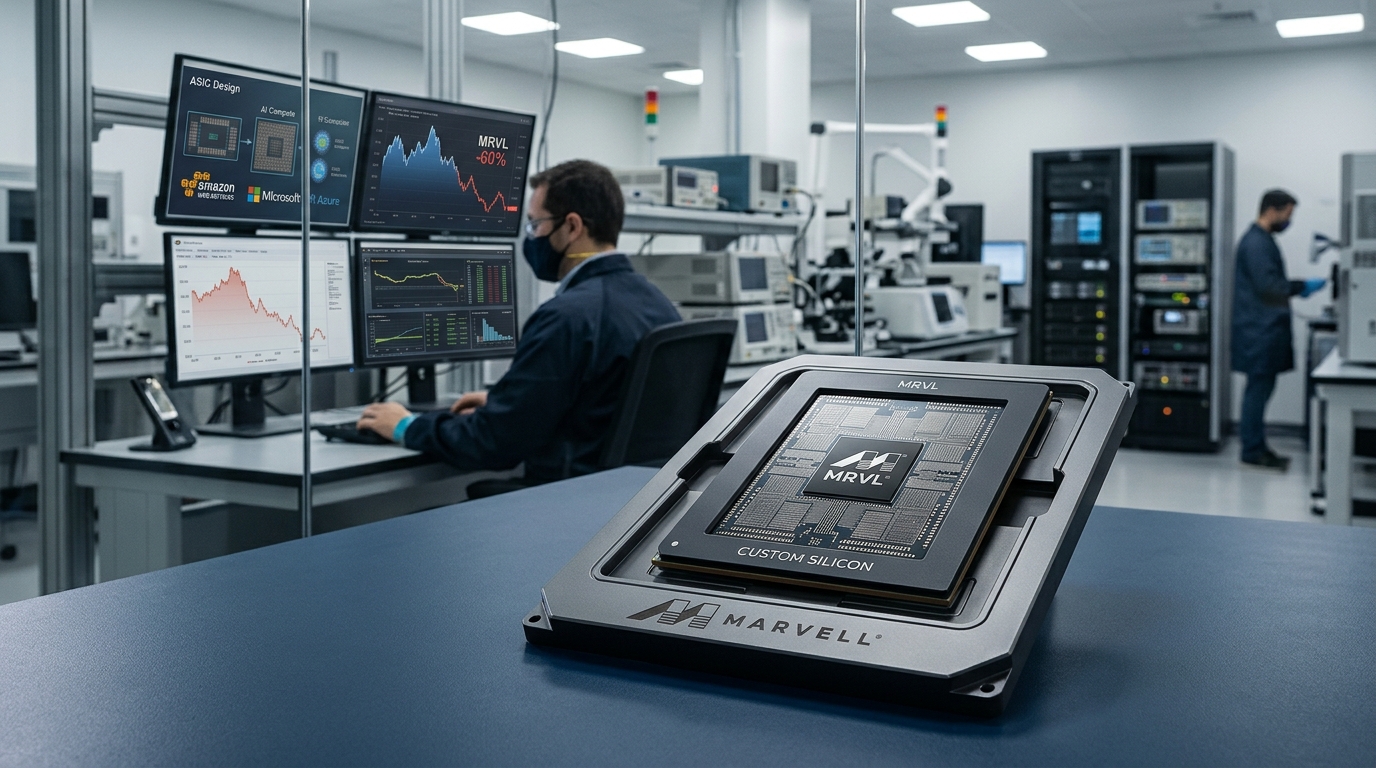
Marvell Technology sits at roughly $131 this morning, more than 60% below the $329.88 intraday high it hit on June 18, 2026. That is not a dip. It is a price move that has outrun the evidence against it, and Tuesday’s fiscal third-quarter report is the moment the market decides whether to agree.
Marvell reports fiscal third-quarter results on Tuesday, December 1, 2026, after the market close. The point of the report is simple: the company is still expected to be growing sharply. Those are not the numbers of a company whose story has collapsed. They are the numbers of a company whose stock has collapsed instead.
Why Wall Street Is Paying Attention
The trigger for this week’s anxiety is the same one that bruised Broadcom. On Friday, November 20, 2026, TF International Securities analyst Ming-Chi Kuo said his latest industry survey indicated that Google had reduced planned 2027 shipments of its Broadcom-designed TPU 8i series by approximately one million units, equivalent to about 20% of the series’ expected volume. Neither Google nor Broadcom has commented publicly on the report. Marvell was dragged along anyway.
Marvell sold off hard into that late-November semiconductor downdraft. The logic, loosely, is guilt by association: if Google is rethinking one custom-chip relationship, it might rethink others. That reasoning holds only if you ignore what Marvell’s actual customer base looks like.
What’s Driving the Opportunity
On the August 27 earnings call, Marvell raised its fiscal 2028 revenue outlook to $18 billion, with custom silicon expected to more than double year over year in fiscal 2028. That custom roadmap is the core reason the stock ever traded as high as it did this year.
The Amazon relationship is not speculative. The company has pointed to expanding hyperscaler commercial agreements tied to custom silicon and attach programs, and analysts have leaned on that momentum in making their cases. The Microsoft relationship is equally concrete. Microsoft has said it will scale its Azure Maia family to multi-gigawatt deployments starting in 2027, with Maia positioned as a primary inference system for Microsoft products and services.
The Microsoft relationship carries particular weight because Azure’s growth trajectory is now confirmed revenue, not projected spend. Azure’s 43% growth quarter ended a year-long debate about whether hyperscaler AI capex converts to real revenue.
Tuesday’s call will pivot on Q4 guidance and any update to the custom silicon outlook. Management has said custom silicon is expected to more than double year over year in fiscal 2028, before accelerating significantly in fiscal 2029. If CEO Matt Murphy repeats that framework with conviction, the stock’s current level looks disconnected from the fundamentals.
What Could Go Wrong
The bear case is real and worth taking seriously. On November 2, 2026, Marvell announced a definitive agreement to acquire Lumentum in an all-stock transaction with an implied enterprise value of $115 billion, at a fixed exchange ratio of 4.5 Marvell shares per Lumentum share, representing a premium of about 24% based on unaffected closing prices as of October 28, 2026. Marvell shares fell about 13% that day.
An all-stock deal ties the value of the acquisition directly to Marvell’s share price, adding dilution risk precisely when the stock is most vulnerable.
Customer concentration is the other live wire. The Kuo report specifically targeted Broadcom’s Google TPU programme, not Marvell’s. But the investment thesis depends on execution: custom silicon, XPU-attach, optical interconnect and scale-up optics must convert the raised outlook into revenue while supply and mix risks remain manageable. A guidance cut or a cautious comment on the Amazon or Microsoft ramp would validate the selloff rather than refute it.
The Bottom Line
Marvell is not Broadcom. Its custom-chip exposure runs through Amazon and Microsoft, not through the Google TPU programme at the centre of this month’s scare. The growth trajectory reflects genuine demand for the chip designs Marvell is delivering.
The risk-versus-reward calculus here is unusually clear. Either Tuesday’s report and guidance confirm that the Amazon and Microsoft programmes are on track, in which case $131 will look like the opportunity it appears to be, or management signals a slowdown, in which case the market will have been right to sell first and ask questions later. There is not much middle ground. Decide before the close.