
When a single executive’s return to one company can add roughly $3 trillion in equity value in a session, that is not a market commentary on earnings or growth. It is a positioning event. And positioning events, however dramatic, deserve a second look before investors declare the correction over.
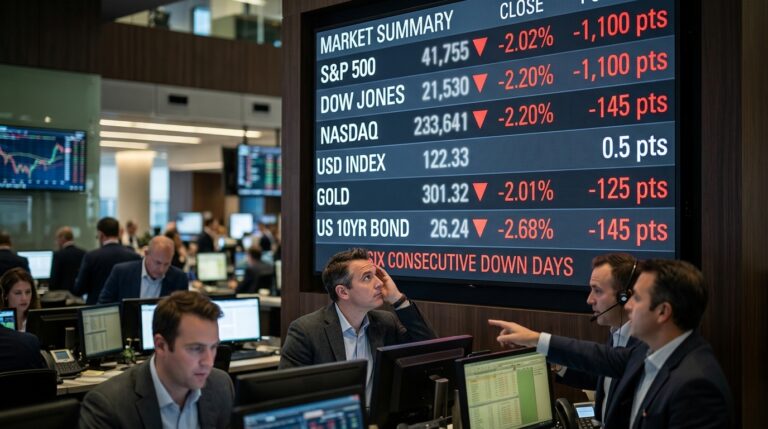
The S&P 500 rose 4.73% to 7,237.17 and the Nasdaq Composite surged 6.51% to 24,089.56, each recording their best single day since April 2025. The Dow gained 3.01%, adding 1,448 points to close at 49,595.31. On the surface, the breadth numbers were compelling too: advancers led decliners 417 to 83 in the S&P 500, with technology the top sector. Smaller companies joined in, the Russell 2000 rising 3.40% to 2,669.66. That is not a narrow short squeeze; it is an index-wide relief bid.
The catalyst was straightforward. Nvidia said its board voted unanimously to reinstate Jensen Huang as President and CEO effective immediately. Huang had resigned on November 12. His return triggered a rapid unwinding of bearish positioning across the technology complex. Nvidia itself surged about 31%.
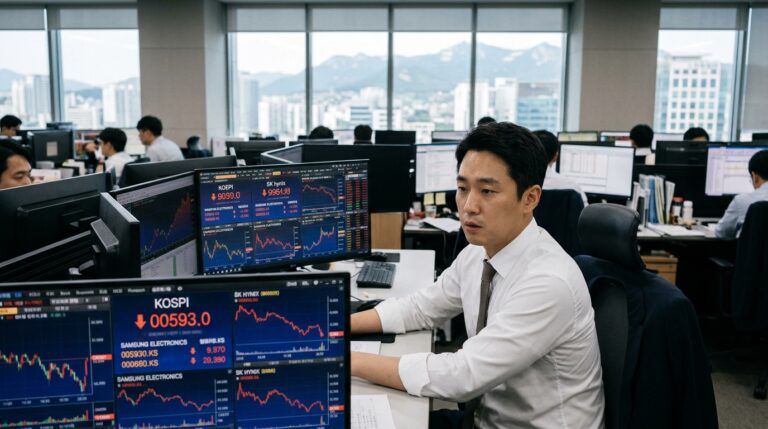
The rally traveled east. Taiwan’s Taiex led regional gains, climbing almost 9%, as shares in TSMC and MediaTek climbed nearly 10%. The Kospi in Seoul advanced 6.3% to 5,006, with Samsung Electronics and SK Hynix both gaining 6.7%. Japan’s Nikkei 225 rose 3.9% to 58,644, with Tokyo Electron climbing 7.7% and Advantest surging 12.5%. Asia’s semiconductor supply chain read Monday’s close as a green light for the AI trade.
What the Bond Market Said Instead
Europe did not share the conviction. Early indications pointed to a softer open in parts of Europe after Monday’s strong cash-session gains. That hesitation matters less than what the fixed income market communicated throughout all of it.
The 10-year Treasury yield was roughly unchanged on Monday and finished the day near 4.92%. It did not fall. In a genuine growth-positive rally, one that changes the economic outlook rather than reverses a sentiment shock, yields tend to rise alongside stocks. Here, the 10-year barely moved in either direction, even as rate markets continued to reflect hawkish expectations into year-end.
The front end is the more revealing read. The sharp AI rebound eased growth fears, but it also left markets still treating a December rate increase as close to fully priced rather than fading away. The bond market’s message is not that the economy strengthened on Monday. It is that inflation remains the dominant variable, and a 31% move in one stock does not change that arithmetic. With headline PCE inflation nowcasting tracking near 3.8% year-over-year for October, structural and monetary headwinds remain intact.
The VIX plunged 25.83% to 26.62 from 35.89, a move several times its typical daily range, as hedges were unwound. At 26.62, it is relieved. It is not calm. The bounce resembles a classic oversold, news-driven relief rally. History shows large up days can occur in downtrends. Confirmation of a sustained turn requires follow-through rather than a one-day pop.
What to Watch Next
Investors will focus on Wednesday’s PCE Index data, the last key data set ahead of the Fed’s final meeting of 2026. September’s PCE price index rose 0.5% from the prior month and 3.6% year-over-year. An October print that runs hot would put the December hike question back at the center and test whether equity markets can hold Monday’s gains with rates pressing higher.
The score from Monday: stocks won the session decisively, Asia extended the move, and the semiconductor trade found its footing. But a 10-year yield sitting near 5% the morning after a 4.73% S&P 500 gain is the bond market declining to endorse the story equities are telling. That gap between asset classes is worth more attention than the closing prices alone.