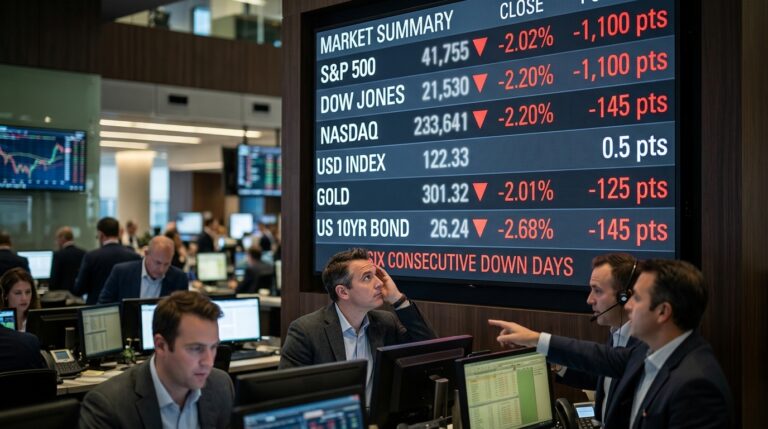
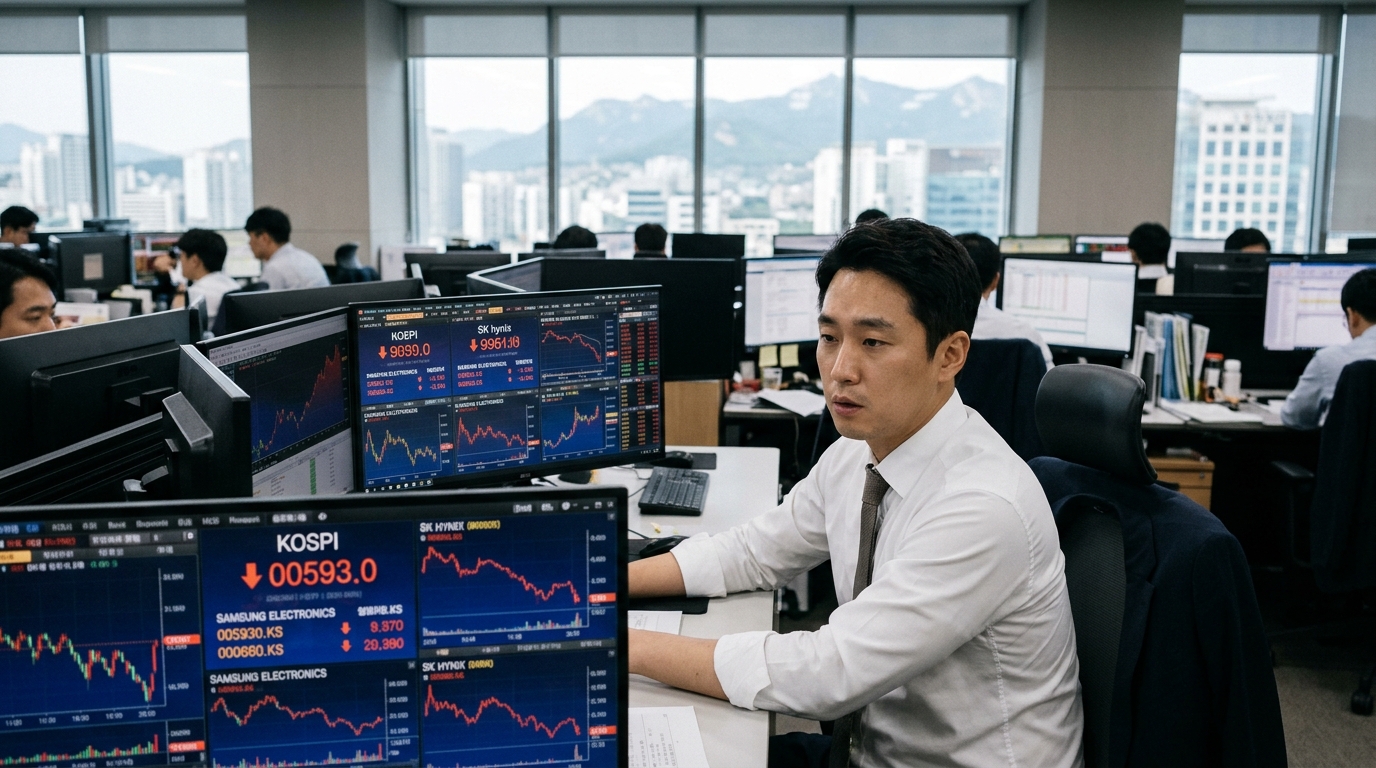
Three governments intervened in their own stock markets over the weekend, deploying tools ranging from stabilization funds to short-selling curbs. By Monday’s close, the most direct answer to whether it worked was: not really, at least not in Seoul.
What Happened
On Sunday, South Korea’s finance ministry said it would begin the preparations needed so its securities-market stabilization fund can be activated promptly if market conditions warrant. The fund is valued at 10.76 trillion won, nearly $8 billion. The government also decided to ease the daily limit on listed companies’ treasury stock buyback orders for three months, starting November 24.
Taiwan, exposed to the AI industry through TSMC and other tech firms, moved to rein in market volatility. The Financial Supervisory Commission said it would tighten short-selling rules, including a ban on short selling below the previous day’s closing price in certain circumstances. Taiwan’s benchmark had already lost 17.5% during the prior week.
China’s state-backed funds invested a record 90 billion yuan ($13.5 billion) in ETFs on Friday, stepping up efforts to support the country’s stock market as a prolonged selloff pushed the benchmark CSI 300 Index into bear-market territory. That surpassed the previous high of 87 billion yuan during the April 2025 tariff rout. The Harvest CSI 300 ETF drew a record 23 billion yuan, while the ChinaAMC SSE 50 ETF attracted an all-time high of 21.7 billion yuan.
The Problem: State Money Does Not Change the Earnings Math
None of it stopped Samsung and SK hynix from falling again. Samsung Electronics and SK hynix extended their slide on Monday as investors cut exposure to AI-linked stocks, even as South Korea prepared the 10.76 trillion won support fund. The KOSPI closed at 4,708.54, down 3.31 percent.
The underlying concern is not sentiment. The KOSPI has sold off sharply in recent weeks, driven by investor reassessment of the near-term return on AI infrastructure spending and fears of a subsequent slowdown in demand for high bandwidth memory chips. Samsung and SK hynix are two of the index’s largest weights, which is both the reason EWY surged earlier in 2026 and the reason it is so exposed now.
Short-selling curbs and buyback relaxations change who can trade and how, but they do not change what investors think AI-linked earnings are worth. Government support measures may help contain short-term market stress, but they cannot independently resolve concerns about corporate earnings, capital expenditure, or the financial sustainability of AI projects.
The Bull Case for EWY and EWT
The intervention measures do compress the downside in the near term. Taiwan rebounded early Monday before giving back gains, suggesting the short-sale curbs created real friction for sellers. Beijing’s national team purchases have a track record of at least halting disorderly declines, even when they do not reverse the broader market downturn.
There is a structural argument, too. SK hynix says it has signed long-term agreements with 14 major customers covering more than half of its planned production capacity in 2027 and 2028. That is not a company without demand. The question is whether investors trust those forward bookings when AI capex timelines are being reassessed globally.
The Bottom Line
EWY trading at a P/E below 5 is not supported by the latest published fund data, but Korea remains cheap versus many global markets on widely used valuation measures. The stabilization fund, the short-selling curbs, and Beijing’s record ETF purchases all reduce the probability of a disorderly collapse. What they cannot do is manufacture demand for HBM chips if the hyperscalers slow their data-center build-outs.
That is the distinction a US investor in EWY, EWT, or FXI needs to hold onto right now. State-backed support is a reason to watch closely, not a reason to buy blindly. Taiwan’s latest short-selling measures were announced on November 19, 2026, and regulators have said they will adjust stabilization measures as needed, so the timing of any rollback remains uncertain.