
October 31, 2026
Bonus Content: EQT Is Buying Range Resources. Natural Gas Just Became the AI Trade.
Dear Reader,
Based on my 55 years of watching the market, I’m deeply concerned that we’re in the early stages of a financial crisis that could be larger than the Great Financial Crisis of 2008.
This has very little to do with the national debt, as bad as that is.
Nor is it another debt crisis in the housing market like the one that tanked the markets in 2008.
In fact, it doesn’t even involve the “AI bubble” or the high-flying stock market, although major, widely held stocks will almost certainly be among the first to crash.
No, this is something far worse, and even more dangerous.
I’m Dr. Martin D. Weiss, New York Times best-selling author, named “Mr. Independence” by Forbes and founder of Weiss Ratings, rated #1 in the Wall Street Journal.
Why #1? Because for 55 years, I have run Weiss Ratings as the nation’s only 100% conflict-free, independent financial rating agency in America.
We have never accepted a dime from rated companies for the grades we issue, and we never will. We answer to no one but our members.
Since 1971, when I founded this company, I have publicly predicted six major American crashes before they happened, always naming the companies most likely to fail with ample warning.
And today I’m issuing a public warning about what could be the biggest crisis to ever hit America.
In previous financial crises, many have lost half, or even most of their retirement savings.
My job – and my family’s job for nearly one hundred years – has been to give Americans the warning before the warning is too late.
And that’s what I’m doing in a free video you can watch today.
>> Go here now to see the most important warning of my career. <<
Good luck and God bless!

Martin D. Weiss, PhD
Weiss Ratings Founder
EQT Is Buying Range Resources. Natural Gas Just Became the AI Trade.
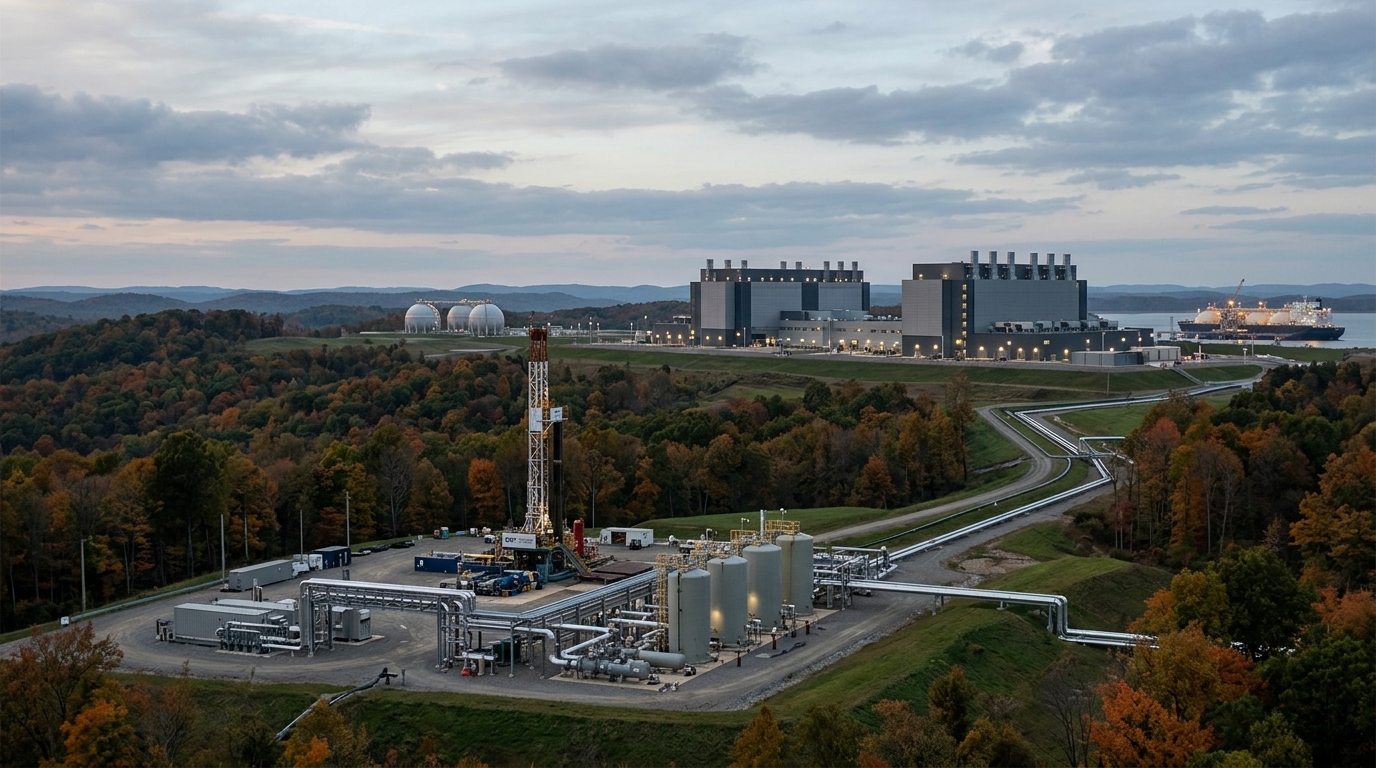
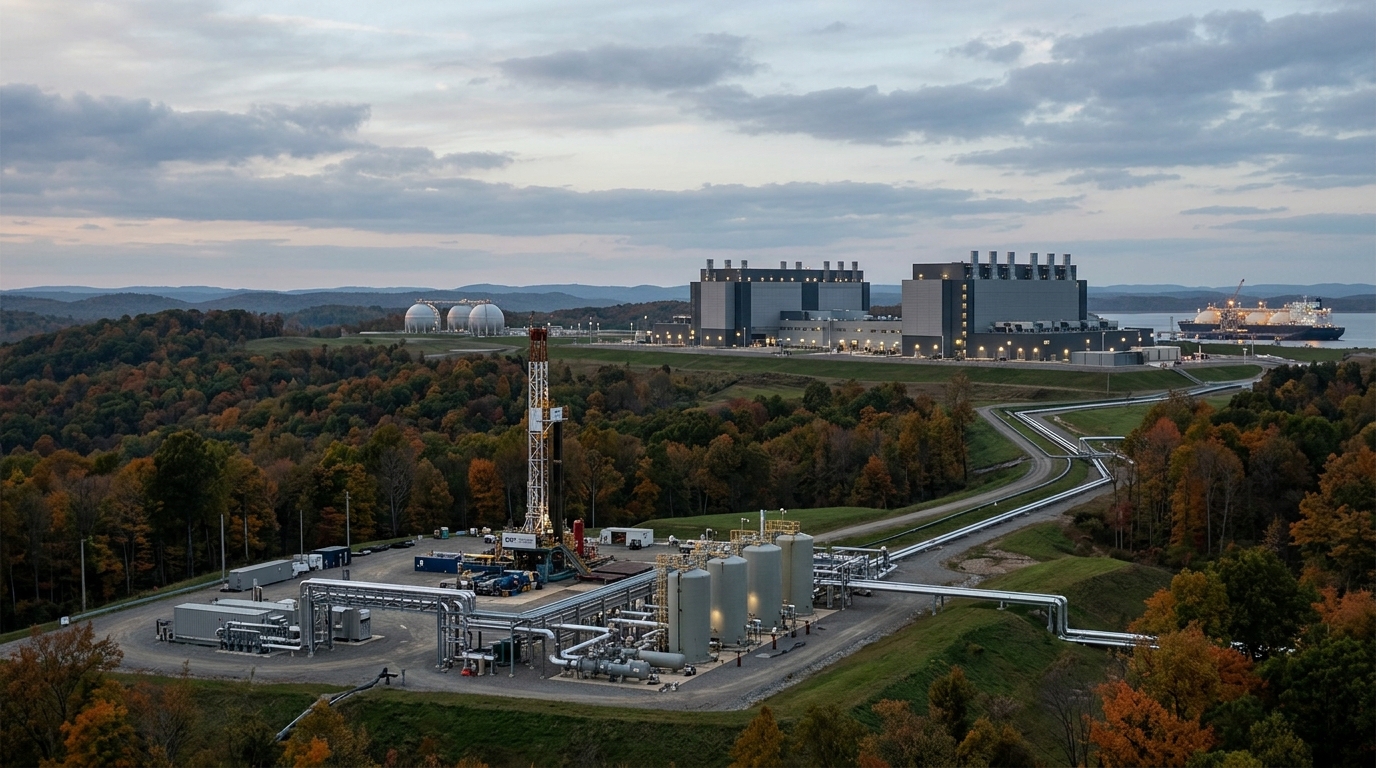
The biggest deal in U.S. natural gas history landed on October 25, and most investors missed it because the tech wreck was louder. That may be an opportunity. The EQT-Range Resources merger is not a story about commodity cycles. It is a story about structural demand that is only going in one direction.
The Business
EQT is the largest natural gas producer in the United States, operating primarily in the Appalachian Basin. Range Resources is a Marcellus Shale producer with one of the longer reserve-life profiles in the sector. Range Resources is an independent natural gas and natural gas liquids producer primarily operating in the Appalachian Basin, with a focus on the Marcellus Shale in southwestern Pennsylvania. The company’s market capitalization stands at about $12.6 billion as of late October 2026.
Separately, both are strong. Combined, they become something that does not currently exist: a vertically integrated, Appalachian-anchored gas giant with enough scale to supply both domestic power markets and international LNG terminals at the same time.
Why Wall Street Is Paying Attention
Range Resources jumped as much as about 18% after the natural gas producer struck a deal to be acquired by EQT in an all-stock transaction that values the combined company at more than $50 billion on a pro forma enterprise value basis. Each Range share will be converted into 0.987 shares of EQT common stock. On the prior session’s close, that exchange ratio implied $54.91 per Range share, a 20.6% premium.
EQT shareholders will own roughly 73% of the combined business and Range investors will hold 27% following closing in the first quarter of 2027. With a deal close expected in the first quarter of 2027, investors considering EQT shares today are essentially buying into the combined entity with deal-value exposure that will still move with EQT’s share price between now and closing.
What’s Driving the Opportunity
The merger would create a natural gas giant with more than 9 billion cubic feet equivalent per day of production, over 30 years of high-quality drilling inventory, and more than 3,700 miles of midstream infrastructure.
The strategic logic goes beyond scale. The merged enterprise would be well-placed to profit from rising demand for liquefied natural gas in lucrative markets in Asia and Europe, as well as surging demand for natural gas-powered electricity generation for AI data centers in the U.S. That two-headed demand driver is what separates this deal from a typical consolidation play. LNG export volumes are rising on long-term contracts. Domestic electricity demand from AI data center construction is accelerating simultaneously. Both require more Appalachian gas, and the combined EQT has the acreage to supply it for decades.
The hyperscaler-to-gas-producer link is not theoretical. Chevron and Microsoft’s 20-year agreement for a dedicated natural gas power facility shows how directly AI capital is flowing into fossil fuel infrastructure.
Energy has been among the best-performing parts of the S&P 500 in 2026, supported by supply disruptions and rising oil prices amid the U.S.-Iran conflict. Natural gas equities have lagged oil within that move, which creates a relative value opportunity if the structural demand case for gas closes that gap.
The supply disruptions behind that energy outperformance have a specific origin. U.S. strikes on Iranian tankers near Kharg Island removed a meaningful share of global oil supply and pushed Brent toward $96.
What Could Go Wrong
The deal is all-stock, which means EQT’s share price between now and a first-quarter 2027 close will determine Range shareholders’ actual return. A broader energy sector correction could reduce the effective deal value before the transaction settles. Regulatory review could introduce delays. And weather risk is real: a warm El Niño winter would suppress near-term gas prices and test investor patience before the long-term story plays out.
Range’s RSI hit 87 following the deal announcement, signaling technically overbought conditions at the current price level. Short-term consolidation is likely. EQT, which sold off modestly on the announcement as the acquirer in an all-stock deal, may offer a cleaner entry into the same combined-company thesis.
The Bottom Line
Natural gas is not the cyclical commodity trade it was a decade ago. It is the fuel that powers AI data centers when solar goes dark and the export commodity that Europe and Asia are signing long-term contracts to secure. EQT’s acquisition of Range Resources builds the company that is best positioned to supply both markets at scale. In a week when tech is pricing downward on AI-spending doubt, the infrastructure that AI actually runs on is quietly consolidating. That is the trade worth watching on November 5, when EQT reports Q3 results and management speaks publicly about the combined company’s outlook for the first time.