October 1, 2026
Bonus Content: BMW Is Cutting Managers. That Does Not Fix China.
Dear Crypto Investor,
A ruling just came down that most investors haven’t connected to crypto yet.
Chatrie v. United States – the Supreme Court just extended 4th Amendment protection to your digital footprint. For the first time, your data has the same constitutional shield as your front door.
One altcoin was built for exactly this moment.
It encrypts transactions at the protocol level… turning that new legal right into something Bitcoin’s fully-transparent ledger can’t deliver.
It’s already live inside a lending protocol holding $11 billion in deposits. Real institutional capital, moving now.
It’s still trading for pennies.
My team has called moves like this before… OCEAN, KDA, PRE among them.
Past results don’t guarantee future ones, but we believe this could be one of our strongest altcoin recommendations yet:
Discover our #1 “Freedom Coin” for the market right now.
We don’t expect this current low price to hold.
Bryce Paul
Crypto 101
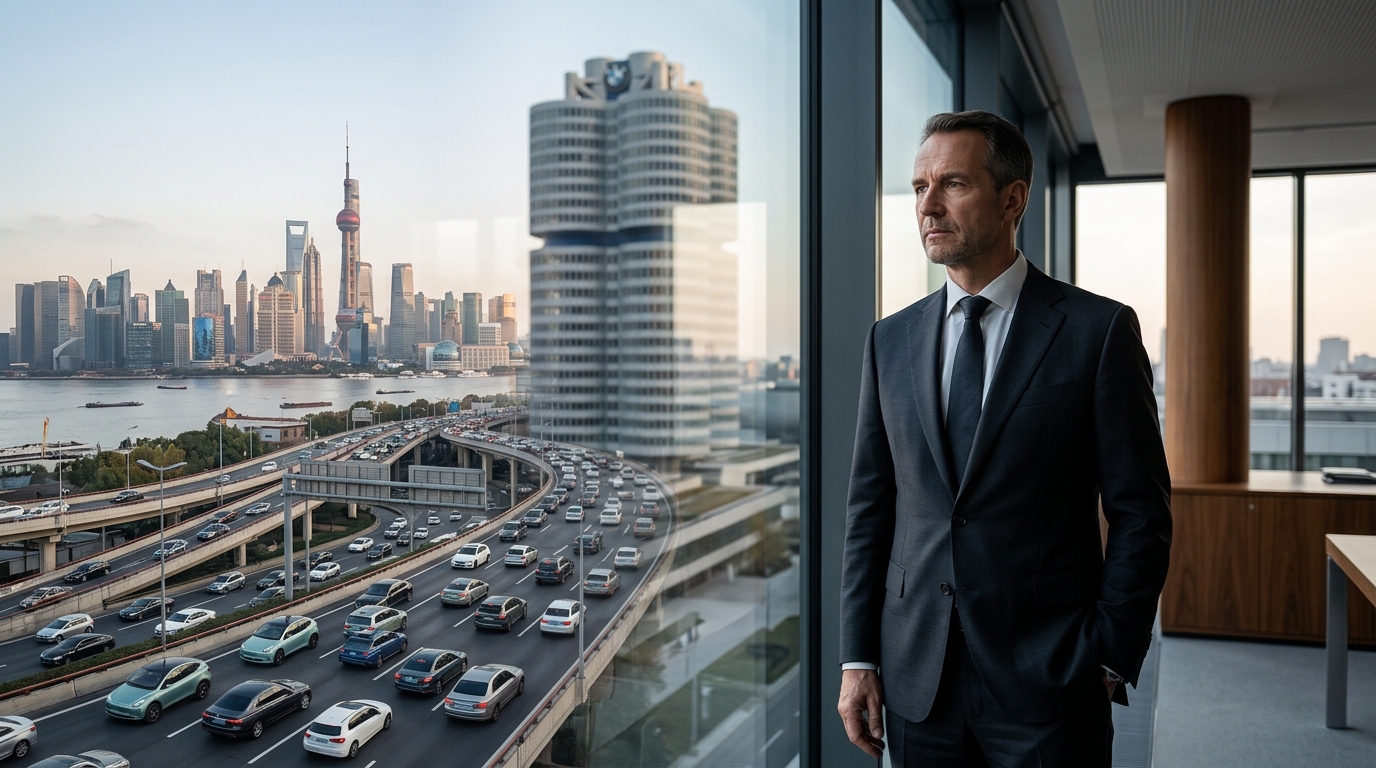
BMW Is Cutting Managers. That Does Not Fix China.
BMW made headlines Wednesday with a restructuring that looks decisive on the surface. Press reports say the company plans to cut about 20% of its senior management roles by mid-2027, with roughly 100 top positions potentially affected. New CEO Milan Nedeljkovic framed it as structural modernization, with AI accelerating processes across vehicle development, purchasing, production, sales and aftersales. CFO Walter Mertl said the technology would support “more agile and efficient development, leaner structures and faster decision-making.”
The cost story is real. BMW has been explicit that leaner structures and AI-enabled productivity are core to its recovery plan, and it has set a 2028 interim target of a 3% to 5% EBIT margin in its Automotive segment. One internal digital assistant BMW has described, used in an Alphabet offer process, replaces around 90% of previously manual tasks. This is not a press release exercise. The cuts are happening, and AI is genuinely doing work that people used to do.
But here is the problem. Layoffs do not manufacture demand, and BMW’s demand problem is severe. In the first half of 2026, BMW Group delivered about 1.16 million vehicles globally, down 4.2% year over year. Deliveries in China were about 261,800 units, down 20.4%, with the second-quarter drop widening to 30.2%. In June 2026, BMW cut its 2026 guidance, lowering its expected automotive EBIT margin to 1% to 3% from 4% to 6%.
BMW’s Automotive segment EBIT margin was 2.3% in the second quarter of 2026. Analysts have been blunt about what that implies for credibility around medium-term targets. In German press coverage of BMW’s strategy event, Bloomberg Intelligence analyst Michael Dean described the interim targets as “disappointing.”
BMW is not alone in this position, which is exactly the point. Volkswagen and Mercedes-Benz have both signaled similar pressure on costs as the European auto industry deals with weak demand and tougher Chinese competition. In September 2026, Volkswagen updated its 2026 forecast and said it now expects an operating return on sales of up to 1%, down from prior guidance of 4% to 5.5% (while also noting that adjusted for specified one-time effects the figure would be higher). Mercedes-Benz has also raised the possibility of plant closures: in late September 2026, production chief Michael Schiebe warned employees in Sindelfingen that if German labor costs were not reduced, the company could end up closing one German assembly plant and one powertrain plant.
When every competitor is running the same playbook, cost cuts stop being an edge and start being table stakes. The harder question, the one BMW’s Capital Markets Day did not answer convincingly, is where volume growth comes from. BMW itself has pointed to China as the center of the problem: management said the downturn in China’s passenger car market accelerated in the second quarter, predominantly in the non-electrified segment. Intense competition from Chinese EV makers and a price war have eroded margins and damaged brand image.
For a single-stock recommendation, the bar is higher than a credible restructuring. A European automaker would need to show volume stabilization in China, margin recovery that does not depend entirely on headcount reduction, and a clear EV product answer for a market where domestic brands are winning on both price and technology. BMW has a plan. Reuters reported on September 30, 2026 that its shares have fallen more than a third over the past year to their lowest level in more than six years. A plan and a recovery are different things, and right now the market is pricing the gap between them correctly.