

Dear Reader,
My name is Jeff Brown, founder and CEO of Brownstone Research.
And I want you to circle one date on your calendar…
That’s the day a tiny company could announce a huge supply deal with Elon Musk.
It’s a stock trading at under $1…
In an overlooked sector you’d never associate with tech.
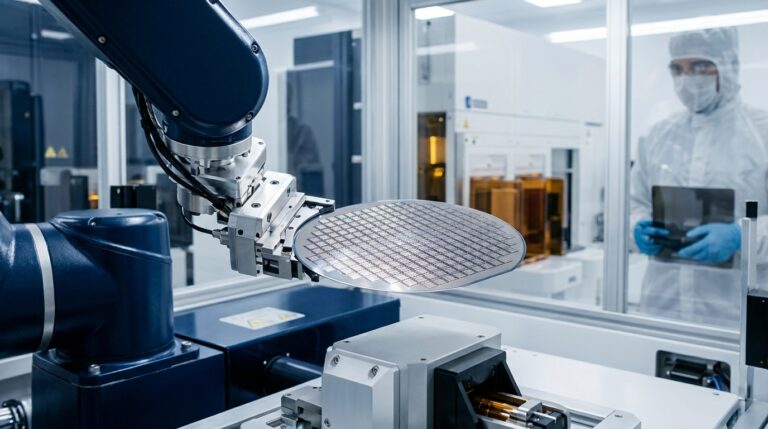
But Musk’s robots, microchips and AI satellites all rely on it.

And on page 37 of the SpaceX IPO filing, Musk names this sector directly.
Why does that matter?
Because Musk raised $85.7 billion from the SpaceX IPO…
And a further $25 billion by selling bonds.
That money is about to flow downstream.
And when a Musk supplier in this sector announced a deal before…
The stock soared 395% in a single day.
That’s almost five times your money…
Before the sun goes down.
I recently sat down with an insider in this sector to talk about what could happen on March 19.
A man who once turned $13,140 of his own money…
Into around $1.85 million in under a year.
In our urgent strategy session, we reveal the name and ticker of a crucial Musk supplier…
Entirely for free.
But once March 19 arrives, this opportunity could be gone.
Click here to watch the strategy session before March 19.
We have so much to look forward to,
Jeff Brown
Founder & CEO, Brownstone Research
AppLovin Is 44% Off Its High. The E-Commerce Bet Is Next.

AppLovin closed at $271.75 the day before it reported Q3 results on November 4. It closed at $356.10 the next day. By November 13 it was at $409.10. The stock is still about 44% below its 52-week closing high of $733.60, set on December 22, 2025.
That gap is where the opportunity sits today.
The Business
AppLovin runs an AI-powered advertising platform called Axon. While the company has roots in mobile apps and games, it is now centered on performance advertising for businesses that want to acquire customers inside mobile apps, and its AI engine matches each impression to the highest-probability buyer in real time. After completing the sale of its Apps business in 2025, the company became a more focused ad technology operation with far less exposure to operating owned-and-operated app inventory.
The addressable market for in-app advertising is commonly estimated in the hundreds of billions of dollars globally, depending on what is included. The adjacent prize AppLovin is now chasing, e-commerce and retail media, is also widely measured as a very large market growing at a double-digit pace. Management has stated the non-gaming opportunity is five to ten times the size of gaming.
Why Wall Street Is Paying Attention
Q3 results were the clearest proof yet that the model works at scale. Revenue reached a record $2.18 billion, up 55% year over year, beating the $2.07 billion consensus by about $110 million. Net income grew 72% to $1.44 billion, a 66% net margin. Adjusted EBITDA was $1.84 billion at an 84% margin. EPS of $4.30 beat the $4.03 estimate by 6.6%.
The stock jumped 31% the day after results. What drove that reaction was not just the Q3 beat. AppLovin guided Q4 revenue to $2.365 billion to $2.395 billion, above where the market expected, citing stronger seasonal e-commerce spend as a holiday-quarter tailwind. Evercore raised its price target to $540. The consensus target across 32 analysts is about $453.
The e-commerce brands AppLovin is courting need somewhere to send that traffic. Shopify’s partnership with Meta to complete purchases through AI agents shows how quickly the commerce layer is rewiring itself around performance advertising.
What Is Driving the Opportunity
The e-commerce expansion is the thesis. In June 2026, AppLovin opened its Axon self-serve platform to all advertisers. Consumer advertiser spend in Q2 came in 28% above the previous peak from the 2025 holiday season, before the full self-serve rollout had time to compound.
The holiday-quarter tailwind AppLovin is counting on runs through the same advertisers driving Meta’s revenue guidance. Meta’s Q2 revenue guidance and the consumer ad spending cycle that underpins it set the macro floor for what AppLovin’s e-commerce ramp can realistically capture.
Currently, Axon monetizes roughly 1.3% of the impressions on its publisher network. If e-commerce density pushes that toward 3%, revenue capacity roughly doubles with no new supply added. That is not a distant scenario. It is what happens as more e-commerce brands enter and Axon has something relevant to show on inventory it already controls. Return on equity stands at 182.97%. AppLovin repurchased $1.4 billion of stock in Q3 alone.
What Could Go Wrong
The 52-week range of $225.19 to $738.01 reflects how violently this stock moves. Any deceleration in advertiser spending, regulatory disruption to data practices, or a slowdown in mobile gaming that reduces publisher inventory would compress the revenue per impression that makes this model work. CEO Adam Foroughi sells shares regularly, a persistent concern for some analysts. The stock shed more than 40% from February to October before Q3 results reversed the trajectory.
The Bottom Line
AppLovin has a rare combination in advertising technology: revenue growing 55% while margins expand and free cash flow was $1.4 billion in Q3. The stock is about 44% off its high not because the business deteriorated, but because the broader AI trade sold down and APP carried meaningful short interest into earnings. Q4 is seasonally the strongest quarter for consumer advertising. The case for AppLovin today is specific to this window, before the full e-commerce ramp appears in the numbers.