The headline reads like a buy signal. On August 24, Elon Musk posted that SpaceX, in partnership with Nvidia, has designed a space-optimized Vera Rubin NVL72 system targeting launch to orbit in Q4 2027, with what he called “significant scale” to follow in 2028. That first orbital data center is now due roughly a year earlier than the company told investors when it went public, having initially targeted deployment “as early as 2028” in its May prospectus. The market’s reaction was swift. The question worth asking this morning is whether SPCX is the right vehicle for that excitement, or whether it’s already priced in at a stock trading around $141.
The Business
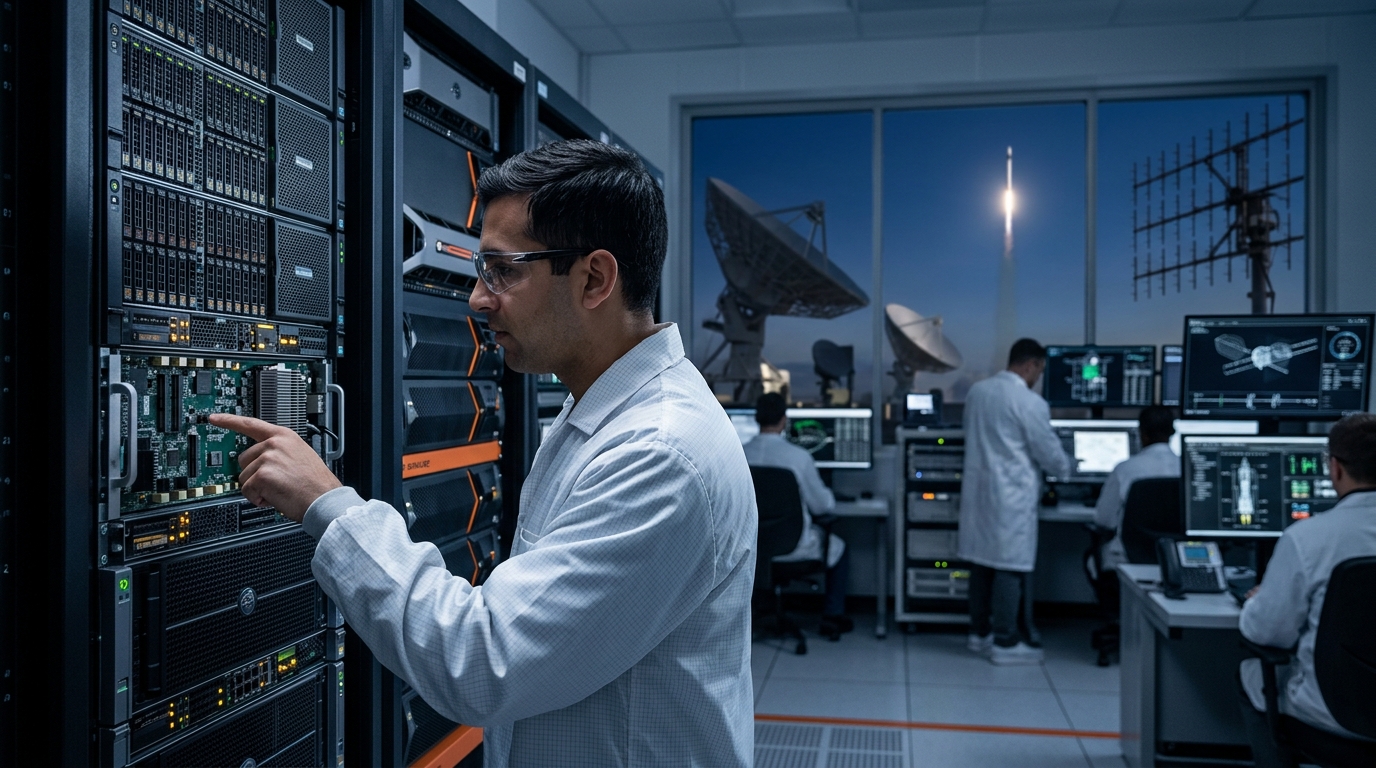
SpaceX and Nvidia are jointly developing the compute payload for a satellite called Starmind AI1, the first in a planned constellation of orbital AI data centers. Each satellite will carry Nvidia’s Rubin GPUs and Vera CPUs, with Nvidia’s Space-1 Vera Rubin module delivering up to 25 times the AI processing performance of an H100 GPU for space-based inferencing tasks. SpaceX has filed to deploy up to one million data center satellites and has said it has agreements with companies including Google and Anthropic to sell access to its compute infrastructure. The ambition is genuine. The project aims to reduce cooling and facility overhead relative to ground-based data centers, which matters to hyperscalers who are running out of power and siting options.
Why Wall Street Is Paying Attention
SpaceX Q2 2026 revenue surged 92% year over year to $7.8 billion, beating estimates of roughly $6.9 billion; its AI segment revenue soared 247% year over year to $2.6 billion amid heavy infrastructure investment. That is a real business accelerating fast. Twenty-eight analysts recommend buying the stock, with the average 12-month price target sitting at $220, and a high estimate of $450. CNBC reported that Nvidia disclosed a $21 billion stake in SpaceX at the end of the second quarter, which tells you something about where the chip giant sees its own hardware going.
The Starmind announcement also coincided with Nvidia reporting its own blowout numbers. In Q1 fiscal year 2027, Nvidia posted revenue of $81.61 billion with net income of $58.32 billion and a profit margin of 71.46%. That result has Raymond James raising its price target on NVDA to $352. Nvidia is already earning real money from the same architecture it is sending into orbit.
What’s Driving the Opportunity
The schedule has moved three times in less than four months. On SpaceX’s first earnings call on August 4, Musk said launches would start next year. Then on August 24 he put a quarter on it, confirming the Q4 2027 target on X. Prototype testing is scheduled for early 2027; if development stays on schedule, mass production would begin later that year out of a new facility called Gigasat, with commercial launches targeting Q4 2027 and beyond. That is a credible-looking sequence on paper. A June Reuters report said SpaceX was aiming to launch initial demonstrations by late 2027, ahead of the “as early as 2028” timeline disclosed in its IPO filing.
Here is the strategic tension. The Nvidia architecture is the same whether a data center sits in Texas or orbit. SpaceX’s stated compute target of 2 gigawatts by year-end 2026, rising to 10 to 15 gigawatts by end 2027, is being built exclusively on Nvidia hardware. Every gigawatt of that build benefits Nvidia’s revenue and margins now, while SPCX shareholders wait for a satellite that has not yet left the ground.
What Could Go Wrong
Musk has been known to issue aggressive timelines that subsequently are not hit, as the histories of the Cybertruck, the Tesla Semi, and the still-unreleased next-gen Tesla Roadster illustrate. As of mid-2026, the Starmind project is at the FCC filing and AI1 prototype stage. No Starmind satellite has been launched into orbit yet. That is not a reason to dismiss the thesis, but it is a reason to be precise about where you are in the timeline.
The valuation math is demanding. SPCX trades at roughly 84 times trailing sales with negative earnings per share and no P/E anchor, with roughly half the valuation resting on unproven AI. Additional tranches of insider shares remain set to unlock over the coming months, a dynamic some analysts have argued could act as a valuation headwind into 2027. That lockup calendar runs almost exactly parallel to the Starmind launch window, which means supply pressure could weigh on the stock at precisely the moment the hardware needs to perform.
The Bottom Line
The Starmind announcement is real and the acceleration is meaningful. But the stock asking investors to price in a working orbital data center at a $1.9 trillion valuation, while the hardware sits in a factory and the schedule has moved three times in three months, is a different proposition from the technology itself.
SpaceX’s stock price is not really a bet on rockets anymore. It is a bet on whether Starmind and xAI can grow into the valuation already priced in. Nvidia is the cleaner expression of that same conviction today: it collects revenue from the chips going into Starmind regardless of whether the satellite launches on schedule, and its earnings are happening now rather than in 2028. SPCX is the more exciting story. NVDA is the better stock for an investor who needs the risk and reward to be proportionate today.