November 8, 2026
Bonus Content: Constellation Energy Reports Monday. Nuclear Meets the Data Center Supercycle.
Below is an important message from one of our highly valued sponsors. Please read it carefully as they have some special information to share with you.
Dear reader,
This might be the most valuable document I’ve ever uncovered.

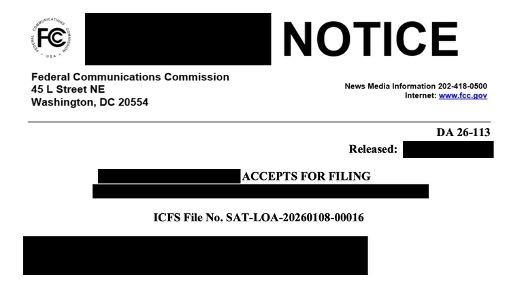
What’s under the black bars could change your life forever.
Elon quietly filed this document with the federal government.
And what’s inside could be bigger than Tesla, SpaceX, and xAI combined.
Big enough, I believe, to mint a record breaking wave of new “Musk Millionaires” over the coming years…
That’s because Elon is going after the largest cash pile in history.
Artificial Intelligence.
And what is in this filing proves he is about to make Bezos, Altman and Zuckerberg beg for mercy.
Look…
I called NVIDIA in 2008, Bitcoin in 2013, and his Super IPO years before they turned everyday Americans into millionaires.
And what Elon is doing next could be the biggest money making opportunity of them all.
Luckily, almost nobody knows this exists.
But it won’t stay quiet for long. Once it goes mainstream, your chance to get in early is gone.
If you missed out on Tesla…
If you missed out on Bitcoin…
If you missed out on NVIDIA…
>>> DON’T MISS THIS ONE TOO <<<
>>> CLICK HERE TO SEE HOW YOU CAN GET IN ON ELON’S NEXT MILLIONAIRE MAKER <<<
This could be your final shot to make up for every other opportunity you’ve missed.
Don’t let one more click and two more minutes of your time be the reason you miss out again.
Regards,
James Altucher
Constellation Energy Reports Monday. Nuclear Meets the Data Center Supercycle.
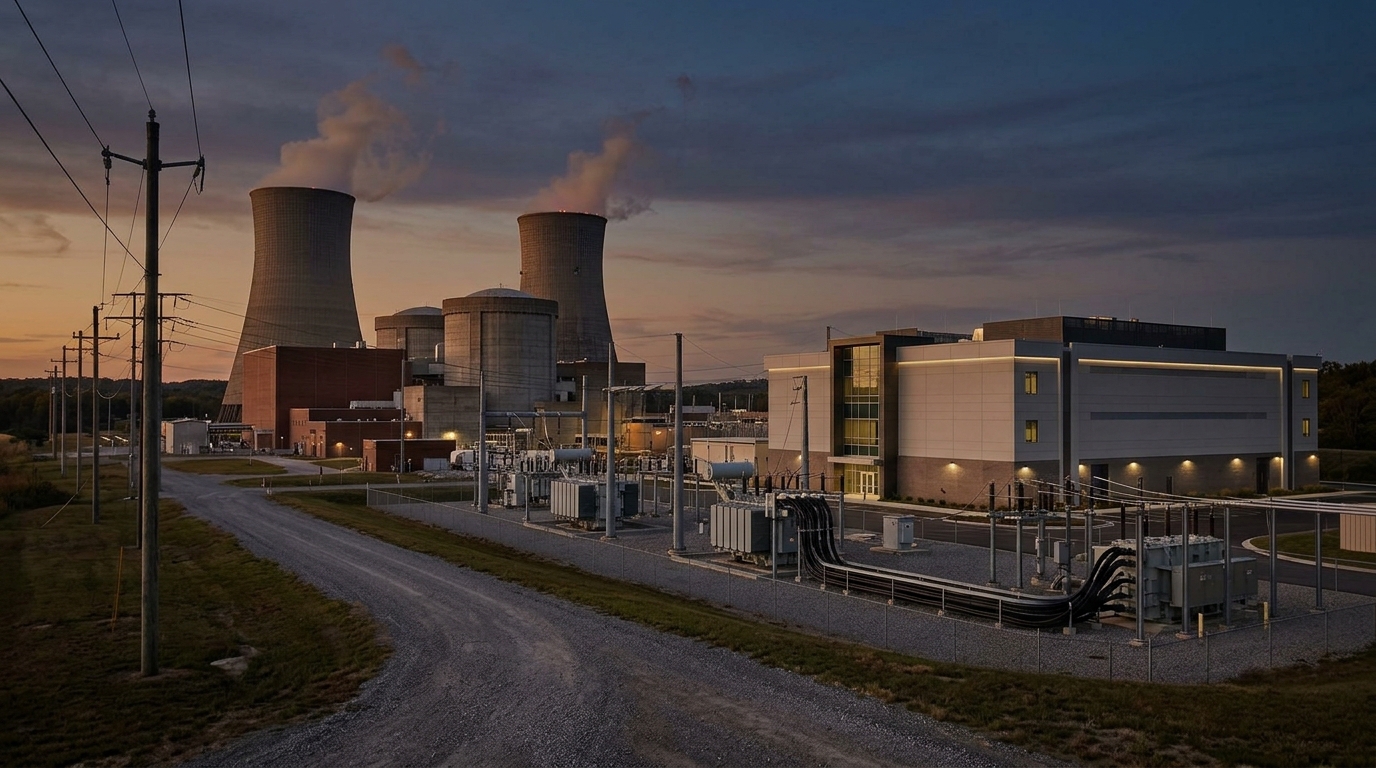
Most power companies had a good October. Constellation Energy had a great one, outperforming the broader utility sector as capital rotated hard out of technology. It reports Q3 earnings Monday morning before the open, and the number that matters most is not EPS.
Analysts expect Constellation to post earnings of about $3.7 per share on revenue of about $9.2 billion. Independent estimates forecast EPS of $3.88, marking roughly a 20% year-over-year increase, and revenues of $9.35 billion, up about 40% from the prior year. The revenue jump is almost entirely structural: on January 7, 2026, Constellation completed its acquisition of Calpine Corporation in a cash-and-stock deal valued at about $22 billion (about $26.6 billion including assumed debt), creating a combined generation fleet of roughly 55 gigawatts.
What Monday’s call will reveal is whether that combination is delivering on its promise. The theory was straightforward: uniting a zero-emission nuclear fleet with Calpine’s natural gas and geothermal generation builds the foundation for powering data centers, advanced manufacturing, and critical AI infrastructure. By integrating Calpine’s flexible gas assets with its nuclear fleet, Constellation can offer blended power products that meet around-the-clock needs, though claims of “100% carbon-free” power backed by gas depend on how a contract is structured and what attributes are being sold. Few peers can match the scale of that combined platform.
The data center pipeline is already paying out in contracts. In February 2026, Constellation said Calpine signed a 380 MW agreement with CyrusOne to connect a new data center adjacent to the Freestone Energy Center in Texas, providing the developer with power, grid connectivity, and site infrastructure while keeping electricity flowing to the regional grid. An exclusive Phase 2 agreement adds another 380 MW, on top of earlier 400 MW Calpine-CyrusOne agreements at the Thad Hill Energy Center that were announced in the second half of 2025.
Historically, CEG has beaten earnings estimates in seven of its last eight quarters. Over the trailing four quarters, Constellation beat the EPS consensus in three of four, delivering an average surprise of about 4%. The base rate for a beat is favorable. The question is whether guidance impresses: the company lifted its full-year adjusted operating earnings guidance to $11.50 to $12.50 per share after Q2, while locking in another 920 megawatts of long-term power purchase agreements running 15 to 20 years.
The risks are worth pricing in. Integration costs for a roughly $22 billion acquisition do not disappear in two quarters. Q3 earnings are expected to have benefited from Calpine’s generation assets and higher PJM capacity revenues, but increased operating, maintenance, and interest expenses tied to the expanded portfolio may have partially offset growth. Any guidance reduction Monday would hit harder than a simple EPS miss, given the premium the stock commands.
Wall Street remains broadly constructive, but the exact mix of ratings, analyst count, and average price target moves day to day and varies by data provider. Rather than a single point estimate, the takeaway is simpler: the Street’s average target sits meaningfully above the recent share price, and the stock’s trailing P/E is in the mid-20s based on recent pricing and trailing earnings.
Utility earnings reports this cycle are being read less as income statements and more as AI infrastructure scorecards. NextEra’s Q2 report showed how quickly a large-load pipeline can re-rate a utility’s valuation multiple.
Constellation is the cleanest intersection of two durable themes: power demand from AI and the institutional push for carbon-free electricity. The Calpine deal either makes it the dominant platform for that trade or turns into a costly integration story. Monday morning, November 9, 2026, before 9:00 AM ET, is when the evidence starts arriving.