October 6, 2026
Bonus Content: Goldman Sachs Reports in 7 Days. The Stock Is 23% Off Its High.
Below is an important message from one of our highly valued sponsors. Please read it carefully as they have some special information to share with you.
Dear reader,
James Altucher here…
For the last twenty years, I have been making predictions that so-called “experts” insisted would never happen.
In 2007 I went on live TV and said Facebook would be worth over a hundred billion dollars. The anchors laughed at me on air.
A few years later I called Apple’s run to a trillion, and got the same reaction.
Now I am making one of my biggest predictions yet. And it starts with recent drone footage of one of Elon Musk’s rapidly expanding production facilities.
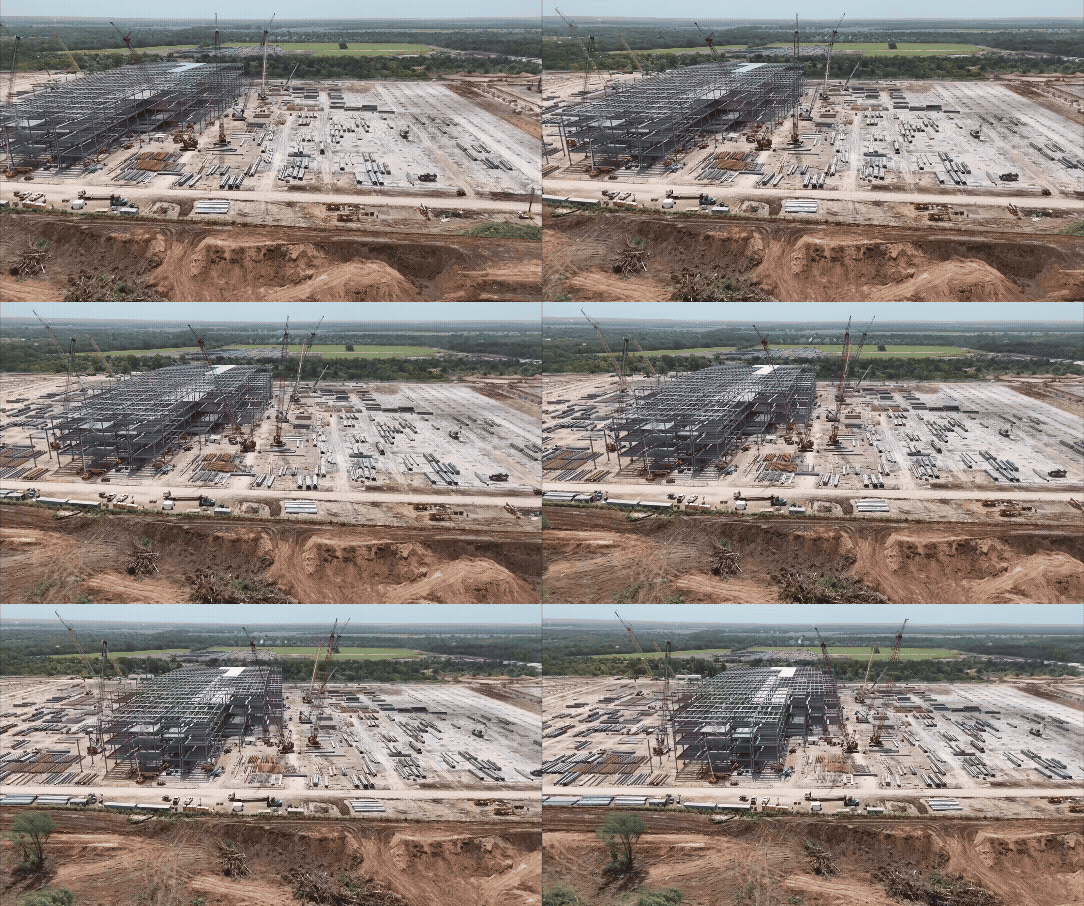
What he is building inside is not an electric car, a solar panel, or a rocket ship. It is something Elon calls an “infinite money glitch.”
And Elon is predicting it will be the biggest product in history. Not just the biggest Tesla or SpaceX product. The biggest, period.
It could enter production in the coming days. And based on data from the Dallas Fed, this could become a nearly $2 quadrillion opportunity by 2040.
It sounds insane, and you have to see it to believe it. So, I put the whole story, and the footage, into a short presentation.
Watch it immediately. Because once that factory turns on, the secret is out.
[ ▶ Watch the presentation here ]
Regards,
James Altucher
Goldman Sachs Reports in 7 Days. The Stock Is 23% Off Its High.
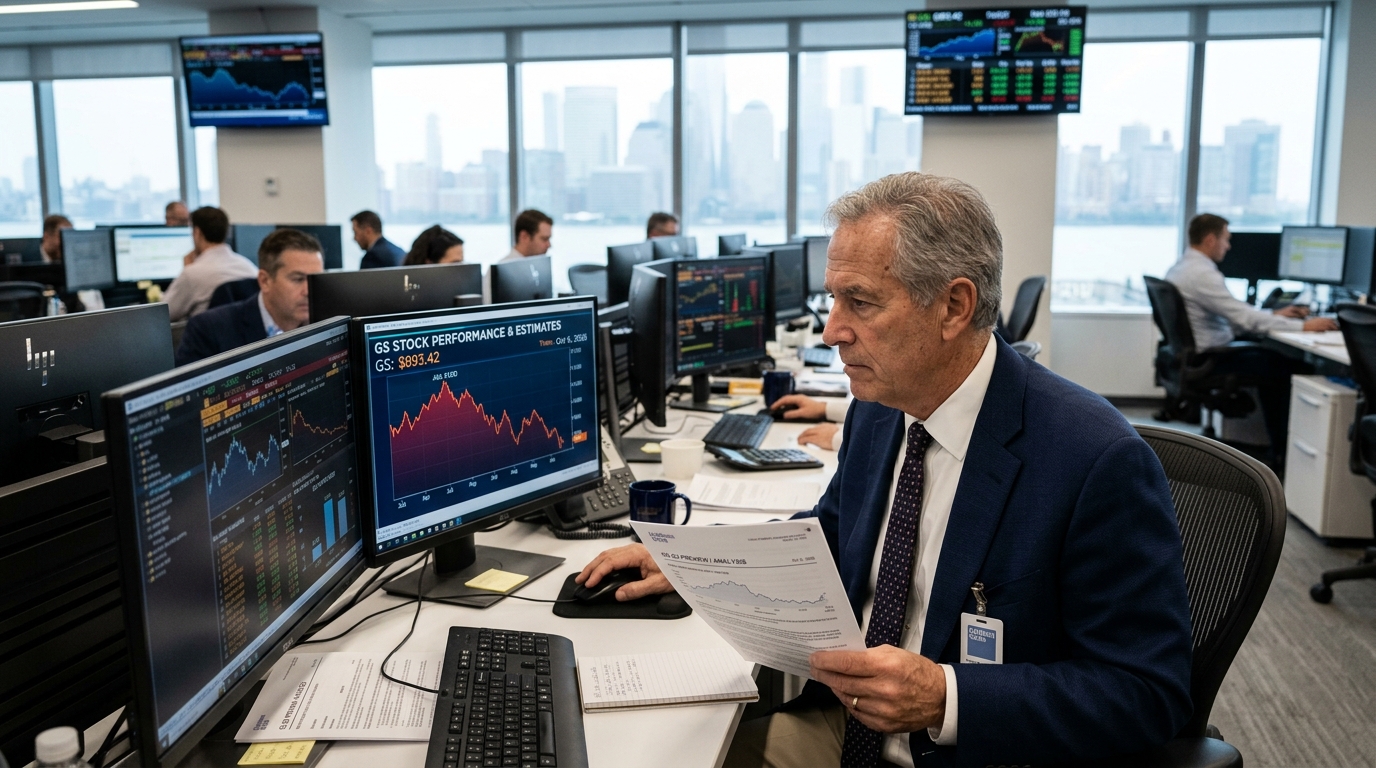
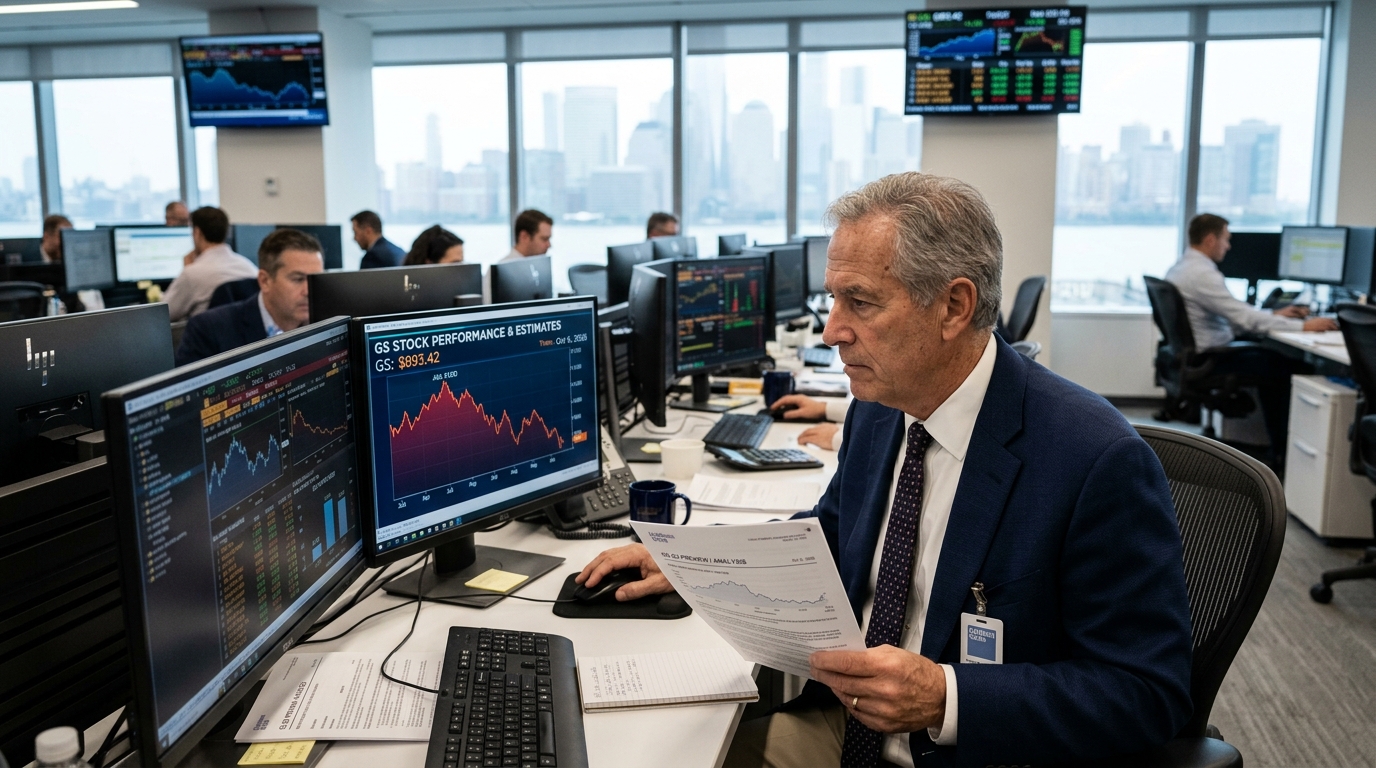
Goldman Sachs (GS) trades at $893 today and is expected to report Q3 2026 earnings on October 13, before the open. Seven days. The stock sat above $1,150 in July. That gap is the opportunity.
Why This Stock Now
The pullback has nothing to do with Goldman’s business. September was rough for financials across the board as Treasury yields surged to their highest levels in more than two decades, compressing bank multiples and spooking rate-sensitive investors. Goldman’s actual franchise kept running. The question October 13 answers is whether the engine was still firing through the summer months, when capital markets historically slow.
The Business
Goldman is the purest play on Wall Street activity among the major banks. Global Banking and Markets generates the majority of revenue: advisory, underwriting, equities, and fixed income. Asset and Wealth Management is the durable complement, with fee income that doesn’t vanish when deal flow dips. The firm’s consumer detour is essentially over: Goldman announced in January 2026 that it agreed to transition the Apple Card program to JPMorgan Chase, substantially completing the narrowing of its consumer focus.
That refocus matters. Goldman spent several years proving it could be a consumer lender. It will spend the next several proving what it always was: the best capital-markets franchise on earth.
Why Wall Street Is Paying Attention
The Q2 2026 results were extraordinary. Goldman reported diluted EPS of $20.98 on revenue of $20.34 billion, beating consensus by roughly $6.51 per share, or about 45%. Investment banking fees jumped 55% year over year, equities net revenues hit a record, and the stock jumped more than 8% on that release.
Since then, it has given back all of those gains and more. The 52-week range tells the story: $740 to $1,154. The current price sits closer to the floor than the ceiling, despite earnings per share running at a trailing rate of around $65. That puts the stock at roughly 14 times trailing earnings. And with Q2 annualized return on equity at 23.5%, the valuation still looks restrained for a franchise that can deliver that level of profitability in a strong tape.
What’s Driving the Opportunity
Three things converge heading into October 13. First, an M&A pipeline does not evaporate in the third quarter: it converts to fees over several months. Second, equities volatility in September was elevated, which historically supports trading revenue. Third, IPO activity picked up in 2026, with a broader reopening of issuance that has supported underwriting opportunities for the banks that lead those deals.
Consensus for Q3 EPS sits around $15 to $16 per share, up about 26% year over year from $12.25 a year ago. Goldman has beaten consensus in each of the last four quarters. If it does so again, the stock is priced to react well.
What Could Go Wrong
The seasonal argument cuts both ways. Investment banking is genuinely slower in August and September. If advisory fees disappointed and trading desks ran lean, Q3 could land below expectations even with a healthy pipeline. Fixed-income trading is sensitive to yield volatility, a headwind or tailwind depending on positioning.
Valuation is not the primary risk. But the stock has shown it can re-rate quickly on macro anxiety. A credit event, a Fed surprise, or a sudden cooling in deal activity could extend the slide regardless of what October 13 shows.
The Bottom Line
Goldman Sachs is a business firing on nearly every cylinder, priced as though something has broken. Nothing has. The September selloff reflects yield anxiety, not franchise deterioration. At $893 with earnings in one week, the risk-reward tilts toward the upside. History says Goldman beats. The pipeline says the business stayed busy. Seven days is a short wait for the confirmation.