October 6, 2026
Bonus Content: Ithaca Energy’s $860m Canada Bet: Growth Engine or Liability Trap?
Dear Friend,
Every time Elon builds an industry, his suppliers get rich.
Piedmont Lithium signed with Tesla. It soared as high as 1,400%.
AST SpaceMobile rode SpaceX rockets. Up as much as 6,695%.
$5,000 in four Elon suppliers could’ve grown to more than $650,000.
Now he’s doing it a third time.
AI data centers in space. 1,000,000 satellites.
And one supplier gets paid on all of it.
Every Tesla. Every Starlink dish. Every satellite.
Dylan Jovine found it. He’s the guy who called Rocket Lab under $4 before it ran as high as 3,850%.
He calls this one Elon’s 100X AI Stock.
And he believes it takes off October 24th.
Get the name and ticker here >>
The Buck Stops Here,
Kelly Maguire
Behind the Markets
P.S. Missed Tesla? Missed SpaceX? This is your second chance.
Claim it before October 24th here >>
Ithaca Energy’s $860m Canada Bet: Growth Engine or Liability Trap?
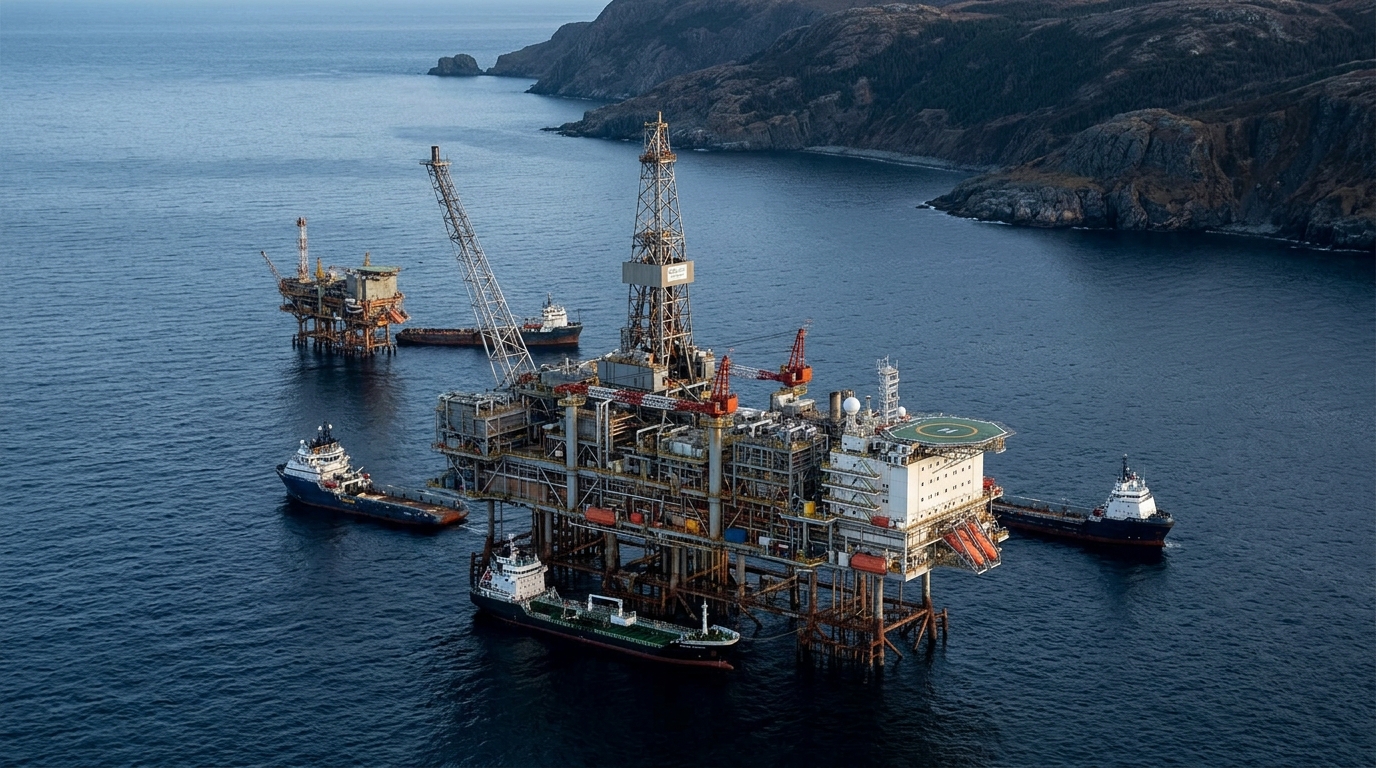
Ithaca Energy spent Monday as the standout performer across the FTSE 100. Shares in ITH closed up 3.70% at 285.50p, powered by a deal that marks a genuine strategic turning point for the Aberdeen-based company. Ithaca agreed to acquire Suncor Energy’s interests in the Terra Nova and White Rose oil assets offshore eastern Canada for $860 million in cash, marking its first international acquisition outside the UK.
The deal includes a 48% operated interest in Terra Nova, a 40% non-operated interest in the White Rose Existing Lands, and a 38.6% non-operated interest in the White Rose Growth Lands, including the West White Rose Extension. On top of the upfront cash, an extra $250 million is contingent on Brent crude, with payments linked to Brent oil prices over a 27-month period commencing July 1, 2026, including a trigger based on average Brent exceeding $80 a barrel over the 12 months to June 30, 2027, with lower thresholds in later periods.
Why This Stock Now
The acquisition answers a question Ithaca has faced since the UK government extended the Energy Profits Levy to 2030. Ithaca’s dealmaking has given it tax losses from past project spending that offset EPL liabilities, but the controversial measure still raises headline UK taxation to 78%, and is set to expire only on March 31, 2030 unless it ends earlier under the Energy Security Investment Mechanism. Canada operates under no such UK windfall tax. New Newfoundland production will be taxed under Canada’s conventional regime, which gives every marginal barrel acquired there a materially different economics profile than equivalent barrels extracted from the North Sea today.
The production numbers are the clearest argument for the bulls. The acquired assets are expected to add approximately 103 million barrels of oil equivalent in proved and probable reserves at around $8 per barrel, deliver average production of roughly 30,000 boe/d between 2027 and 2031, and lift Ithaca’s medium-term group production outlook to between 140,000 and 150,000 boe/d. West White Rose sharpens the near-term case further: first production is anticipated in Q3 2026, meaning Ithaca could be booking Canadian cash flow before completion even closes.
What Wall Street Is Weighing
Management indicated the acquisition is expected to be immediately accretive to both cash flow and dividends, a key consideration for a company already known for its high-yield shareholder returns policy. Ithaca’s parent, the Israeli-owned Delek Group, retains majority control, so dividend accretion matters directly to the controlling shareholder’s own cash flows, reinforcing confidence that management will follow through.
Financing looks manageable at first glance. Funding comes from cash, an undrawn reserve-based lending facility of $1.3 billion plus $500 million for letters of credit, and secured debt in Canada. Ithaca says leverage will rise but stay well below its ceiling. Completion is targeted for the first half of 2027, subject to Canadian approvals, with a $50 million break fee.
What Could Go Wrong
The bear case starts with decommissioning. Ithaca takes on all decommissioning obligations for the acquired assets. In the North Sea, that liability has already become a structural drag. Full-year 2026 net decommissioning cost guidance sits at $170 to $210 million for the existing UK portfolio alone. Layering Canadian end-of-life costs on top means that number grows as the Canadian fields age toward their own eventual shutdowns, even if the timeline is long.
Then there is Brent. Contingent payments kick in if Brent averages above $80 over the 12 months to June 30, 2027. That looks achievable today given Middle East tensions driving energy prices, but oil markets have a habit of resetting ambitions. A sustained slide below $80 removes the contingent cost while also compressing the free cash flow Ithaca needs to service the base $860 million and sustain its dividend. The two risks compound each other. Terra Nova is also an aging offshore field with a recently completed life-extension project, meaning production decline curves will steepen as the decade progresses.
The Bottom Line
Ithaca is making a rational escape from an increasingly taxed and decommissioning-heavy UK regime, using assets that carry long reserve lives and near-term production growth via West White Rose. The acquisition adds 103 million barrels of 2P reserves, with an estimated reserve life of about 17 years, as well as around 200 million boe of additional resources. At roughly $8 per barrel of proved and probable reserves, the entry price is disciplined. The inherited decommissioning tail is real, but it is long-dated, and the Canadian fiscal environment is meaningfully more favorable than the 78% EPL rate compressing North Sea returns today. For investors willing to accept the oil price dependency, ITH is a stock where the growth catalyst is live and already reflected in Monday’s price move, without being fully priced in.