October 6, 2026
Bonus Content: Caterpillar Hit $20.5 Billion in One Quarter. Power Generators Are Why.
They named me “Mr. 1,000%” for a reason:
Because I’ve called 51 different stocks that have gone up 1,000% or more.
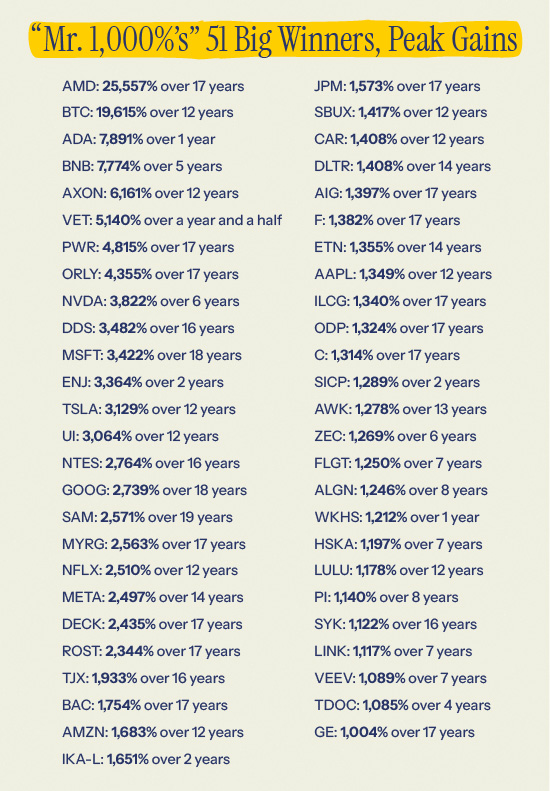
Including NVDA back when it was $6…
Now, 6 years later, it’s up more than 3,100%,
I also wrote up every single “Magnificent 7” stock before that name was even a thing.
Look: can you imagine grabbing 51 different 10-baggers?
Even ONE 10-bagger can be lifechanging.
And I’ve called dozens and dozens over my career.
That’s why you need to see the story on my #1 AI stock for right now.
To your wealth,
Matt “Mr. 1,000%” McCall
Head Innovation Strategist
Monument Traders Alliance
Caterpillar Hit $20.5 Billion in One Quarter. Power Generators Are Why.
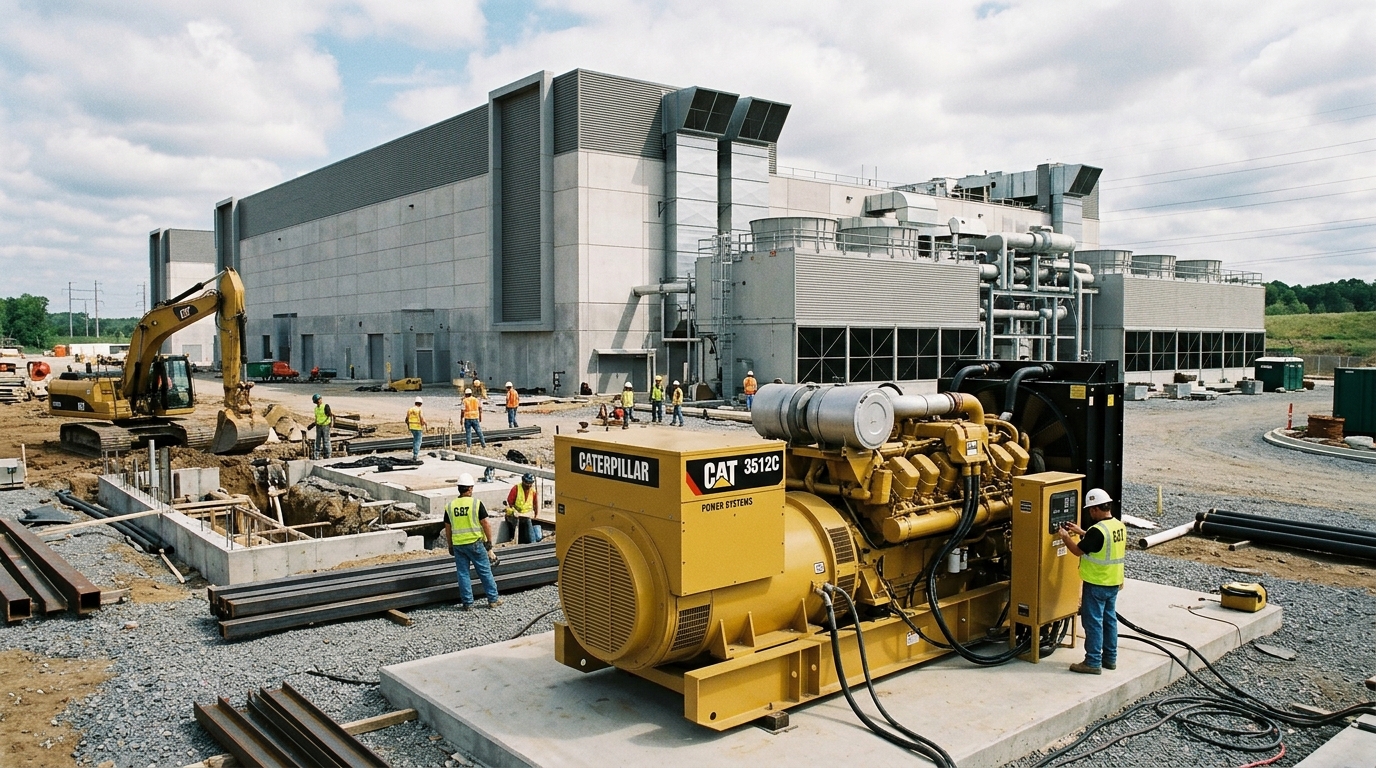
Caterpillar (CAT) set a company record in Q2 2026: $20.5 billion in sales and revenues in a single quarter. The stock trades around $849. It was above $1,073 in late June 2026. What the business is doing and what the market is paying are not telling the same story.
Why This Stock Now
Q3 2026 earnings are scheduled for October 29, 2026, with consensus EPS near $6.93. That would represent a step-down from Q2’s $8.17, and the market has largely priced in that expectation. What it has not fully priced in is a $72 billion order backlog, a $1 billion new factory announced September 30, and a power generation business growing faster than almost any segment at any industrial company in the S&P 500.
The Business
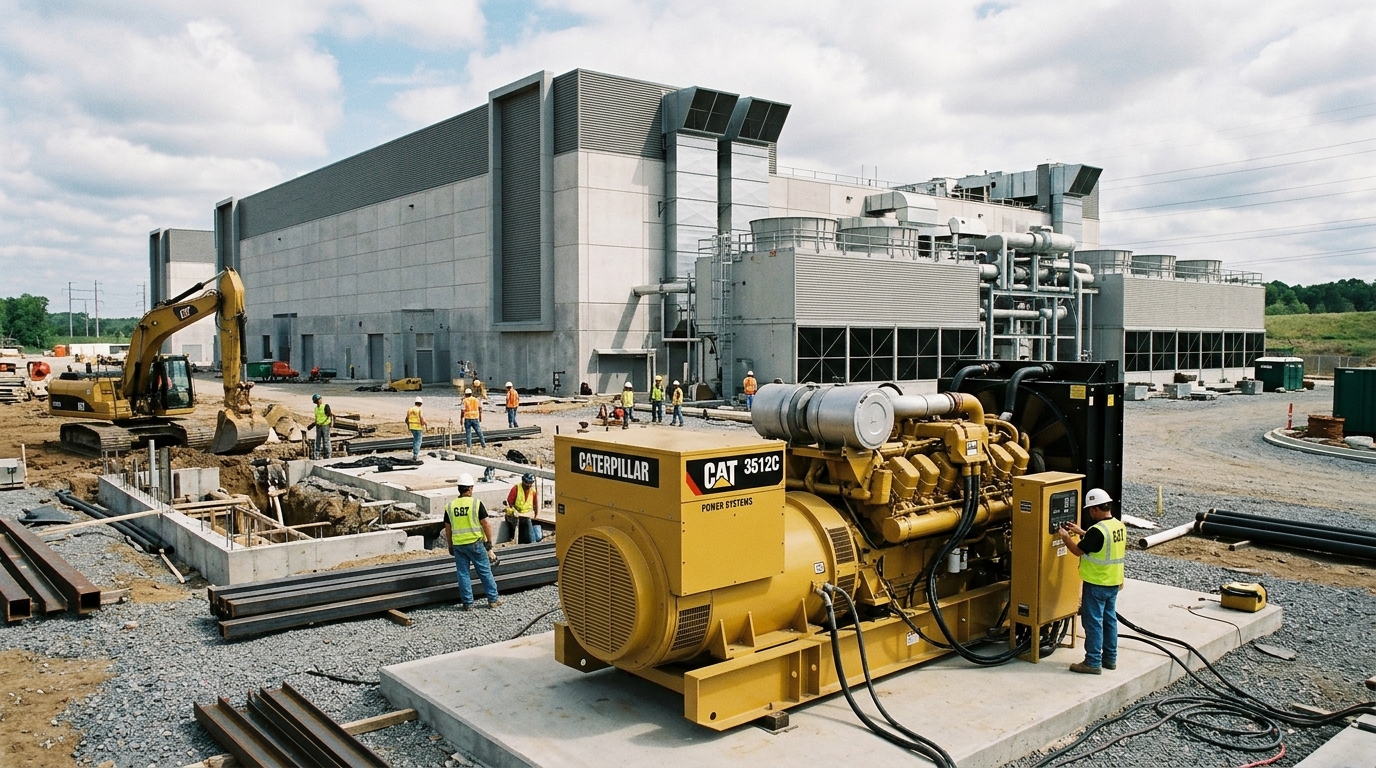
Caterpillar makes the machines that build things: excavators, bulldozers, large diesel engines, gas turbines. Its cyclical identity is being quietly rewritten. Data center developers now need Caterpillar’s large generator sets for on-site power, its heavy equipment to break ground and move earth at hyperscaler campuses, and its machinery for every phase of a project that spans several years. The company is the picks-and-shovels play on the AI buildout that does not appear on any technology stock screen.
Why Wall Street Is Paying Attention
Power generation retail sales grew 72% year over year in Q2. CEO Joe Creed attributed the surge to “very strong demand for large generator sets and turbines used in data center applications,” and said the company was not seeing customers slow down. Construction Industries revenue rose 35%, with North American sales up 50%, as Caterpillar cited higher-than-expected demand in the region. The order backlog jumped 92% year over year to $72 billion. Few industrial companies carry that kind of visibility.
Management raised full-year 2026 sales and revenue growth guidance to “mid-to-high teens” from “low-double-digit” after Q2, while simultaneously narrowing its view of the year’s net incremental tariff costs. Adjusted operating margin expanded to 21.9% from 17.6% a year earlier. Both improvements in the same quarter is rare at Caterpillar’s scale.
On September 30, the company announced a $1 billion investment to build a new manufacturing facility in Sanford, North Carolina, increasing production of compact track loaders and telehandlers. Caterpillar is not waiting for demand to arrive. It is building ahead of it.
What’s Driving the Opportunity
The stock has underperformed the broader market over the past three months as yield anxiety and industrial-sector rotation weighed on the group. The concern, articulated recently by Truist analyst Jamie Cook, is that AI-related construction spending could slow and that higher diesel and other input costs will bite into margins. Those are legitimate watch items. The $72 billion backlog represents customers who have already committed capital and are not waiting on interest rate clarity.
At roughly 31 times forward earnings, CAT is not cheap in an absolute sense. But the valuation reflects a business with about a 57% return on equity, expanding margins, and a growth driver spending at hundreds of billions annually across the hyperscalers. Earnings are expected to grow about 20% next year, from roughly $27 to roughly $33 per share.
What Could Go Wrong
If AI infrastructure spending plateaus or shifts toward smaller, distributed compute, the generator set and turbine business slows faster than backlog metrics suggest. Higher interest rates suppress non-residential construction broadly, which affects all three of Caterpillar’s primary segments. Tariffs remain about a $2.2 billion 2026 cost headwind management has contained but not eliminated. The premium multiple leaves limited cushion for a guidance cut.
The Bottom Line
Caterpillar is not a technology company, but it is participating in the AI infrastructure cycle as directly as any industrial name. The Q2 record, the $72 billion backlog, the 72% power generation surge, and the fresh $1 billion factory investment all point the same direction. The Q3 report will test whether the business can sustain that trajectory through a seasonally mixed quarter. Around $849 with the backlog it carries, Caterpillar’s own customers are answering that question every day they do not cancel an order.