
For a while now, I’ve been showing regular traders like you how to take advantage of a specific 60-minute window…
One that lets us go after 50% returns every morning – whether the market opens higher… or lower.
Here’s what I mean…
If you had spotted this 60-minute opportunity yesterday morning… all you would’ve had to do was place a quick trade before 10 am…
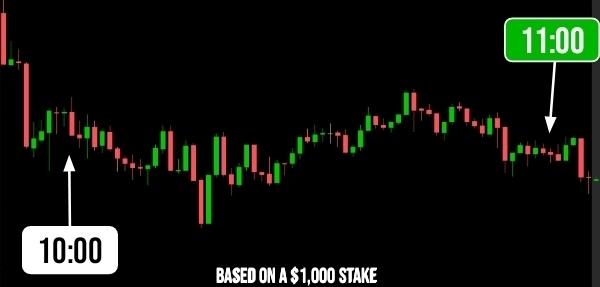
Went ahead with your morning plans and when you return a couple of minutes later, there’s a good chance you’d find $500 in extra income sitting in your account (on a 1k stake)
It wouldn’t have mattered what happened with the overall market… this 60-minute window would have been all you needed to target cash.
Today? Same story.
Place a quick trade, grab your coffee… and let the setup do the heavy lifting.
And just 60 minutes later… come back to what could be a nice $500 in extra income sitting in the brokerage account.
I designed the setup to be that straightforward.
Granted, there will be trades that won’t work out
But if you want in?
Toyota Is Taking Market Share While GM and Ford Hand It Away
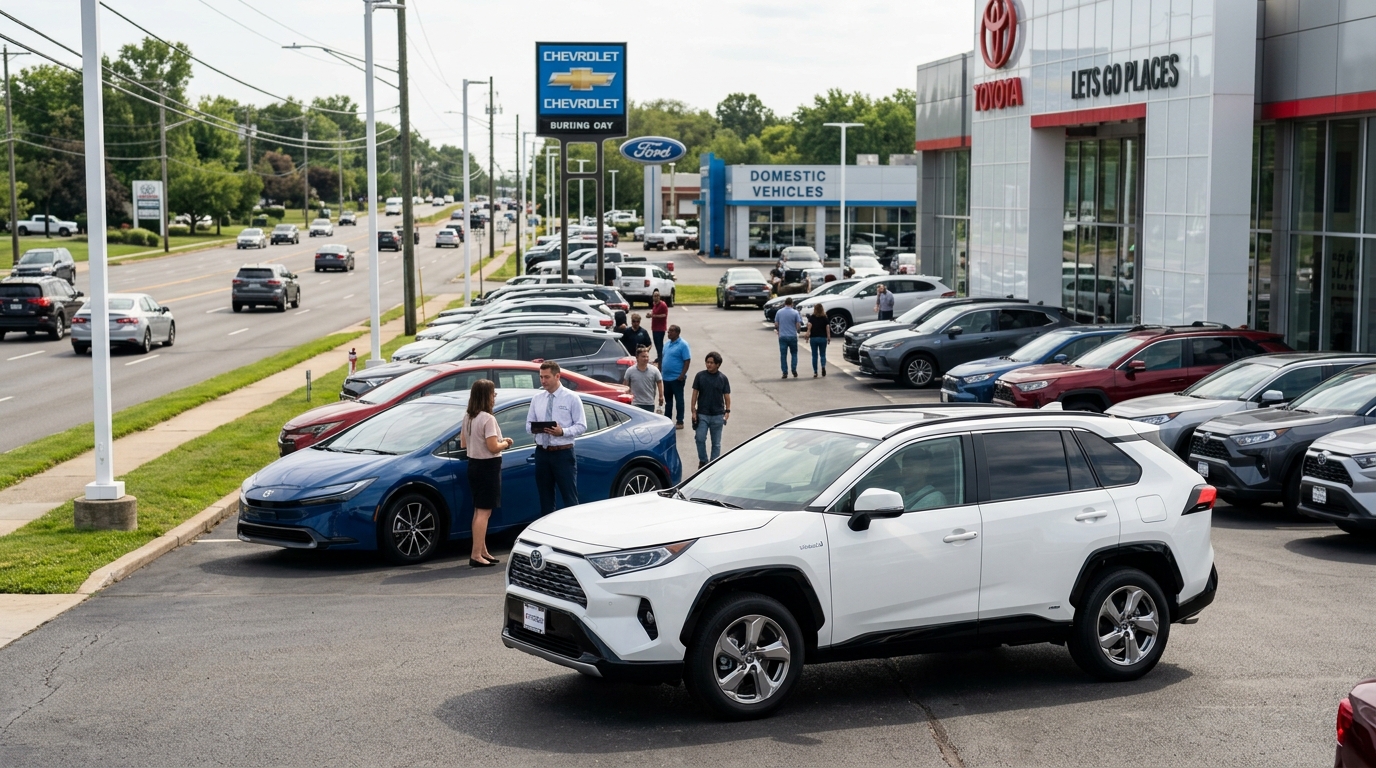
The September sales numbers are in, and the distance between Toyota and its American rivals is widening fast. Toyota Motor North America sold 201,306 vehicles in the US last month, up 8.4% by volume year over year. That headline number understates what is actually happening at the product level.
Toyota’s electrified vehicle segment surged 37.8% to 117,215 units, accounting for 58.2% of total sales. The Toyota division alone hit an all-time best electrification mix of 61% for the month. These are not fleet units padded with rental orders. They are retail buyers choosing hybrids and plug-in hybrids at a time when alternatives are harder to finance and fuel is expensive.
The broader industry managed only a fraction of that momentum. Total new-vehicle sales for September 2026 are projected to reach 1,330,100, a 2.6% increase year over year, according to the joint JD Power and GlobalData forecast. Toyota grew at more than three times that pace. Average incentive spending per vehicle across the industry is trending toward $3,574, a 7.3% increase from a year ago, with incentives as a percentage of MSRP hitting 6.9% in September, up 0.4 percentage points from September 2025. Toyota is growing without matching those discount levels.
Why GM and Ford Are Losing Ground
General Motors’ US sales have dropped more than 6% year over year through the first nine months of 2026, according to Cox Automotive forecasts cited by Reuters. GM dealers have said some of their customers switched to other brands because GM has few hybrid options for mainstream buyers. Ford’s situation is similarly uncomfortable. Ford’s vehicle sales are expected to drop 8.8% through the first three quarters of the year, which would knock its market share down nearly a full percentage point to 12.5%. Ford’s sales have been pressured in part by the wind-down of the Escape compact SUV nameplate, and by lower pickup-truck production after a fire at an aluminum supplier disrupted supply.
Toyota is threatening to surpass GM as the US market leader by year end, according to industry commentary around third-quarter market-share trends. That gap looked insurmountable a year ago.
What’s Driving the Opportunity
The hybrid advantage is structural, not cyclical. Reuters has reported that automakers with several hybrid models have fared better this year amid higher gas prices tied to the Iran war. Toyota built that portfolio over two decades. Its competitors are still catching up on product and cannot close the gap in one model cycle.
The financial calendar adds urgency. Toyota will release its next earnings report on November 4, 2026. The August quarter beat was significant: Toyota reported earnings of $7.57 per share versus a $4.68 estimate, a roughly 62% beat. September’s sales performance gives the company real momentum heading into that print. Third-quarter US volume of 633,223 vehicles was up only 0.6% versus a year ago, but September’s late surge and the accelerating electrified mix suggest the quality of that volume improved materially.
What Could Go Wrong
Toyota carries real risks. US tariffs remain a cost headwind for Japanese manufacturers shipping into the American market, and the company has acknowledged that pressure in prior earnings calls. Currency is a secondary drag: a stronger yen reduces the yen value of dollar-denominated revenue when translated back to the home currency. Recent Toyota financial results have shown that profits can fall year over year even when sales are resilient, a reminder that top-line share gains do not automatically translate into earnings growth when costs are moving against you.
Valuation is not obviously cheap for a mature automaker. Investors who buy Toyota here are paying for continued hybrid-led share gains and a credible November earnings catalyst, not a deep-value recovery.
The Bottom Line
Among the major auto stocks, Toyota is the one with the wind at its back right now. Rivals are discounting to hold volume; Toyota is growing volume without matching those discounts. The hybrid portfolio is the most durable competitive asset in the US market today, and five weeks from earnings, the risk-reward skews toward the company that is actually taking share. GM and Ford can tell a recovery story later. Toyota is delivering one now.