When a company loses nearly a quarter of its market value in a single session, the follow-up messaging matters enormously. Enova International’s (ENVA) follow-up was an unusual one: abandon a major strategic acquisition and, in the same press release, promise to return more cash to shareholders.
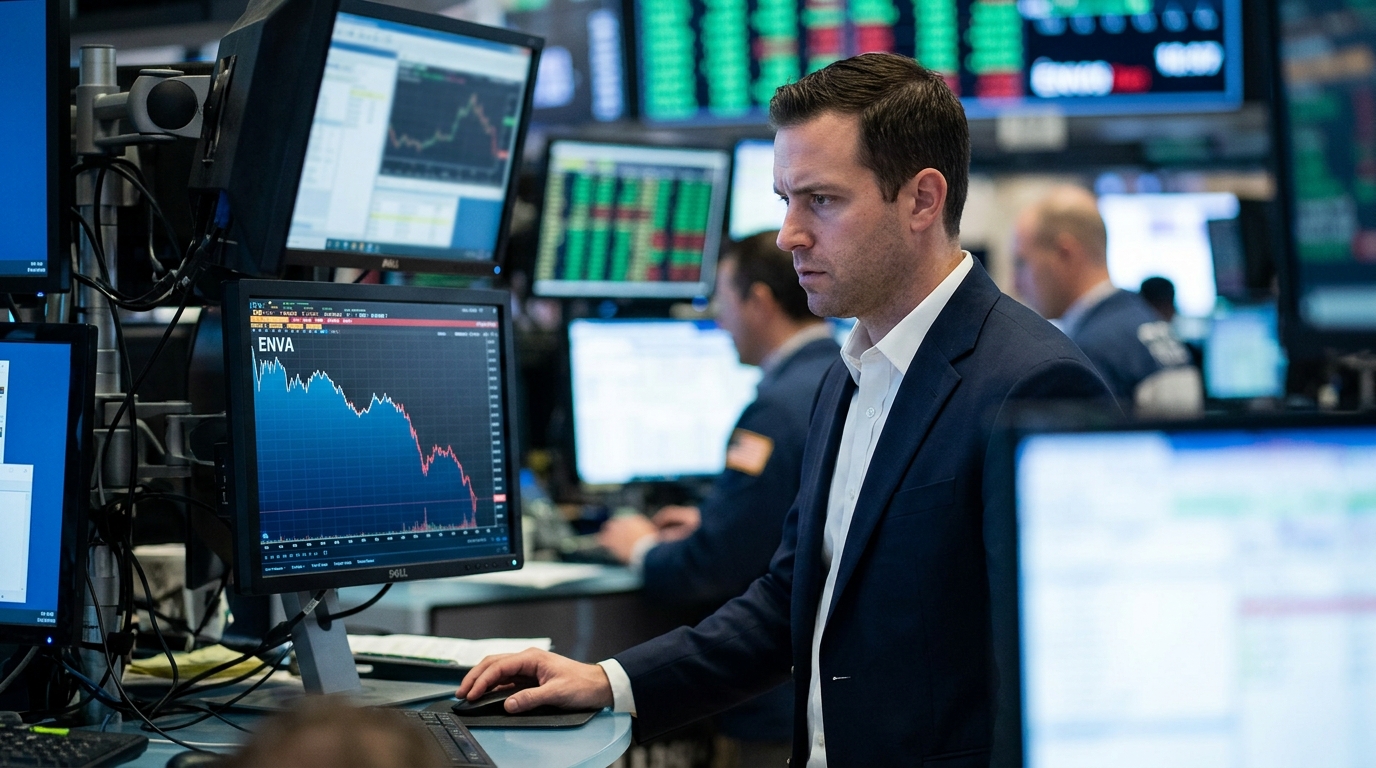
On September 14, Enova announced it had withdrawn its applications with the Office of the Comptroller of the Currency and the Board of Governors of the Federal Reserve System related to the proposed acquisition of Grasshopper Bancorp. ENVA shares fell $53.11 the following session, a drop of roughly 23%, closing at $173.61.
Enova had been pursuing Grasshopper to obtain a bank charter, which can bring steadier funding through insured deposits and easier access to the payment system. That funding advantage is exactly what separates SoFi (SOFI) and LendingClub (LC) from pure nonbank lenders today. SoFi’s acquisition of Golden Pacific Bancorp was positioned as a path to operating SoFi Bank, N.A., bringing funding economics in-house, while LendingClub’s acquisition of Radius Bancorp followed the logic of pairing a digital lending franchise with a regulated bank balance sheet. Enova was attempting the same trade. It failed.
Enova said it pulled the applications because unclear standards for nonbank applicants and susceptibility to political and advocacy pressures made continuation unattractive. CEO Steve Cunningham put it plainly: “Without clearly articulated standards, the process is susceptible to political pressure and outside advocacy, rather than being guided strictly by the statutory factors that should govern it.” That is a credible grievance. Industry coverage has reported that, in 2026, over 30 neobanks, digital asset companies, lenders, investment firms, and payment providers have undergone the bank charter process through federal regulators, and that the OCC has also started publishing charter denials and returning some applications without a decision. The path is real but not guaranteed.
What makes Enova’s situation harder to read is the pairing of retreat with capital return. CFO Scott Cornelis said current growth and credit trends give management confidence in its outlook, and that the company intends to accelerate share repurchase activity for the remainder of 2026. As of June 30, Enova had $218 million available for repurchases under its senior note covenants and $349 million available under its current Board authorization, which expires June 30, 2027.
The company expects third-quarter revenue growth of around 25% and adjusted EPS growth of roughly 30% year-over-year, with full-year 2026 guidance calling for revenue growth of 20% to 25% and adjusted EPS growth of 30% to 35%. Those are strong numbers. But the market is now pricing Enova without the Grasshopper catalyst. The acquisition had been expected to drive first full-year adjusted EPS accretion of 15% or more, and to exceed 25% once the full benefits were realized. That accretion is now gone.
So the question every Enova shareholder should answer for themselves: is accelerating buybacks at a lower share price a sign of genuine financial strength, or is it the most palatable option left after a strategic plan collapsed? Both can be true simultaneously. Companies with real earnings momentum do buy back shares opportunistically. They also sometimes reach for buybacks when they have run out of better uses for capital.
Enova’s underlying lending business, built on machine learning and analytics serving nonprime consumers and small businesses, remains intact. The core model does not require a bank charter to generate strong earnings. Management has reiterated that Enova’s growth strategy does not depend on becoming a bank. What it does require is a cheaper and more stable funding base over time, and that structural gap has not narrowed.
The buyback is real capacity. Whether it compensates for losing the Grasshopper thesis depends on what you believed that thesis was worth. If you owned Enova for its lending engine, Tuesday’s pullback may look like an entry point. If you owned it for the bank transformation story, the position deserves a hard reassessment.