
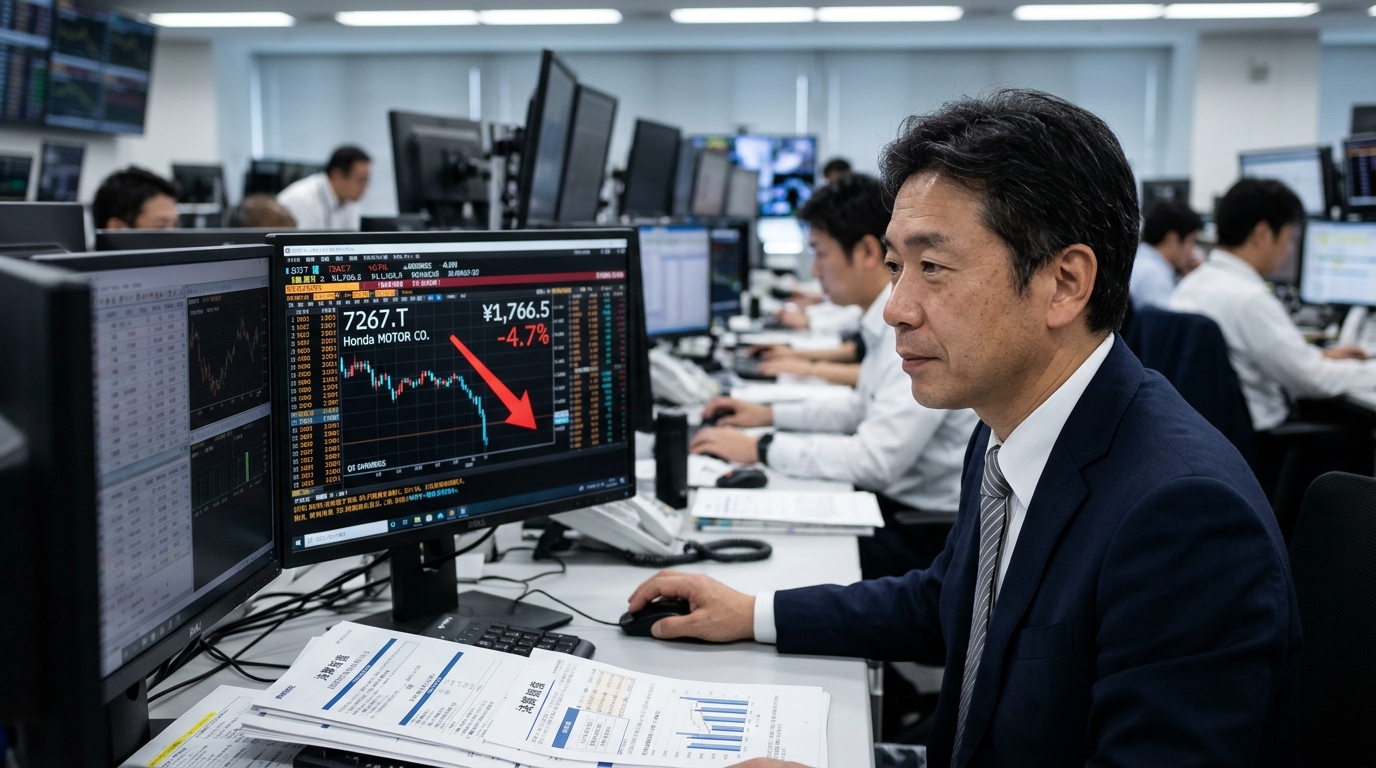
Markets punished Honda on Tuesday for delivering exactly what a restructuring announcement is supposed to look like: a painful one-time cost, a cleaned-up balance sheet, and a raised outlook on the other side. Honda Motor stock fell 4.7% to ¥1,766.5 on Wednesday after the company’s fiscal second-quarter earnings release delivered a guidance upgrade that fell short of what analysts had anticipated. That reaction is understandable. It is also worth questioning.
The Business
Honda is two companies inside one ticker. The first is an auto manufacturer navigating a painful EV strategy reset in China. The second is the world’s largest motorcycle producer, combined with a North American hybrid operation that is running hot. Record motorcycle volumes of around 20.57 million units in fiscal 2025 and a 21.3 million unit forecast for fiscal 2026 represent roughly 40% of global market share. That is not a niche business. It is a cash engine that most auto-focused investors consistently undervalue when scanning the headline numbers.
Motorcycle segment revenues came in at roughly ¥969.1 billion in the quarter, up about 17% year over year, while operating profit from that unit reached ¥179.2 billion, up about 14%. Those are not distress-era numbers.
Why Wall Street Is Paying Attention
Management raised full-year operating profit guidance to ¥780 billion from ¥650 billion and lifted the net profit outlook 25% to ¥500 billion, but the revised target remained below the QUICK Consensus average estimate of roughly ¥585 billion held by 16 analysts. That gap drove the selloff more than the results themselves.
Guidance gaps driving selloffs on earnings day are a recurring pattern across the auto sector right now. GM faced the same scrutiny heading into its Q3 report, where analysts questioned how much of the headline number was genuinely earned.
Analysts also noted that because first-half net profit already exceeded the full-year guidance figure, the implicit outlook for the second half pointed to a net loss, adding a layer of caution to an otherwise upbeat headline number. That concern is legitimate. It is also the reason the stock is worth examining at current levels rather than avoiding.
What’s Driving the Opportunity
The core argument here is simple. First-half adjusted operating profit excluding EV-related losses reached ¥1,133.6 billion, supported by motorcycles and North American hybrids. That is the business without the write-off noise. It grew 71.3% year over year on a yen that averaged about 159 to the dollar, and it is the foundation management is now betting on.
Honda plans to reallocate more development and production resources into hybrid models currently in high demand, with next-generation hybrid models launching from 2027 onward. The company is targeting a cost reduction of more than 30% on that next-generation hybrid system compared to the 2023 version. Honda also plans to build a new auto production plant in Ohio, lifting North American capacity to 1.91 million vehicles by 2029 from 1.67 million, with expectations that U.S. hybrid demand will continue to grow.
Honda has already booked about 93% of its full-year EV-related loss forecast in this quarter. The worst of the restructuring bill, in other words, is largely behind it.
What Could Go Wrong
The yen is a significant variable. Much of the first-half profit improvement came from a weaker currency, and any reversal would compress reported earnings quickly. China remains a drag, with automobile demand in the region continuing to soften. Honda kept its full-year EV-related loss estimate at ¥520 billion and expects ¥360 billion in cost increases, which it will work with suppliers to reduce. That supplier negotiation carries execution risk. And management’s own guidance implies a weaker second half, so any further deterioration in motorcycle demand or North American auto sales could make the raised outlook look optimistic fast.
The Bottom Line
Honda’s current Price-to-Sales ratio is approximately 0.32 to 0.33, roughly in line with recent-year averages. The stock is not pricing in a smooth recovery. It is pricing in continued skepticism. If the motorcycle and hybrid divisions keep growing at the pace they demonstrated in the first half, and the EV losses now mostly in the rearview mirror stop weighing on reported numbers, the gap between what Honda earns and what the market believes it earns should narrow. The 4.7% drop on guidance-raise day created that opportunity. Whether it lasts is a second-half question.