

November 1, 2026
Bonus Content: AppLovin Is Down About 70% From Its High. Wednesday’s Numbers Have to Explain Why.
Dear Reader,
Back in 2001, a sleepy South African newspaper company did something strange.
It bought a 46% stake in a tiny startup almost nobody had heard of.
That startup was Tencent.
Three years later Tencent went public and became a global giant.
And that boring newspaper stock?
A $5,000 investment could have grown to more than $75,000 inside a decade.
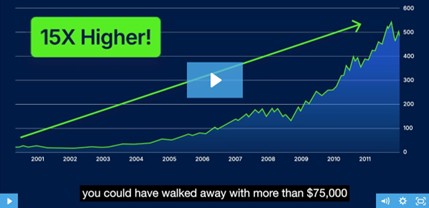
Fifteen times your money… on a company most people would have laughed at.
One tech legend calls this a “Second IPO”, and he says it’s about to happen again.
Click here to watch how these “Second IPOs work >
And the ticker symbol of the company that could be next.
Yours in smart speculation,
Stephen Prior, Publisher
Monument Traders Alliance
AppLovin Is Down About 70% From Its High. Wednesday’s Numbers Have to Explain Why.

AppLovin reports Q3 results after the close on Wednesday, arriving as one of the more unusual mismatches in the market: a company growing revenue above 50% year over year, generating free cash flow above $1.3 billion per quarter, expanding into a new vertical already gaining share, and trading about 70% below its all-time high near its 52-week low.
Analysts expect about $2.08 billion in Q3 revenue, up from $1.41 billion a year ago. EPS consensus sits around $4.04, compared to $2.45 in the year-ago quarter. The company itself guided for $2.055 to $2.085 billion. AppLovin has beaten EPS estimates in each of its last four quarters.
Why This Stock Now
The gap between what this business produces and what the stock reflects is the primary thesis. In Q2, AppLovin reported $1.92 billion in revenue, a 53% year-over-year increase, with adjusted EBITDA margin at 84% and net income of $1.27 billion, up 55%. Free cash flow in Q1 reached $1.3 billion. The company repurchased $2.2 billion of its own shares in 2025 and added $3.2 billion to its buyback authorization. At current prices near $229, the stock trades at roughly 18 times trailing earnings, a multiple that implies the growth story is finished. The numbers say otherwise.
The Business
AppLovin runs the Axon AI advertising platform, built over a decade in mobile gaming where it became a dominant performance ad engine. In June 2026, the company opened AppLovin Ads, powered by Axon, to all advertisers via self-serve access. A Jefferies survey of 30 e-commerce and web advertisers in Q2 found that AppLovin’s share of their ad budgets grew 169 basis points from Q4 2025, reaching 11.1% of spend, just ahead of TikTok. Management estimates the non-gaming advertising market is five to ten times larger than gaming.
The company divested its video game apps business in 2025, reducing the business to a single high-margin advertising platform. First-half 2026 adjusted EBITDA of $3.17 billion against $3.77 billion in revenue reflects a margin structure most software companies never approach.
What Could Go Wrong
The stock’s decline is not random. A securities fraud class action filed in 2026 alleges the company misled investors about aspects of its AI advertising model development and product readiness, creating legal overhang. The e-commerce expansion remains in early innings, and Q3 is the first full quarter after the June opening of self-serve access. If Q4 guidance disappoints, the stock has room to fall further from an already depressed level. Weak sentiment after a large decline can keep a stock cheap long after fundamentals would otherwise argue for a recovery.
The legal overhang compounds a dynamic the market has punished repeatedly this cycle. A stock can beat every earnings metric and still lose $175 billion in market cap when guidance or sentiment shifts against it.
The Bottom Line
AppLovin is growing revenue above 50%, producing more than $1 billion in quarterly free cash flow, expanding into a market several times its original size, and trading near a 52-week low. The 33 analysts covering the stock carry a median 12-month price target near $458, with estimates ranging as high as $790. Wednesday’s Q3 results, specifically Q4 revenue guidance and any commentary on e-commerce momentum, will determine whether this year’s selloff was a reset worth owning or a signal that the market has seen something the quarterly numbers have not yet shown.