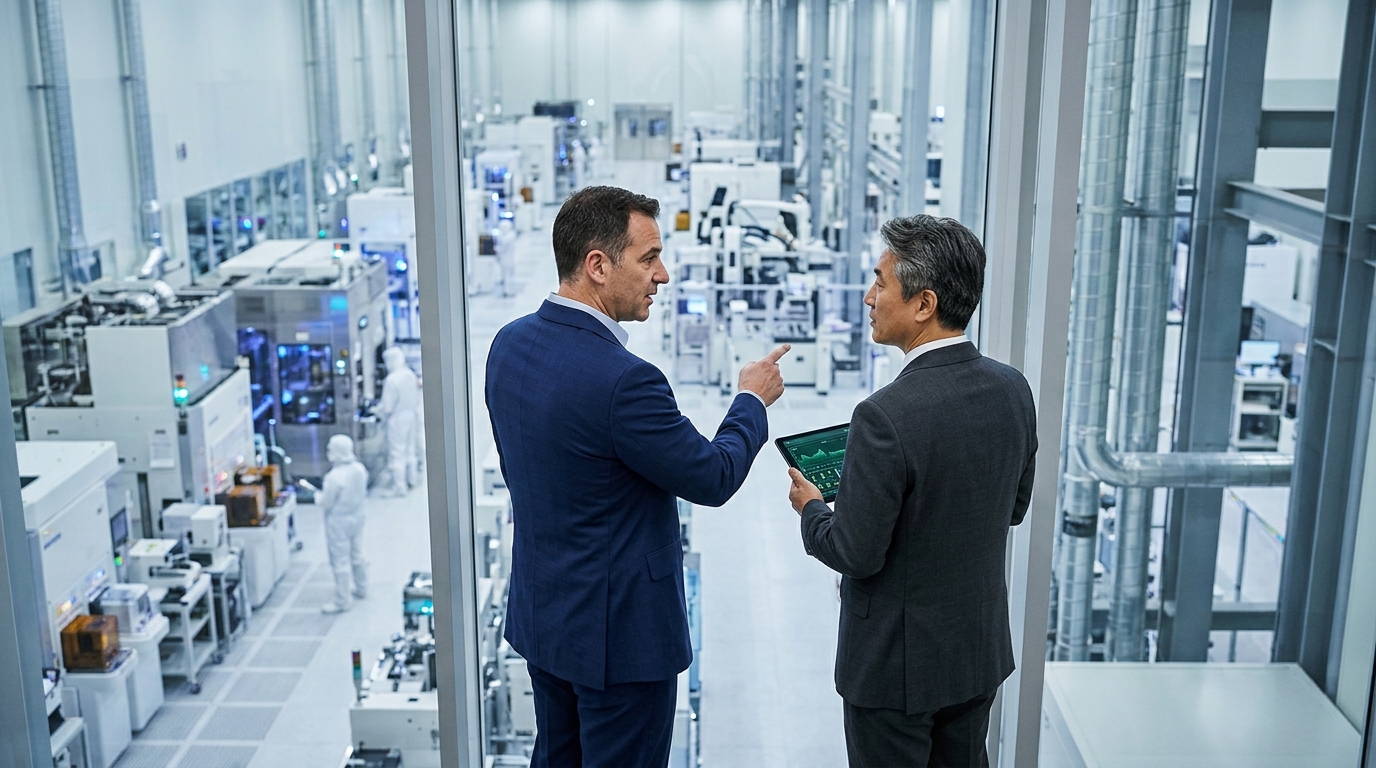
The number already on the scoreboard is extraordinary. Samsung’s third-quarter sales climbed to about 195 trillion won, while operating profit came in at 107.3 trillion to 107.5 trillion won.
But the divisional split is almost beside the point. The real question Thursday answers, or refuses to, is whether Samsung intends to bank these profits or plow them back into capacity fast enough to wreck the very pricing that created them.
Why the KOSPI Disconnect Is the Story
The KOSPI slipped 3.52% to a six-month closing low on Thursday, with Samsung Electronics and SK hynix falling 4.03% and 5.49%, respectively, as investors took profits. That followed a far uglier session earlier in the month. SK Hynix sank 11.35% and Samsung Electronics dropped 10.13% in a single session, while foreign investors had already pulled $676 million out a day earlier. Samsung and SK hynix suffered their worst weekly losses since the 2008 global financial crisis in the week of October 12 to 16, falling 17.8% and 24.3%, respectively.
The apparent contradiction, record profits meeting relentless selling, resolves quickly when you understand what the market is actually pricing. SK hynix’s July results offered a preview: the company reported sharply higher profits, but its shares fell because results did not match elevated expectations, and the stock has not recovered since. Samsung faces the same bar Thursday, amplified by two months of accumulated anxiety over AI spending durability and a new competitive threat from China’s ChangXin Memory Technologies.
The Bull Case Is Structural, Not Cyclical
Samsung’s management expects the supply-demand gap to widen in 2027, with the company’s next major HBM production hub scheduled to begin full operations only in 2028. SK hynix’s CEO has stated that 2027 may be the tightest supply year in industry history. That framing, if reinforced Thursday, is the most powerful thing Samsung can say to a skeptical market.
TrendForce forecasts Q4 2026 contract-price increases of 10 to 15% for conventional DRAM and 15 to 20% for NAND flash. Those are decelerating from the mid-year surge but still inflationary. Analysts expect Q4 operating profit to grow 8.2% sequentially, compared with approximately 20% growth in Q3, which means the easy beats are behind the company. The question is whether the cycle extends or exhausts itself.
What Capex Guidance Actually Signals
This is where Thursday’s call earns its significance. Combined capital expenditure by Micron, Samsung, and SK hynix is projected to rise sharply into 2027, but the key question is timing: how much of that spending turns into usable output before the next wave of demand arrives.
If Samsung signals accelerated Pyeongtaek spending or pulls forward its Yongin schedule, it tells investors two things at once: management believes demand is durable, and supply tightness will persist long enough to justify the spend. If guidance is cautious or unchanged, the tight-supply story can still hold because bringing large new fabs to volume is a multi-year process. Either reading is net positive for pricing. The risk is a capex number large enough to spook the market on oversupply fears before any new wafer actually ships.
Stocks to Watch
Samsung Electronics (005930.KS) is the obvious center. Recent consensus snapshots put the average 12-month target price in the high-400,000 won range, alongside a low-to-mid single-digit forward P/E depending on the estimate set, a valuation that suggests the market has already priced in a slowdown the fundamentals do not yet show. Thursday’s divisional detail and capex commentary are the clearest near-term catalyst in either direction.
SK hynix reports a day earlier and sets the tone for the memory complex going into Samsung’s call. Its HBM4 ramp and the relative margin gap versus Samsung on commodity DRAM will tell investors whether Samsung is losing or holding share where it matters.
Micron (MU) trades the same thesis in dollars and without the won headwind. On Micron’s fiscal Q4 2026 earnings call, CFO Mark Murphy said: “Our inventory levels and supply remain extremely tight.” Any Samsung capex signal that implies prolonged tightness is a direct tailwind for Micron’s ASP outlook through 2027.
SanDisk (SNDK) lives or dies on NAND pricing. TrendForce’s forecast of 15 to 20% Q4 NAND price increases is the ceiling SanDisk needs Samsung not to undercut with aggressive capacity additions. Thursday’s NAND divisional disclosure will move the stock.