Dear Reader,
Before Wall Street legend Marc Chaikin unveiled his new 401(ai) breakthrough…
He wanted to understand what could happen if investors identified some of the fastest-moving AI stocks early.
So he assembled a hypothetical basket of five top-performing AI stocks.
The result?
137.3% average gains… in less than a year.
While he can’t promise results like this…
That’s a big reason why this 60-year Wall Street veteran is now moving full steam ahead with his newest project.
He calls it the 401(ai).
When a man who’s spent nearly 6 decades studying stocks…
Whose work has been used by billionaire investors… whose work appears on Bloomberg and Reuters terminals…
And who developed indicators used by Nasdaq…
Creates a new investment approach…
It’s worth finding out what he discovered. Especially if you worry that you don’t have another 20 or 30 years to build the retirement you want.
KEEP IN MIND: Marc’s system already gave bullish ratings to the first round of big AI winners, including Nvidia before it soared 864%, Super Micro Computer before it soared 2,346%, Vertiv before it went up 611%, and AppLovin before it soared 539%.
Check out Marc’s MUST-SEE 401(ai) video here – before the next round of AI winners take off.

Sincerely,
Vic Lederman
Publisher, Chaikin Analytics
P.S. Now, the 401(ai) blueprint is ready to go live. Get started now, before the rest of the market discovers it.
Deere’s Nitrogen Tech Is Cutting Fertilizer Bills by 60%. The Stock Has Not Caught Up.
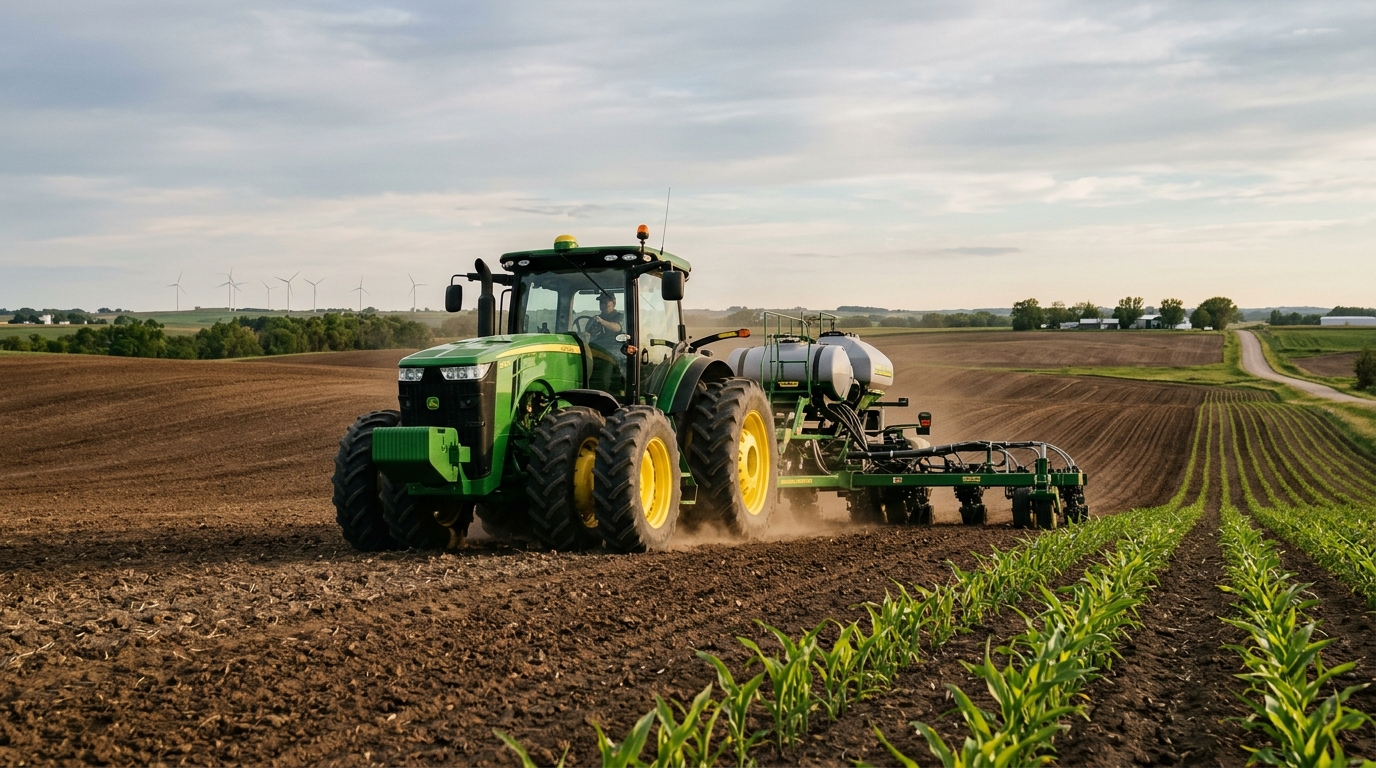
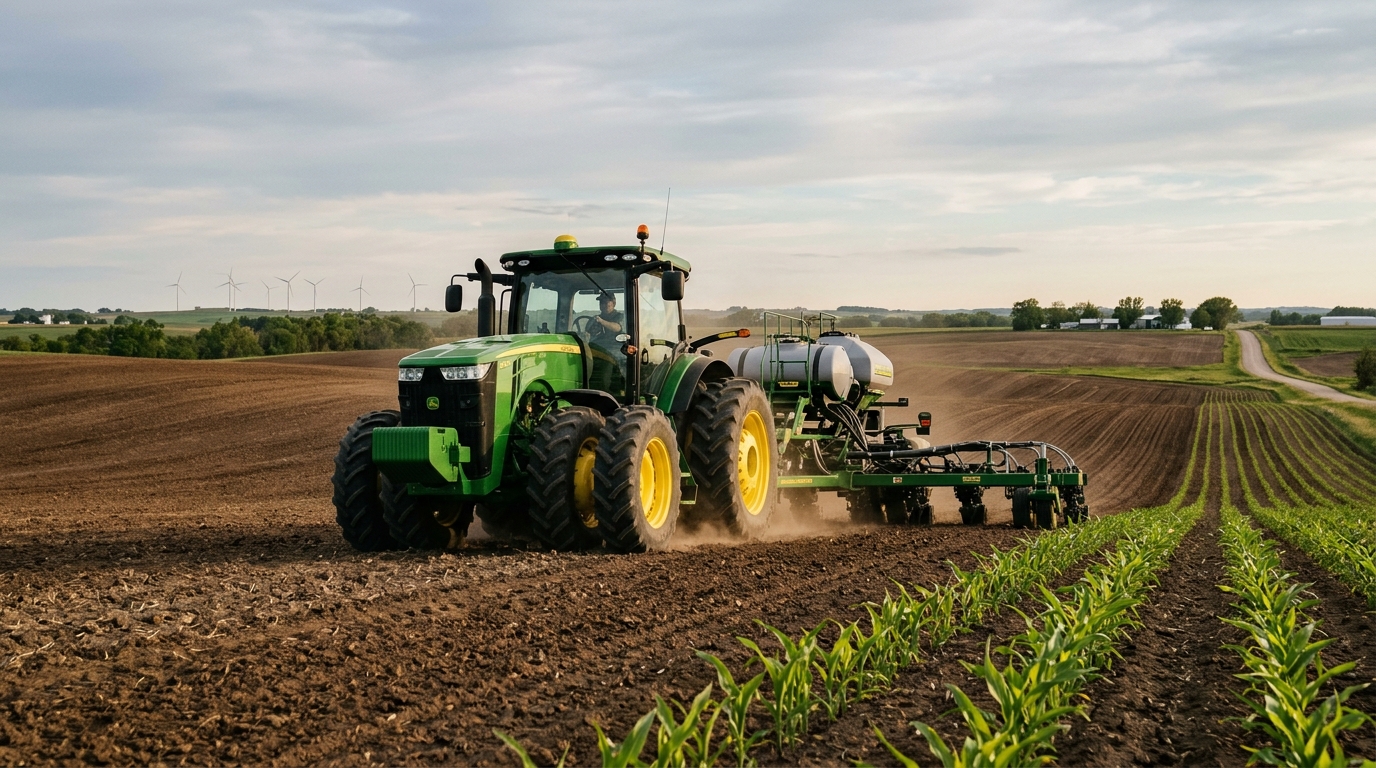
Farm economics are brutal right now. Profit margins for many growers of corn, soybeans, cotton, and wheat have been under heavy pressure since 2022, with economists projecting roughly $44 billion in net cash income losses from their 2025–26 crops. Fertilizer costs remain elevated above pre-pandemic levels. In that environment, a technology that cuts nitrogen spending by more than half is not a niche product. It is a survival tool.
That is exactly what Deere’s precision planting attachments are delivering. ExactShot uses high-speed sensors to detect each individual seed as it enters the soil and fires a precise dose of starter fertilizer directly onto it, skipping all the empty space between seeds where traditional systems waste product. Farmers applying the technology are cutting in-furrow fertilizer use by up to 60% while maintaining yield, with Deere estimating a total value proposition of roughly $72 per acre in potential cost savings and potential revenue uplift. Across a 500-acre corn operation, that number becomes material fast.
The field data is stacking up. More than 40% of model-year 2027 planters in North America on early order include advanced offerings such as ExactRate, ExactShot, or FurrowVision, Deere president Deanna Kovar noted on the company’s Q3 2026 earnings call. See & Spray, the boom-mounted camera system that applies herbicide only where weeds actually appear, covered five million acres in the 2025 season alone, cutting non-residual herbicide use by nearly 50% and saving 31 million gallons of herbicide mix. For model year 2027, Deere is consolidating its See & Spray tiers into a single unified Gen 2 platform, with cameras that identify crops and weeds with four times the accuracy of the prior version.
The attachment story also illustrates a broader industrial pattern. Caterpillar’s record backlog shows how capital-equipment makers with recurring service layers can sustain margin even when new-unit volumes soften.
The investment case here is not about large-equipment volume, which is soft. Deere’s production and precision agriculture segment posted $3.998 billion in Q3 2026 net sales, down 6% year over year, on lower shipment volumes. That number reflects the down-cycle in big-iron purchases. The attachment and software business behaves differently: farmers who already own a tractor or sprayer are upgrading it with precision hardware because the payback period is short. See & Spray adoption on North American sprayer orders is expected to nearly double year over year, even as overall equipment sales slipped.
Deere raised its full-year net income guidance to $4.75–$5 billion after the Q3 beat, and the stock jumped nearly 7% on earnings day to close above $620. But the precision ag services layer, the part of the business with recurring subscription revenue and attachment rates compounding season over season, is still being valued largely as a tractor company. An estimated 8% reduction in fertilizer use through precision-ag optimization can avoid as much as $20,000 per 1,000 acres in additional fertilizer expenses, giving Deere’s machine-vision technology a compelling argument to every farmer watching their input bill. When the equipment cycle turns, that installed base is already there.
Precision agriculture’s value proposition extends beyond the farm gate. Restaurant chains absorbing persistent food-cost inflation are a direct beneficiary of any technology that structurally lowers agricultural input expenses.