
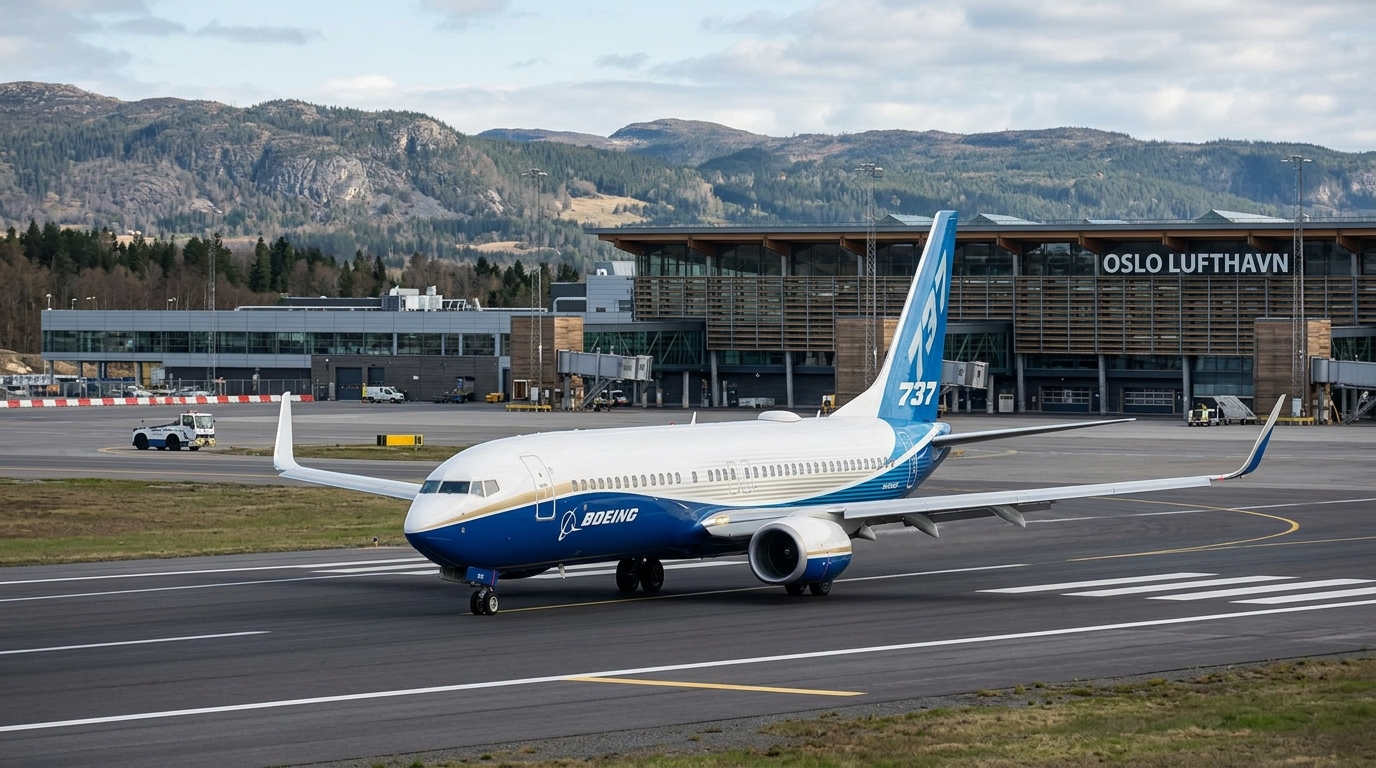
Norway’s sovereign wealth fund has been one of the most conspicuous non-owners of Boeing for years. That is about to change, and the timing matters enormously for investors already watching BA from the sidelines.
Why This Stock Now
A government-appointed commission recommended that Norway allow its $2.3 trillion wealth fund to invest in major Western defence groups currently banned from its portfolio due to their involvement in nuclear arms production, Reuters reported on October 15. The specific names cited in that report include Lockheed Martin, Boeing, Airbus, and BAE Systems, which are excluded under the current ethics guidelines because some of their operations include nuclear weapons production. This is not a fringe review. The sovereign wealth fund is worth around $2.3 trillion and is widely described as owning about 1.5% of the world’s listed equities, making it one of the biggest investors in stock markets worldwide.
The Norway proposal does not exist in isolation. Global defense budgets have entered a structural expansion phase that is reshaping which stocks sovereign and institutional allocators are permitted to own.
Norway is expected to consult on the proposals before the government puts forward a new ethics framework, with an ethics white paper expected in spring 2027. That means investors have a long runway to position ahead of any eventual parliamentary decision.
The Business
Boeing is not a pure defense play, which is precisely what makes the Norway catalyst land harder. Defense revenues provide ballast while the commercial side recovers. First-half 2026 revenues rose to $46.777 billion from $42.245 billion in the same period a year earlier, driven by higher revenues at Defense, Space and Security and Commercial Airplanes.
On October 13, Boeing announced it delivered 161 commercial aircraft in the third quarter, underscoring robust demand in the aerospace sector. The company delivered 124 units of the 737 model and reported 33 deliveries under its Defense, Space & Security programs, including AH-64 Apache helicopters and KC-46 tankers. Year-to-date commercial deliveries now stand at 475 aircraft.
Boeing is not the only prime contractor collecting large Pentagon commitments in a compressed window. Lockheed Martin secured a seven-year framework to triple Patriot interceptor output and quadruple THAAD production, yet the stock barely moved on the news.
Why Wall Street Is Paying Attention
Three forces are stacking up at once. First, the Norway fund opening. Second, a defense contract surge: on September 29, the U.S. Navy awarded Boeing a contract worth more than $20 billion to develop the F/A-XX sixth-generation carrier fighter under its Next Generation Air Dominance effort. Third, and most immediately, Reuters reported on October 16 that the FAA is set to approve the long-delayed 737 MAX 10 as soon as next week, after completing a key safety review.
Airlines have ordered nearly 1,500 MAX 10s, and the model accounts for about 30% of Boeing’s outstanding 737 backlog, Reuters reported. Beyond product lineup positioning, the certification carries substantial financial implications: higher-margin MAX deliveries serve as a key cash generator, supplying the liquidity necessary to pare down the company’s heavy debt burden.
What’s Driving the Opportunity
Wall Street’s consensus Boeing stock price target is about $272 per share, implying roughly 43% upside from recent levels. BA closed at $190.21 on October 16, roughly 25% below its 52-week high. Achieving that valuation will depend on Boeing converting its $715 billion backlog into profitable aircraft deliveries while reducing debt and manufacturing costs. The Norway flow accelerates that institutional re-rating if the parliamentary process ultimately goes through: a fund that owns about 1.5% of listed equities and currently owns zero Boeing would, by its own logic, need to buy.
Norway’s sovereign wealth fund is regarded as a global benchmark for responsible investing, and if this review is ultimately implemented, it may have a demonstrative effect on the ethical investment frameworks of other sovereign investors and large institutional investors worldwide. That secondary wave matters for Boeing as much as the primary one.
What Could Go Wrong
The risks are real and worth sizing correctly. Boeing remains unprofitable on a recent trailing basis and free cash flow has been negative over the most recent reported trailing twelve months. The Norway policy shift is still many months away, and civil society groups have criticized the proposal as a watering down of the fund’s ethical rules, Reuters reported. MAX 10 certification, though close, is not yet official. Analysts broadly expect Boeing to post a loss of about 19 cents per share when it reports Q3 earnings on October 27, meaning the report could rattle sentiment before the recovery story gets firmer footing.
The Bottom Line
Boeing sits at the intersection of three catalysts breaking in the same week: a $2.3 trillion fund preparing to buy it for the first time in years, FAA certification of its most commercially significant aircraft variant arriving imminently, and a more than $20 billion fighter jet program freshly in hand. The stock is down about 12% from its December 31, 2025 close and trades well below analyst consensus. None of these catalysts is guaranteed to close on schedule. But the combination of institutional demand about to be unlocked, a certification that unclogs the delivery pipeline, and a defense business winning one of the largest U.S. fighter development awards in decades makes Boeing the most compelling single opportunity in the market today.