
September 25, 2026
Bonus Content: Lockheed Martin Is Quadrupling Missile Output. Can It Deliver?
Dear Reader,
They declared a ceasefire!
Until they didn’t.
Then Trump said we were about to sign a deal.
Until we started shooting at each other again.
According to one source, Trump has said an Iran deal is “close” 38 times since the war began.
In the time between writing this message and you reading it, who knows whether we’ll be hearing about an imminent deal… or more bombing.
And it doesn’t matter.
This is all a distraction.
Here’s the REAL reason why Trump may NEVER end this war.
To your future,

Addison Wiggin
Founder, Grey Swan Investment Fraternity
Lockheed Martin Is Quadrupling Missile Output. Can It Deliver?
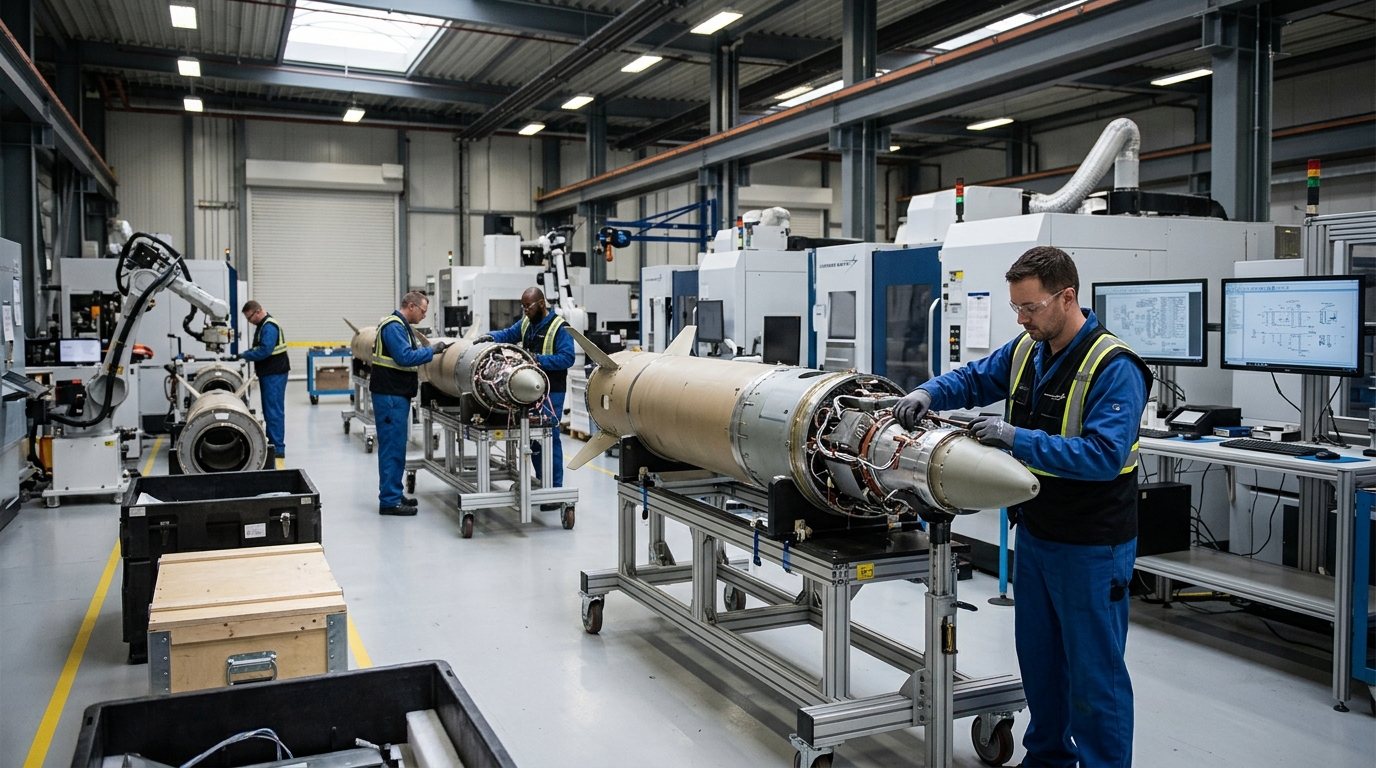
The order book is not the question anymore. Lockheed Martin’s Missiles and Fire Control business alone now carries about $87.9 billion in backlog, a figure that would have seemed extraordinary two years ago and today barely draws comment. The real question heading into the October 27 earnings report is whether Lockheed can physically build what it has already been paid to deliver.
Why This Stock Now
The stock sits near $525, roughly 25% below its 52-week high of $692. That gap exists not because demand collapsed but because the market is pricing in meaningful execution risk. The investment case hinges on successful production execution, especially for the F-35 and missile defense programs, amid rising fixed-price contract risks. Those risks are now being tested in real time, at a scale no previous management team had to manage.
The Business
Lockheed and the Department of War have signed a framework agreement that aims to quadruple THAAD interceptor production capacity, from 96 to 400 interceptors per year. That target does not get reached by optimizing spreadsheets. Lockheed broke ground on a new Munitions Production Center in Troy, Alabama, adding 87,000 square feet of production space to support THAAD interceptors and future Next Generation Interceptor work. It is one of more than 20 sites being expanded or modernized as part of the munitions push. Lockheed’s more than $9 billion investment through 2030 is already delivering tangible results to meet heightened munitions demand.
Why Wall Street Is Paying Attention
The U.S. government awarded Lockheed Martin a seven-year undefinitized contract action for up to $35 billion to quadruple production of THAAD interceptors. That contract alone is larger than Lockheed’s entire annual revenue just five years ago. Lockheed also announced a seven-year contract modification for up to $53.86 billion for PAC-3s, bringing the total multiyear contract value to $58.62 billion following a $4.7 billion award in April. Combined with HIMARS, PrSM, and space-based interceptor prototype work tied to Golden Dome, the missiles segment is undergoing a structural reset rather than a cyclical bump.
Missiles and Fire Control sales rose 19% to $4.1 billion in Q2, led by production ramps for PAC-3, THAAD, and Precision Strike Missiles. CFO Evan Scott said every segment will grow faster in the second half of 2026, with missiles and fire control leading the acceleration in munitions production.
What’s Driving the Opportunity
Lockheed now projects full-year sales of $79.75 billion to $81.75 billion, about an 8% increase at the midpoint, and lifted its free cash flow outlook to $7 billion to $7.2 billion, with earnings per share of $29.95 to $30.65. The $230.4 billion backlog, largely government-backed, provides years of revenue visibility. Free cash flow yield sits near 5.8% at current prices, and the dividend yields 2.6%. That combination is uncommon in a company growing revenue at about 8%.
Northrop Grumman expects U.S. contract activity under the Golden Dome homeland missile defense initiative to accelerate through the end of 2026 and into early 2027, which means the pipeline feeding Lockheed’s backlog has not yet peaked.
What Could Go Wrong
The supply chain is the ceiling. Quadrupling THAAD output requires propulsion, electronics, and structural components to scale in parallel. L3Harris Technologies and Lockheed signed a multi-year framework agreement to quadruple propulsion production for THAAD; L3Harris said the deal is expected to become its largest THAAD propulsion award to date once finalized. Delays at any tier supplier compress margins on fixed-price line items, and Lockheed has already absorbed large reach-forward losses on classified contracts in recent years. One undefinitized contract action is not a guaranteed profit; it is a commitment to perform.
Lockheed Martin will release its next earnings report on October 27, 2026. Analysts currently expect Q3 EPS of $7.56. A miss tied to production ramp costs would pressure a stock that has already given back a quarter of its value from the high.
The Bottom Line
Lockheed’s backlog is credible. The demand behind it, from Iran to Ukraine to Golden Dome, is not a procurement cycle that reverses quickly. The discount from the 52-week high reflects a market that has shifted from asking whether orders will come to asking whether factories can deliver them. At roughly 19x trailing earnings with a $637 average analyst price target, the stock prices in legitimate uncertainty. Investors who believe the industrial buildout stays on schedule are buying that uncertainty at a reasonable price. Those who doubt the supply chain can absorb this much volume simultaneously have a reasonable counterargument too.