Here’s a number that keeps coming back to me: $163 billion.
That’s GE Vernova’s current order backlog. To put it in perspective, it’s larger than the entire market cap of most S&500 companies. It grew by more than $13 billion in a single quarter. And it’s not slowing down.
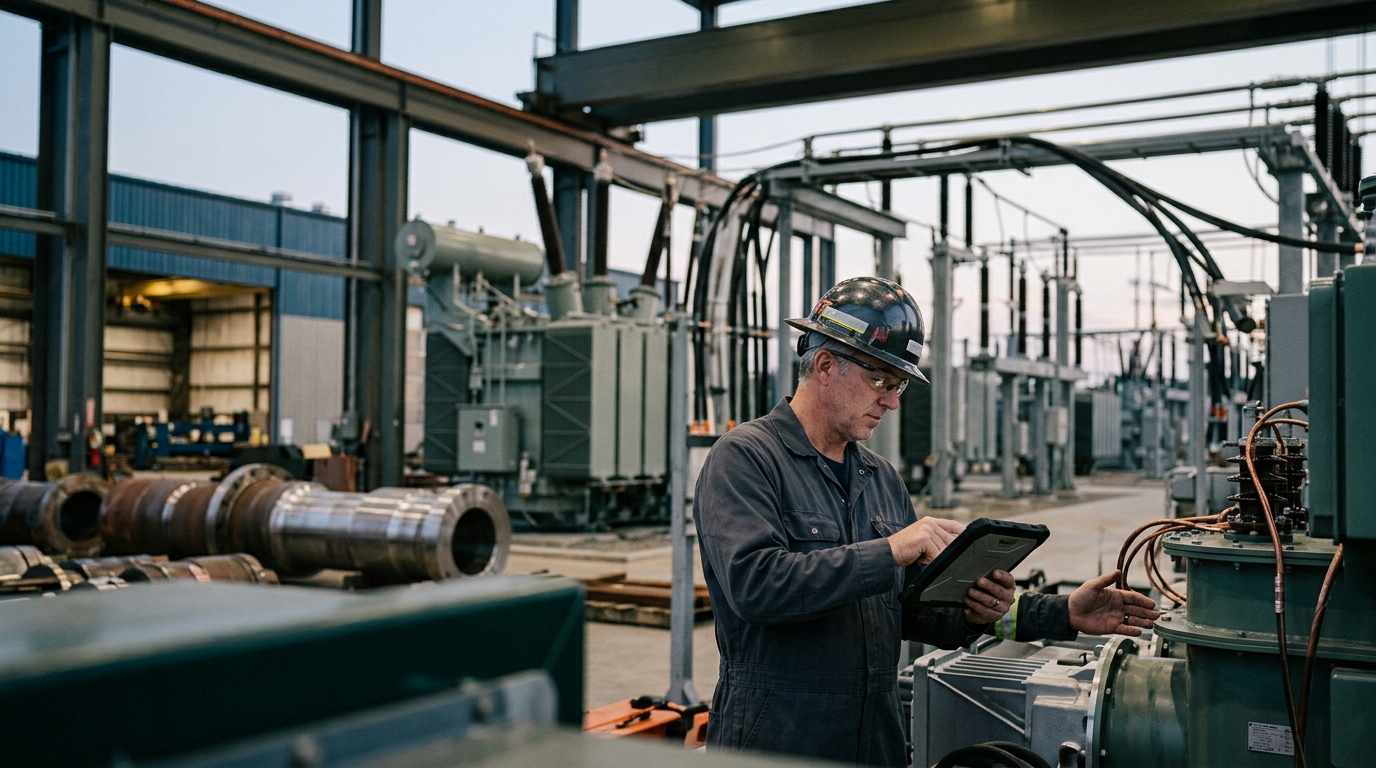
GEV is not a semiconductor company. It’s not a software company. It builds the gas turbines, transformers, switchgear, and grid solutions that actually keep the lights on – including inside the data centers everyone’s been calling the most important infrastructure build of the generation. The AI trade has a power problem, and GE Vernova may be the clearest solution on the board.
What the Numbers Actually Say
In Q1 2026, GE Vernova delivered revenue of $9.34 billion, a 16.3% year-over-year increase that exceeded Wall Street consensus, while adjusted EPS of $2.06 crushed analyst expectations of $1.88. That kind of beat-and-raise usually moves a stock for months.
Orders of $18.3 billion increased 71% organically in the quarter, with strong equipment growth in Electrification and Power. Seventy-one percent. That’s not a cyclical uptick – that’s a demand surge that looks structural.
What’s interesting is where those orders are coming from. In Q1 alone, GE Vernova’s Electrification segment booked $2.4 billion in equipment orders to support data centers – more than all of last year. In one quarter. More than the entire prior year combined.
Electrification orders increased 86% organically, driving a book-to-bill ratio of approximately 2.5 with continued strong demand for grid equipment. A book-to-bill above 2.0 means the company is booking orders roughly twice as fast as it can ship them. That’s a backlog that builds on itself.
The Guidance Raise Nobody Fully Priced
GE Vernova raised its 2026 revenue guidance to $44.5–$45.5 billion, adjusted EBITDA margin guidance to 12%–14%, and free cash flow guidance to $6.5–$7.5 billion. That free cash flow number is worth sitting with. Q1 free cash flow of $4.8 billion alone exceeded the full year of 2025.
In the first quarter.
Management also authorized a $10 billion buyback and doubled the quarterly dividend. GE Vernova has set a goal to grow its power and electrification backlog to $200 billion by end-2027.
The Pricing Uplift Nobody Is Talking About
Here’s the part that most investors skip. Orders signed in the first half of 2026 are priced 10 to 20 percentage points higher on a dollar-per-kilowatt basis than the Q4 2025 backlog. That pricing uplift has not yet appeared in revenue – it will as those orders convert through 2027 and 2028.
Slight tangent, but it matters: this is how industrial compounders actually work. The revenue you see today reflects orders placed 12 to 18 months ago. The margin you see in 2027 reflects the pricing power being exercised right now. GEV is building a margin story that hasn’t fully appeared on an income statement yet.
The Peer Picture
Siemens Energy recently reported a record order backlog of €154 billion and revenue growth of 9%, while Mitsubishi Heavy Industries remains a major gas turbine competitor as utilities and industrial customers race to secure power capacity. The entire sector is signaling the same thing: power infrastructure demand is running well ahead of supply. GE Vernova is at the center of that.
Bernstein recently started coverage with an Outperform rating and a price target of around $1,210. Goldman Sachs has a target near $1,328. Argus is at $1,300. GEV was trading near $1,127 as of June 22, 2026 – still below its April all-time high of approximately $1,182.
Where the Risk Lives
The Wind segment is a real drag. The unit posted a $382 million Q1 EBITDA loss, and commodity price volatility affecting input costs remains a watch item. Management is executing Wind as a contained problem, but it bears watching heading into Q2 results, expected July 23.
Valuation isn’t cheap. ABB trades at approximately 22.9x, Siemens Energy at 19.7x, and Schneider Electric at 17.4x, with the sector median near 17x. GEV commands a premium. Whether that premium is justified depends entirely on whether the backlog converts as expected – and so far, the conversion record is clean.
The Part People Miss
Everyone knows GE Vernova benefits from AI. What they underestimate is the duration. AI data centers require roughly three to four times the electrical power of traditional cloud computing centers, and GE Vernova manufactures the high-efficiency gas turbines, transformers, and grid management systems necessary to generate and distribute that electricity.
This isn’t a one-cycle trade. We are in a world shaped by supply, where access to energy, infrastructure, and other critical resources increasingly determine economic and market outcomes. GE Vernova doesn’t just benefit from that world. It may be one of the companies most responsible for enabling it.
The backlog is $163 billion and growing. The Q2 earnings call is July 23. That’s the next data point worth watching closely.