September 29, 2026
Bonus Content: Iron and Sodium Are Winning Grid Storage Deals Lithium Can’t Touch
While Mines Take Decades, This Story Is Targeting 2026.
Most mining stories ask investors to wait.
Maybe too long.
The average mine can take 29 years to get up and running. That means investors are often buying a very long road: years of drilling, years of funding, years of permits, and years of hoping the story still matters when production finally arrives.
Luckily, this gold-silver story looks different.
Instead of starting from zero, the company is working with material from a past-producing site that can still contain recoverable gold and silver.
And that material is already sitting above ground. That is the potential shortcut.
The company is targeting 2026 production, which means cash flow could enter the story much sooner than the usual junior mining timeline. And if that happens, it would help fund the next part of the story without relying on constant fundraising.
Plus, we’re not just talking about a small site. The property now includes 485 mining claims across 24,414 hectares.
Less waiting than the usual junior mining story with cash-flow potential and targets for this year?
That is the kind of timeline retail investors can actually understand.
Iron and Sodium Are Winning Grid Storage Deals Lithium Can’t Touch
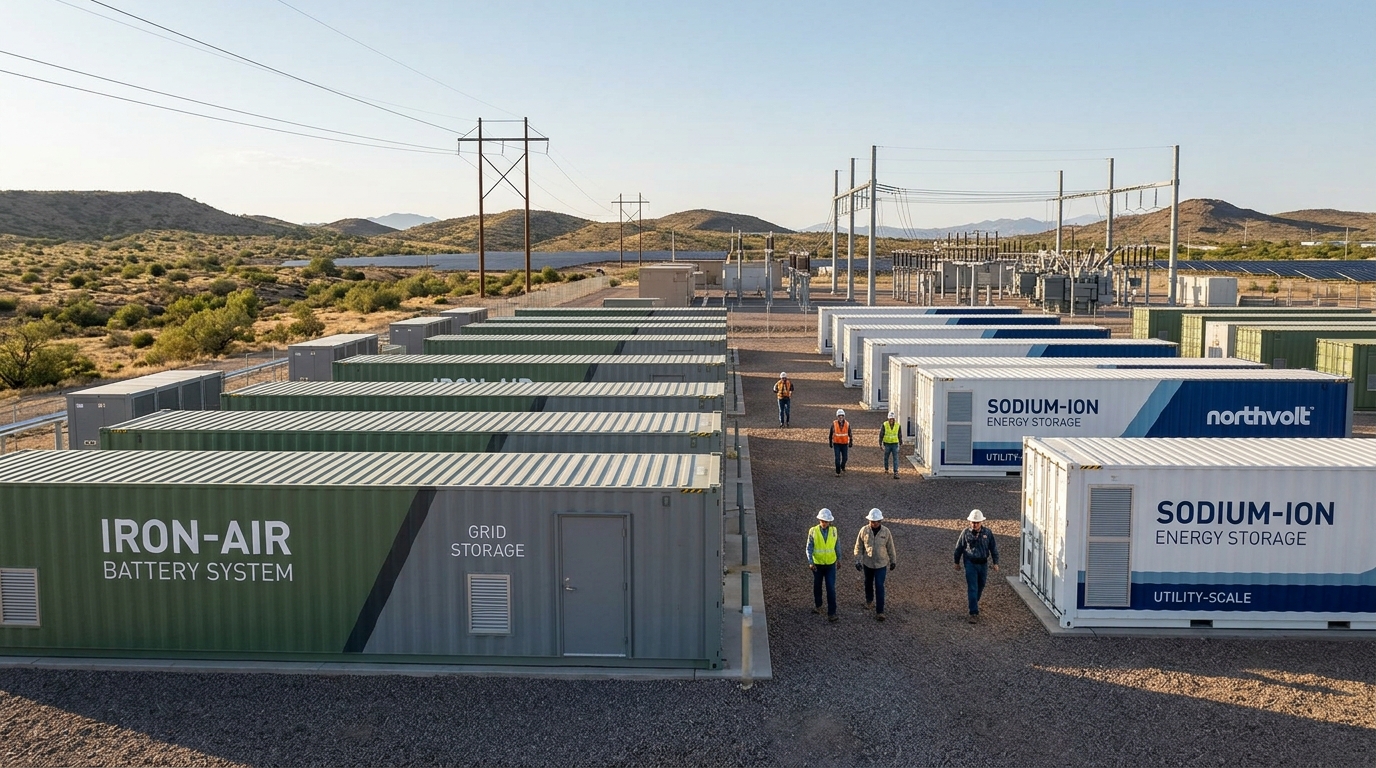
The battery chemistry conversation has spent years orbiting lithium. That framing is now genuinely outdated for one specific market: long-duration utility-scale grid storage. Two alternative chemistries, iron-air and sodium-ion, have crossed from pilot projects into contracts measured in gigawatt-hours this year. The minerals they rely on are iron and soda ash, not lithium, cobalt, or nickel. That distinction is starting to matter enormously to procurement officers and grid planners.
The Iron Case
Form Energy’s iron-air battery is purpose-built for one thing lithium-ion cannot do economically: store electricity for 100 hours or longer. Lithium-ion system-level costs for stationary grid applications are still commonly discussed in the mid-hundreds of dollars per kWh on an all-in installed basis, while Form has publicly targeted about $20 per kWh at commercial scale for iron-air, in part because power and energy capacity cannot be independently scaled in lithium-ion architecture.
That structural cost gap is translating into real contracts fast. In late February 2026, Xcel announced an Electric Service Agreement with Google for a Minnesota data center that includes 300 MW of Form Energy long-duration iron-air battery storage (30,000 MWh). Form Energy then signed a 12 GWh supply agreement with AI data center developer Crusoe in March. By March 2026, Form and Crusoe said Form had more than 75 GWh of commercial projects under agreement.
The Sodium Surge
Sodium-ion has a different value proposition: not duration, but cost, safety, and supply chain independence. Sodium carbonate (soda ash), a key input, is widely available in the United States and is far more abundant than lithium. For utilities navigating prohibited-foreign-entity compliance rules and community fire-safety pushback on lithium systems, that profile is increasingly attractive.
In April 2026, CATL and HyperStrong signed what they described as the world’s largest sodium-ion commercial contract, a three-year, 60 GWh energy storage order, marking sodium-ion’s entry into the GWh-scale deployment era. CATL followed that by signing a memorandum of understanding with Dutch energy company Alfen to deploy 5 GWh of its Tener Sodium systems across Europe, with batteries rated for 15,000 cycles and a 25-to-30-year service life. CATL has said it will begin delivering its first sodium-ion energy storage systems to customers in September 2026, with cumulative shipments expected to reach 1 GWh by year-end.
Why This Changes the Procurement Calculus
Battery storage costs jumped sharply in 2025 as U.S. tariff changes rippled through procurement. Industry pricing trackers including Anza Renewables said four-hour battery system costs rose about 56% to 69% from January 2025 levels in segments of the market. Separately, developers and utilities have been preparing for tighter prohibited-foreign-entity rules affecting certain clean energy tax credits, which industry guidance has described as becoming materially more consequential in 2026. That headwind hits lithium-ion systems hardest, since their supply chains run deepest through China. Iron and sodium chemistries, built on abundant domestic or FEOC-safer minerals, sit on the other side of that cost curve.
Communities across the U.S. are enacting moratoria on battery systems over fire safety concerns. In New York state, industry testimony to state lawmakers has said more than 100 local governments have enacted moratoria on energy storage. Non-flammable iron-air and sodium-ion chemistries can ease a siting problem lithium cannot fully avoid.
Lithium-ion still owns short-duration frequency regulation and will for years. But the multi-hour and multi-day market, where AI data center demand and renewable intermittency are driving the biggest procurement decisions right now, is where iron and sodium are winning. The mineral race was never really about density. It was always about duration, cost, and where the grid is actually going.