September 15, 2026
Two to four freed labor hours per day, redeployed to the line, is the clearest path back toward 27% restaurant margins.
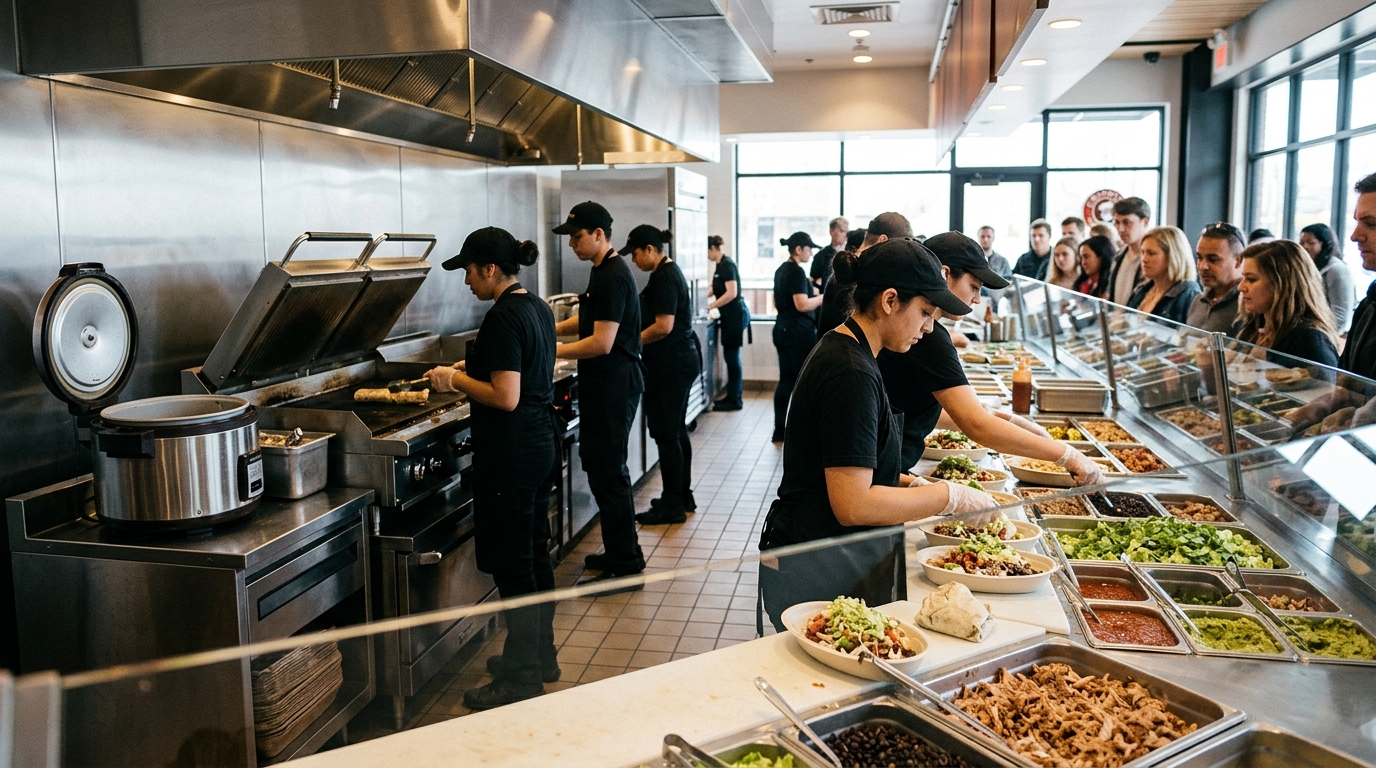
Chipotle’s margin problem has a name: the noon rush. Restaurant-level margin fell 220 basis points year-over-year to 25.2% in Q2 2026, pressured by higher labor, marketing, and other operating costs. That gap does not close with price increases alone. It closes by getting more bowls out the door between 11:30 a.m. and 1:00 p.m., and that is exactly what the high-efficiency equipment package is designed to do.
Elon Musk Just Called the Dollar “Hopeless” – Then Reinvented It
What’s going on with Elon Musk? Last year, he launched a full-blown attack on the U.S. dollar, calling it “hopeless.” And within months, he hatched a plan to reinvent the world reserve currency. Now, with the blessing of President Trump and the U.S. Treasury, it’s coming to life. And investors who grasp what’s going on could make a fortune.
The rollout, which Chipotle calls HEEP, has now reached 1,000 restaurants, with a target of 2,000 by the end of 2026. The equipment automates the most repetitive prep tasks, and the payoff is specific. Equipped kitchens are delivering two to three additional entrees during the peak 15-minute lunch window, and CEO Scott Boatwright says the efficiency translates into roughly two to four extra labor hours per day, which the company reinvests in staffing the front line to advance throughput.
That reinvestment logic matters more than it sounds. Labor costs hit 26.1% of revenue in Q1 2026, up from 25.0% a year earlier. Wage inflation is not going away. The only lever management fully controls is how productively those hours are deployed, and the HEEP data suggest the equipment pays for itself by converting prep labor into throughput labor precisely when foot traffic peaks.
Central Banks Just Made Their Move
Foreign central banks have cut Treasury holdings to their lowest level since 2012-dumping $82 billion in March alone. At the same time, they hold more gold than Treasuries, for the first time since 1996. That’s not a trade – it’s a strategic shift. Garrett Goggin has spent 20 years studying gold cycles, and he says: “When central banks move like this, they’re positioning ahead of something big.”
See where smart money is going now – and which gold stocks have massive upside potential
The Chipotlane side of the equation compounds the effect. In Q2 2026, Chipotle opened 100 new company-owned restaurants, 80 of which included a Chipotlane. Digital orders placed through the app and website accounted for 38.6% of total food and beverage revenue in Q1 2026, and that channel routes through the separate digital make line, keeping the front line free for walk-in volume. The two systems, automated prep and dedicated digital pickup, are designed to work together.
Restaurants with Chipotlanes have seen higher sales than locations without them. The dedicated lanes allow mobile customers to collect orders in under 30 seconds on average. Speed at that scale is a unit-economics argument, not just a convenience story.
Nuclear Energy’s Comeback Could Spark Before 2026
Global energy demand is surging and one overlooked power source is quietly returning to the spotlight. New policy support and supply constraints are setting the stage for a surprising shift in the energy markets.
The risk is timing. Boatwright has described a path to completing the rollout sometime in 2027. Until then, a large portion of the system is still running the old way through peak lunch, leaving margin recovery uneven quarter to quarter. Labor costs also rose 30 basis points to 25.0% in Q2 2026, driven by wage inflation, performance-based bonuses, and additional restaurant labor supporting operational execution, including hospitality initiatives. Automation absorbs some of that pressure but does not eliminate it.
The investment case for CMG right now is essentially a bet on execution speed. The equipment works. The digital channel is growing. The question is whether HEEP reaches 2,000 locations by December as promised, and whether the lunch-hour throughput gains show up clearly enough in Q3 and Q4 comps to restore confidence in the margin story. If they do, 25.2% looks like the trough, not the new normal.