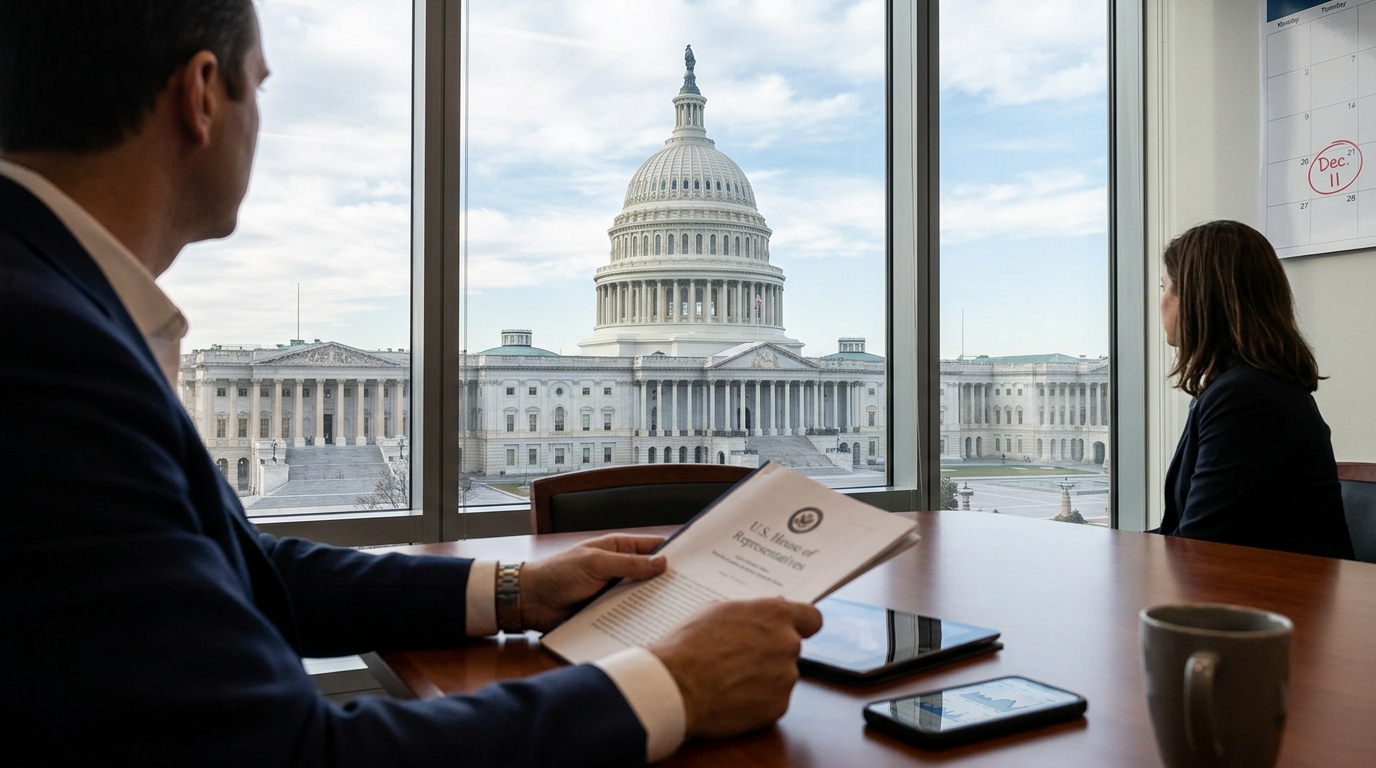
The House voted 370-48 Tuesday to pass a stopgap continuing resolution, funding the government into December and sidestepping what would have been a politically combustible shutdown fight weeks before the midterms. The bill now goes to President Trump, who is expected to sign it into law. For traders, the practical read is three lines: the Sept. 30 funding cliff is gone, the economic data calendar is intact, and the fight restarts at Dec. 11.
Market Snapshot
Federal agencies will remain funded through Dec. 11, removing the risk of a partial government shutdown this fall. That matters directly to SPY. Shutdown risk had sat unpriced in broad equity positioning, a tail that quietly weighs on sentiment even when it never becomes consensus. With the Sept. 30 cliff cleared, one layer of that overhang comes off the table.
The continuing resolution pushes the spending battle to before the holidays, when midterm results will determine how much leverage each party holds. The CR passed almost a month ahead of the Oct. 1 funding deadline, a rare occurrence even in fractious Congresses, and the broad bipartisan margin reflects both parties’ anxiety about a fall funding fight with the congressional majority still in play.
Stocks in Focus
BLS / October Jobs Report. This is the most direct trading implication. During the 2013 shutdown, BLS delayed the September jobs report by roughly three weeks. In that episode, the employment report that would normally have been released in early October came out on Oct. 22, 2013. That won’t happen this time. The October employment situation, due in early November, will run on schedule, keeping a clean data runway through the Fed’s November meeting.
LMT, LDOS, SAIC. Defense contractors faced a specific problem under shutdown conditions: even when the government reopens after a shutdown, defense companies still contend with a continuing resolution, which can prohibit new program starts and constrain certain awards. For the Defense Department, the CR ensures that current programs can be funded at fiscal 2026 levels and reduces the risk of a shutdown disruption to operations. Existing contracts continue flowing, but the structural headwind for LMT, LDOS, and SAIC remains: new-start awards can stall under a CR. The deal removes the shutdown risk for incumbents while continuing to delay the new-contract surge that full-year appropriations would unlock.
Sector Watch
The stopgap temporarily extends current spending levels and policies, with some adjustments for priority programs. Defense services names with heavy contract backlog concentration, such as LDOS and SAIC, are in a cleaner operating environment today than yesterday. The ceiling on new awards stays capped through at least Dec. 11, but the floor on existing revenue just got firmer.
Catalyst Calendar
- Sept. 30: End of fiscal year 2026. Agencies now roll into FY 2027 under CR authority rather than lapsing. Non-event for markets.
- Nov. 3: The congressional midterms will determine House and Senate control, making results a major factor in whether Republicans or Democrats enter year-end spending talks with greater leverage.
- Dec. 11: The new deadline postpones decisions over the government’s full-year spending priorities. Congress will then face completing all 12 appropriations bills or agreeing to another temporary extension before the Dec. 11 cliff.
Risk Radar
The House has passed three of the 12 fiscal 2027 spending bills. The Senate has passed none. That gap is the core risk to remember when Dec. 11 arrives. If the midterms shift chamber control, lame-duck negotiations become the venue for a full-year deal or another stopgap, likely under far less bipartisan goodwill than Tuesday’s 370-48 vote implied.
The Cheat Sheet
- Top Market Theme: A historically early, lopsided CR vote closes the Sept. 30 shutdown tail and keeps the economic data calendar clean through year-end.
- Stock to Watch: LDOS and SAIC, where contract stability is confirmed but new-start growth remains capped until full-year appropriations arrive.
- Sector to Watch: Defense services. Existing revenue is protected; the post-CR contract surge is the trade waiting on a Dec. 11 resolution.
- Biggest Risk: Neither chamber has completed full-year FY2027 appropriations. Dec. 11 arrives five weeks after midterms with a potentially different majority and the same unfinished 12-bill pile.
- Biggest Opportunity: BLS data is now on schedule. A clean October jobs report in early November feeds Fed positioning cleanly into the November meeting with no data-gap distortion.
- One Thing to Remember: The shutdown risk did not disappear; it moved to Dec. 11 under a different political configuration. Treat that date as a hard event risk to build around, not ignore.