Something strange just happened in the bond market.
For years, foreign nations have been dumping U.S. Treasuries in a torrent.
China alone has offloaded more than half a trillion dollars from its peak holdings…
The BRICS nations sold $47 billion in a single month, earlier this year…
And central banks have been swapping dollars for gold at the fastest pace since the Cold War.
Billionaire investor Ray Dalio calls it the “breakdown of the monetary order.”
And the legendary Jim Rogers predicted the dollar would lose its reserve currency status within just a few years.
But then – almost overnight – the trend simply reversed.
Despite America’s $36 trillion debt. Despite the war in Iran. Despite the UFO memes, the Epstein files, and the never-ending scandals consuming Washington…
Foreign nations are buying U.S. Treasuries again, and at record pace.
Barely reported in the mainstream press, holdings have surged more than $587 billion in the past 12 months alone, to an all-time-high of $9.49 trillion.
What’s going on?
What force is powerful enough to reverse a multi-decade-long exodus from the dollar – in the face of everything working against it?
The answer will change everything about the way you save and invest your money. Forever.
In the back rooms of the State Department, the leaders of 13 nations quietly signed an historic agreement.
A treatise that one of America’s own Under Secretaries of State says will give the U.S. “a competitive edge so steep, so insurmountable, that no adversary or competitor can scale it.”
In short: a shocking plan to replace the U.S. dollar as we know it.

Those who understand what’s been set in motion could find themselves on the right side of the greatest wealth divide in a generation.
Those who don’t could be left wondering what the hell just happened to their money.
Watch my new documentary, for the full story on the money reset no one’s told you about – or prepared you for.
You’ll discover how Trump has completely bypassed Congress to initiate something Fortune calls “the biggest change to the world’s relationship with the dollar” in a generation.
And details on five investments at the very heart of America’s new monetary order – including the name and ticker of my #1 move to make today.
Good investing,
Porter Stansberry
Tesla Roadster Is Almost Here. The Real Bet Is Elsewhere.
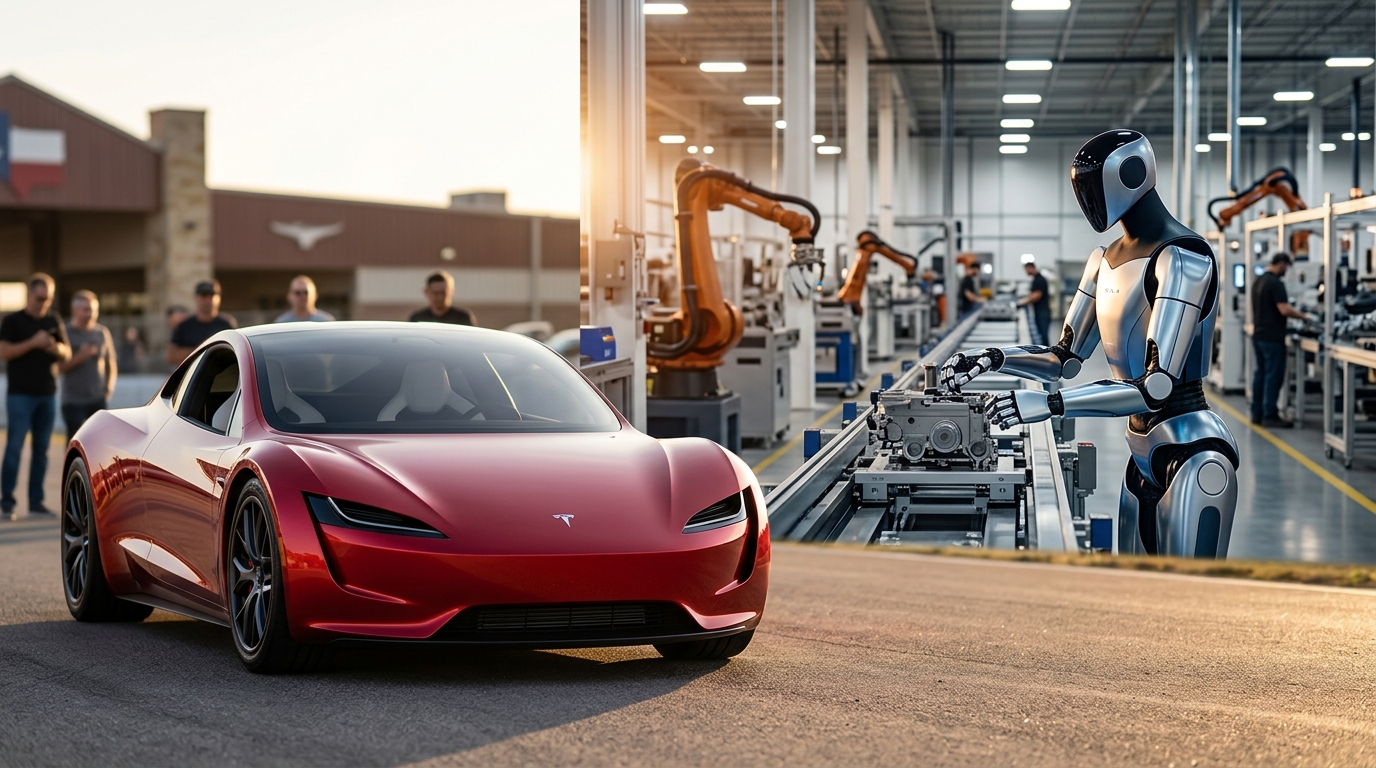
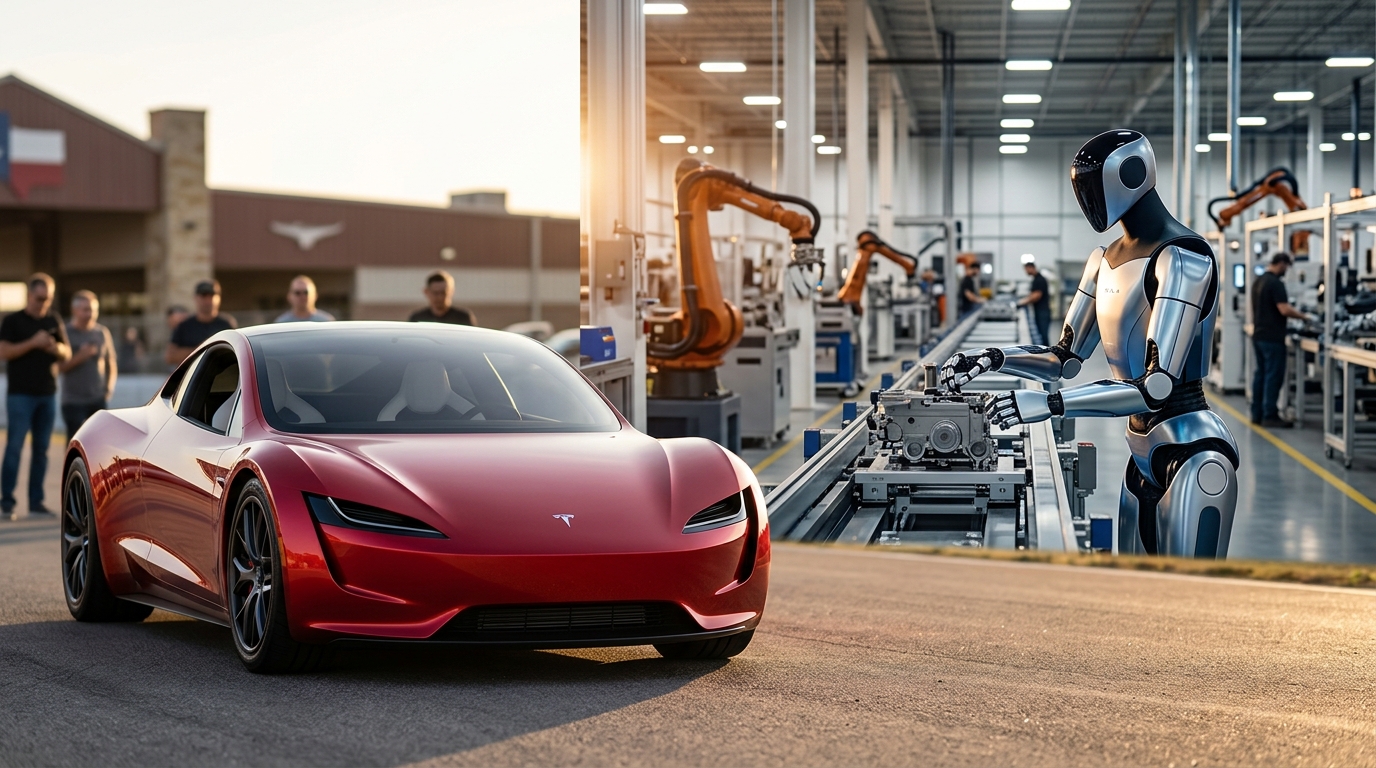
On Saturday, Tesla teased what anyone following Elon Musk’s posts already knew: the long-delayed next-generation Roadster will be unveiled on October 1 in Waco, Texas, near SpaceX’s McGregor, Texas rocket-testing facility. CEO Elon Musk said the company will unveil the Roadster nearly a decade after the vehicle was first presented in November 2017 with an original promised delivery date of 2020, and the program has reportedly evolved from a conventional high-performance electric vehicle into something closer to a halo hypercar. A limited edition may feature cold-gas thrusters developed with SpaceX. Musk has called it potentially one of the most exciting product unveils ever.
Investors should temper that enthusiasm before Wednesday’s show.
The Roadster was originally introduced with a stated starting price of $200,000 and a $250,000 Founders Series. But Tesla has since removed firm pricing from its website, and there is no current official price or volume guidance for the production version. At any plausible supercar volume, even an enthusiastic reception would barely register against Tesla’s overall revenue. The car is a brand statement. The business case is somewhere else entirely.
The Business
Tesla is no longer a single-product car company, and the market has been pricing it accordingly for some time. Tesla delivered 480,126 vehicles in Q2 2026, its best-ever second quarter. Energy storage deployments reached 13.5 GWh, up more than 40% from the 9.6 GWh deployed in Q2 2025.
That is the strong side of the ledger. The weak side: non-GAAP Q2 EPS of $0.33 came in below what many analysts had expected, and automotive gross margin (excluding regulatory credits) fell to 16.3% from 19.2%, while energy storage gross margin dropped to 20.4% from 39.5%. Tesla also posted negative free cash flow of $1.1 billion on $5.8 billion in capital expenditures. The company has said it expects 2026 capex to be in excess of $25 billion, driven in part by AI infrastructure and production-line investments tied to its robotics and autonomy ambitions.
Why Wall Street Is Paying Attention
The real catalyst sitting just past the Roadster reveal is Q3 earnings. As of this weekend, the widely-circulated expected date is October 21, 2026, though Tesla has not confirmed it. Analysts are projecting Q3 EPS of roughly $0.46, a meaningful step up from the $0.33 reported in Q2. Bank of America has reiterated a Buy rating with a $460 price objective, pointing to robotaxi expansion and looming Optimus production milestones, and noting investor focus will center on the pace of fleet scaling and new market launches.
Tesla began offering Cybercab rides in Austin in early September. That gives the company two high-profile technology moments in rapid succession, keeping institutional attention on the autonomous and robotics story rather than the EV margin compression narrative.
What’s Driving the Opportunity
The Optimus humanoid robot is the variable that could re-rate this stock, or not. Musk has said Tesla is moving toward Optimus production, and he has argued that robots could ultimately represent a very large share of Tesla’s value. Whether Tesla can build a supply chain for an entirely new product category is something investors can actually track over coming quarters. A humanoid robot has no established supplier ecosystem, so every part, from actuators to hands, needs new sourcing or internal development. That is why production milestones matter far more than demos.
What Could Go Wrong
The Roadster’s repeated delays make execution the central risk. The vehicle will not by itself resolve the margin, cash-flow, and capital-spending pressures affecting Tesla’s core business. Investors should focus less on the unveiling and more on whether Tesla provides a credible production timeline.
On the robotaxi side, a high-profile autonomous accident could trigger regulatory headwinds that halt or slow the U.S. expansion. Margins remain the most immediate concern: Tesla’s 2025 automotive gross margin was about 17.8%, down from 18.4% in 2024, reflecting ongoing pricing pressure and mix, rather than a collapse from the high-20% range. The Q3 report will show whether the Q2 margin compression was temporary or structural.
The Bottom Line
The October 1 Roadster event will generate significant media coverage, and may briefly lift TSLA on sentiment. But the Roadster is a showcase, not a revenue driver. The actual investment thesis depends on whether autonomous miles continue compounding, whether Q3 earnings show margin recovery, and whether Optimus moves from factory demo to production reality. Analyst price targets on TSLA run from roughly $125 up to $600, a range that captures genuine disagreement about which version of Tesla you are buying. The answer will come on earnings night, not at a Texas launch event.