
Dear Reader,
The Democratic Socialists won big at the polls this election cycle.
They’ve more than tripled their votes in Congress.
And even managed to win the mayor’s office in D.C.
But as terrifying as that is, there’s an EVEN BIGGER threat you should be paying attention to right now.
Frankly, I’m not surprised so many Socialists won.
They’ve pointed out many things that are genuinely wrong right now:
- The middle class is struggling.
- Your dollars aren’t going as far as they used to.
- Big business is in cahoots with the government.
Don’t get me wrong, I’ve spent my whole career warning where Socialism leads.
But fundamentally, these aren’t political problems more handouts will fix.
That’s why I’m stepping forward today.
Because the most dangerous economic force in America right now is EVEN WORSE than Socialism.
It’s managed to quietly take over Washington – long before this election cycle began.
And, based on the results, I’m afraid this will all reach a breaking point in the coming weeks… and have a serious effect on any money you’ve set aside for retirement.
I strongly encourage you to check out my important message, which explains everything you need to know. You can access it free of charge here.
Sincerely,
Dr. Ron Paul
12-Term Former Congressman
Former Presidential Candidate
Washington Insider for Over 50 Years
P.S. I think you’ll agree that one of the most interesting parts of my new video is where I reveal the #1 step Americans can take to protect themselves today from these coming disasters.
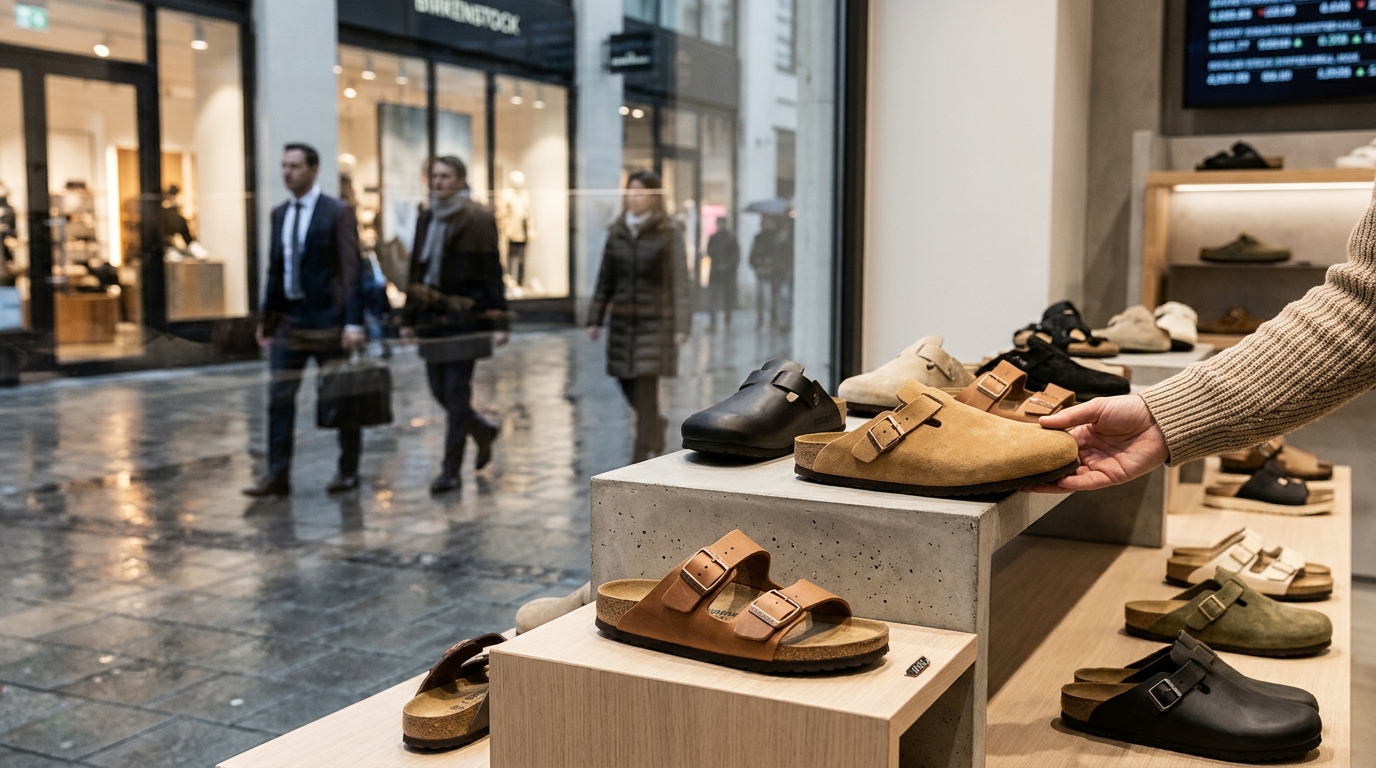
Birkenstock Is 30% Below Its High and Reports in December
Most footwear companies spent 2026 fighting for shelf space by cutting prices. Birkenstock did the opposite and kept growing.
More than 90% of Birkenstock’s sales are still happening at full price, even as rivals resort to discounts. That is not a marketing claim. It is a margin structure. In its most recent quarter, Birkenstock reported an adjusted gross profit margin of 59.2%. When Nike cannot clear inventory without a sale event, Birkenstock is running at full-price realization across every channel.
The Q3 fiscal 2026 numbers confirmed the model is not slowing. Revenue grew 15% in constant currency, at the high end of the annual target, while direct-to-consumer growth accelerated to 16% in constant currency, outpacing B2B for the first time in two years. Own retail revenue surged 50% in constant currency. Management raised full-year guidance immediately after, lifting adjusted EBITDA guidance to at least EUR 710 million.
The pricing architecture runs deeper than quarterly results. In fiscal 2025, the company said average selling price rose 5% in constant currency on mix shift and targeted price actions. Raising price into a soft consumer environment without denting volume is the cleanest possible test of pricing power, and Birkenstock passed it.
Few legacy apparel brands have managed the same discipline. Levi Strauss has been expanding gross margin while navigating tariff pressure and a direct-to-consumer pivot — a parallel test of whether pricing power can survive a hostile cost environment.
Its client base has continued to pay full price even as broader discretionary spending has declined, with Asia-Pacific growing 23% in constant currency, indicating significant international runway outside its main European and American markets.
What Could Go Wrong
The stock is near its 52-week low for a reason. Tariffs, currency headwinds, rising inventory, and a more cautious consumer remain key risks weighing on Birkenstock’s stock performance despite solid fundamentals. Adjusted gross profit margin came in at 59.2% in Q3, down 130 basis points year over year, mainly from FX and tariffs. With manufacturing costs priced in euros and U.S. revenue subject to tariff pressure, the currency mismatch is a real drag on reported margins regardless of brand strength.
Guggenheim analyst Simeon Siegel noted that the fiscal 2026 revenue raise implies a Q4 revenue figure roughly below the Street’s current consensus expectation. Any Q4 miss on December 10 would likely punish a stock that has already given up nearly 30% from its 52-week high of $50.73.
The Bottom Line
According to S&P Global Market Intelligence data compiled by Stock Analysis, 23 analysts rate BIRK stock a consensus “Buy” with an average 12-month price target of $50.90. At roughly 14 times forward earnings, the stock is pricing in a consumer that never comes back. The business keeps proving that thesis wrong, one full-price sale at a time.