For a while now, I’ve been showing regular traders like you how to take advantage of a specific 60-minute window…
One that lets us go after 50% returns every morning – whether the market opens higher… or lower.
Here’s what I mean…
If you had spotted this 60-minute opportunity yesterday morning… all you would’ve had to do was place a quick trade before 10 am…
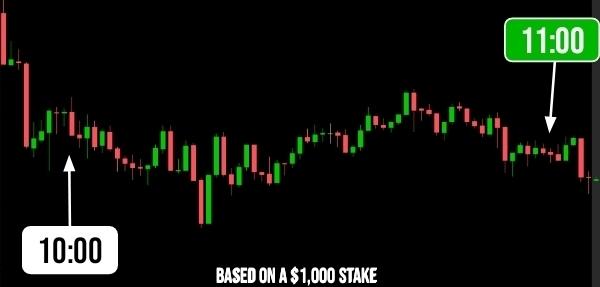
Went ahead with your morning plans and when you return a couple of minutes later, there’s a good chance you’d find $500 in extra income sitting in your account (on a 1k stake)
It wouldn’t have mattered what happened with the overall market… this 60-minute window would have been all you needed to target cash.
Today? Same story.
Place a quick trade, grab your coffee… and let the setup do the heavy lifting.
And just 60 minutes later… come back to what could be a nice $500 in extra income sitting in the brokerage account.
I designed the setup to be that straightforward.
Granted, there will be trades that won’t work out
But if you want in?
Pfizer Beat by 19%. The Patent Cliff Is Still Coming.
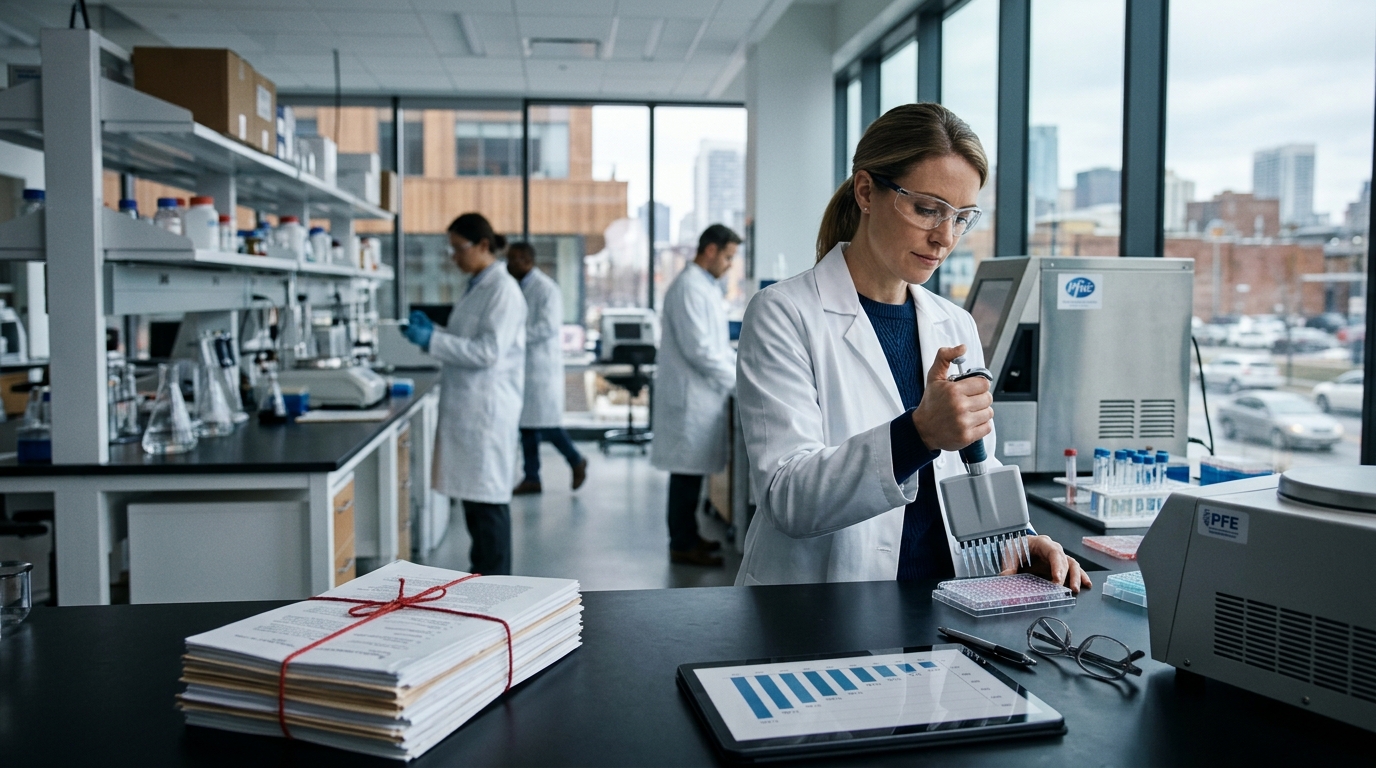
Pfizer reported stronger-than-expected third-quarter 2026 results, with adjusted earnings of $0.87 a share on revenue of $16.6 billion, both above Wall Street forecasts. Adjusted EPS of $0.87 beat the $0.73 consensus estimate by 19.18%. The company now expects 2026 revenue of $62 billion to $64 billion, up from $60.5 billion to $62.5 billion. The stock is trading near its 52-week high of $31.44. Argus raised its price target for Pfizer to $40 from $35, maintaining a Buy rating.
The quarter was real. The problem behind it is also real.
Why This Stock Now
The sector matrix places energy and healthcare ahead of the S&P 500 over both three months and four weeks, while technology and communication services are losing relative strength. Pfizer sits at the center of that rotation: a stable dividend, a beaten-down base from 2025, and now four consecutive quarters of beating Wall Street estimates.
The Business
The revenue beat was led by Pfizer’s cardiac medications Eliquis and Vyndaqel, which generated $2.5 billion and $1.8 billion, respectively. Eliquis climbed 25% and Padcev rose 55%. Launched and acquired products generated $3.8 billion in revenue and grew 32% operationally. Excluding Comirnaty and Paxlovid, overall revenue grew 7%. That is the handoff the market needs to see: older pandemic-era products declining while newer assets pick up the slack.
What Is Driving the Opportunity
The obesity pipeline is Pfizer’s most consequential bet. After several internal failures, Pfizer’s acquisition of Metsera in November 2025 added an ultra-long-acting GLP-1 candidate. Phase 2b data provided proof of concept for berobenatide as a potential first-in-class monthly GLP-1 that can deliver competitive weight loss with favorable tolerability and a very low 0.5 mL injection volume. These data support Pfizer’s plans to advance 10 Phase 3 studies for berobenatide in 2026, targeting a potential first approval as early as 2028.
The competitive stakes in that market are already visible in the financials of Pfizer’s rivals. Novo Nordisk is absorbing a projected 28% earnings drop to defend its obesity franchise against Lilly and new entrants like Pfizer.
What Could Go Wrong
GAAP net income declined 8% to $3.24 billion and reported diluted earnings fell to $0.56 per share, despite improved sales from newer pharmaceutical products. The gap between $0.56 reported and $0.87 adjusted EPS reflects ongoing amortization of acquisition-related intangibles. More structurally, Pfizer has said it expects about $17 billion of loss-of-exclusivity revenue declines from 2025 to 2030, including Eliquis and Ibrance. There is likely a 12 to 24-month window in which Pfizer is absorbing cliff-related losses before berobenatide reaches meaningful commercial scale.
The Bottom Line
Pfizer topped Wall Street’s expectations for the fourth quarter in a row. The next leg requires absorbing the patent cliff without a revenue collapse and delivering berobenatide Phase 3 data strong enough to compete with Novo Nordisk and Eli Lilly in one of the most competitive drug markets ever created. At roughly 10 times forward earnings with a dividend yield near 6%, investors are being paid to wait for the answer.