
October 20, 2026
Bonus Content: Tesla Reports Wednesday. The Car Numbers Do Not Matter.
Wall Street loves a new story.
But sometimes the more interesting opportunity is a company that has been waiting years for the market to catch up.
One little-known Nasdaq company has spent more than 25 years developing professional drone technology that is now a priority in Washington.
This is not a company trying to invent itself around D.C.’s latest push.
It was developing these technologies long before America’s current drone demand started.
That experience matters as the Pentagon looks for scale and Washington directs more attention toward domestic manufacturers.
Yet the company is still trading under $5… for now.
If America’s drone industry is entering a much bigger chapter, investors may want to know why this pioneer remains so overlooked.
Tesla Reports Wednesday. The Car Numbers Do Not Matter.
Tesla’s Q3 delivery numbers have been public since October 2. The company delivered 486,532 vehicles in the third quarter. Normally that beats the story. With Tesla in 2026, it does not even come close.
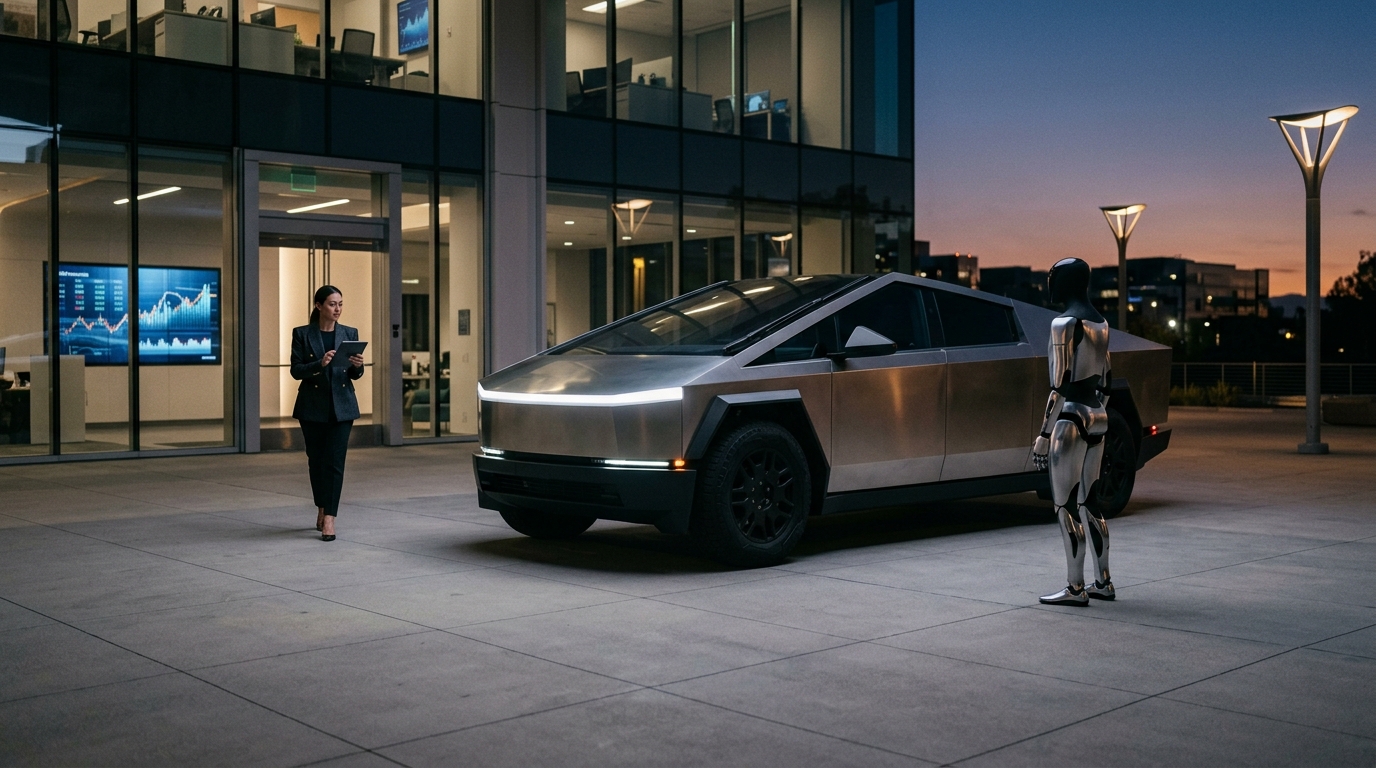
The stock has fallen roughly 21% year to date, and the options market is pricing in about a 5% move on Wednesday. Goldman Sachs said in a note this month that updates on Full Self-Driving, robotaxi, and Optimus are likely to matter more to the stock than earnings per share, and Tesla has begun putting its Cybercab into limited service in Austin. That framing is correct. This is not an automotive earnings call.
Why This Stock Now
Tesla is priced like a technology company generating recurring revenue from software and mobility services. The current valuation only works if Cybercab and Optimus can actually scale. Wednesday is the first major public reckoning with whether that is happening on a real timeline or a hopeful one.
Tesla says its robotaxi program has passed 1 million cumulative unsupervised miles, up from roughly 380,000 at Q2 earnings. The operational progress is genuine. But the path from a Texas fleet to a multi-city national rollout runs straight through a regulatory framework that was written for a different era of transportation.
The Business
Analysts broadly expect Q3 revenue around $28 billion, with earnings per share in the mid-$0.40s. Both figures are roughly flat to slightly below a year ago. The key focus will be whether Tesla continues to rely on price cuts to maintain market share and whether its automotive gross margin can rebound from 16.9% in Q2.
Energy storage is the underappreciated business inside the earnings release. The energy segment is growing, and it deserves more attention than it gets. If margins in that segment recover from the Q2 compression, it changes the profitability math in a meaningful way.
What Wall Street Is Watching
Capital spending is the uncomfortable number. Management has said it expects 2026 capital expenditures to be in excess of $25 billion, with spending expected to grow for the next two to three years. Negative free cash flow of $1.1 billion last quarter will draw attention. A company with a market capitalization above $1 trillion burning cash at this pace needs the growth story to be airtight.
Capital discipline is the dividing line between AI infrastructure stocks that hold their multiples and those that don’t. Arista Networks shows how a company with explicit AI revenue targets and 40% growth guidance earns the right to a premium valuation, the standard Tesla’s spending trajectory will be measured against.
U.S. regulators are reviewing a petition alleging Tesla robotaxis exceeded speed limits in active school zones, covering Model Y and Cybercab vehicles using automated driving. That open file hangs over any timeline Elon Musk offers Wednesday.
What Could Go Wrong
Energy storage deployments came in below some forecasts in Q3, and automotive margins have trended lower for two straight quarters. A company asking investors to pay for the future while delivering less in the present needs the future to be credibly quantified, not just described.
The Bottom Line
The bull case is not dead. A robotaxi network that compounds at the rate suggested by Austin’s early data, combined with Optimus robots and a recovering energy business, could justify a much higher price. But Goldman’s framing is right: Wednesday’s call is primarily an update on whether the non-automotive businesses have a real commercial timeline. If Musk provides concrete milestones on Cybercab expansion beyond Texas and a framework for when Optimus starts generating revenue, the stock likely moves higher regardless of the EPS line. If he offers ambition without specifics, the 21% year-to-date decline will find new lows.