There is a particular kind of frustration that comes with owning a company that posts its best quarter in its history and then watches the stock drop anyway. That is where ASML stands this morning.
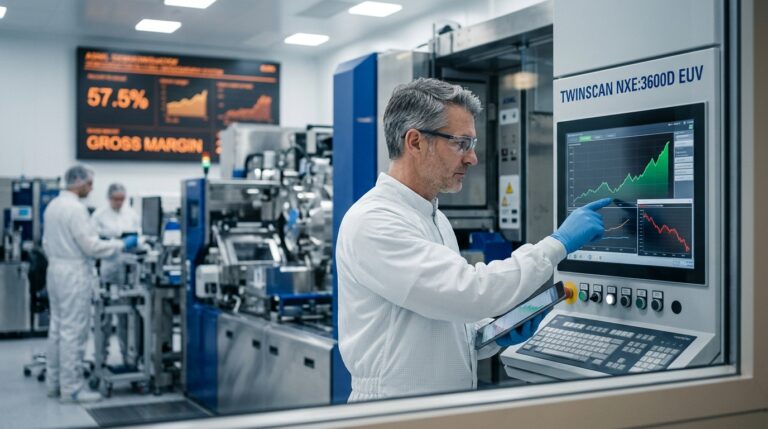
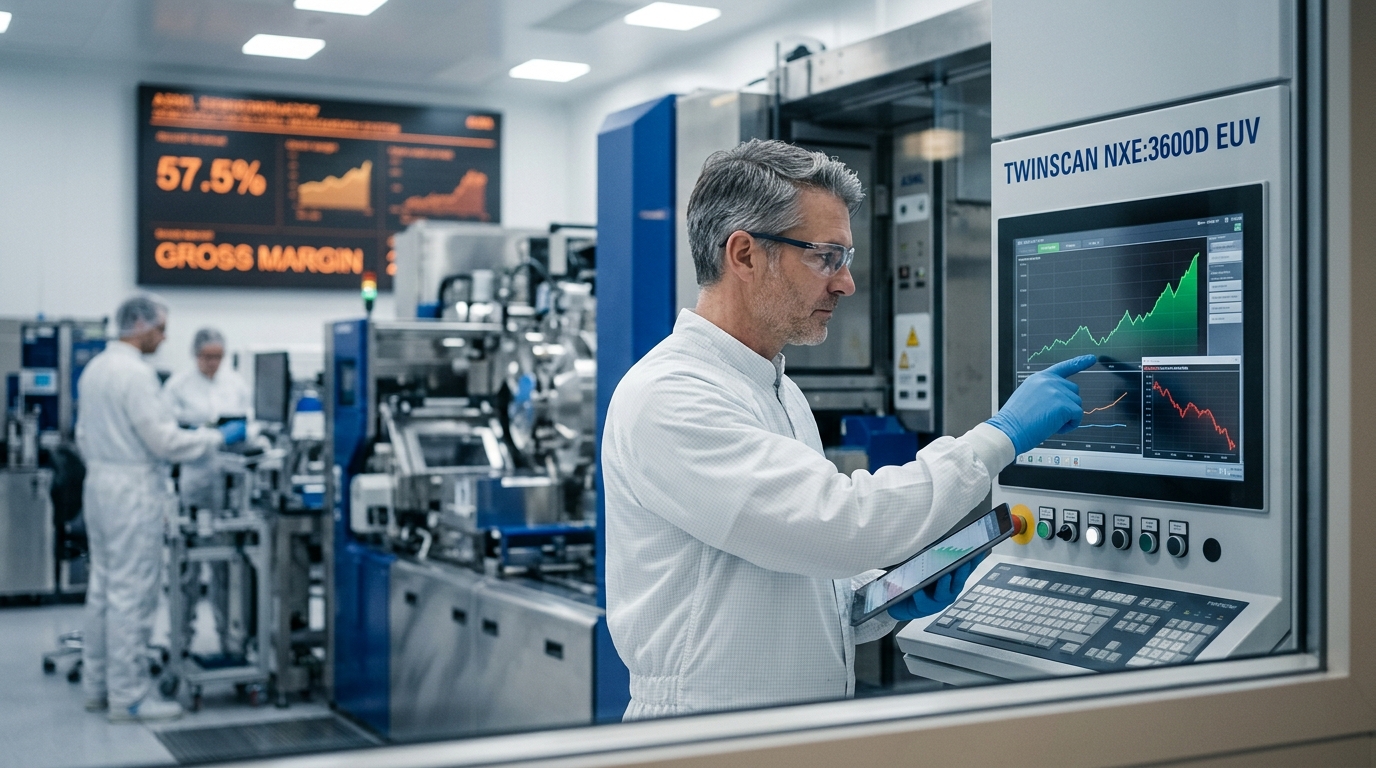
The numbers were exceptional. The Dutch semiconductor equipment maker reported record third-quarter 2026 results, with €11.7 billion in sales, €5.0 billion in net income and a 57.5% gross margin, driven by strong demand, favorable product mix and €3.3 billion in installed-base upgrades. Earnings per share of $14.65 was a remarkable $2.52 higher than the analysts’ forecast of $12.13, reflecting a 20.8% surprise. The company raised its outlook, forecasting fourth-quarter revenue of €14.2 billion to €15.2 billion and full-year 2026 sales of €44 billion to €45 billion, with EUV and installed-base revenue expected to be major contributors.
The stock fell 1.86% in the prior regular session, and shares were down about 2% in premarket US trading after the report. A classic sell-the-news pattern: the shares had climbed toward $1,800 ahead of the report. Good news confirmed does not drive incremental buyers.
The business itself tells a different story. ASML’s customers want more chipmaking capacity than the company expects to supply, even after its planned expansion. With customer demand stretching into the end of the decade, management has said it is evaluating capacity expansion beyond its prior plan. Installed-base upgrade revenue came in at €3.3 billion, above guidance. Chipmakers are not waiting for new tools: they are paying to make existing ones more productive right now.
Then there is the longer roadmap. On September 7, in advance of the SPIE Bacus Conference, ASML and TSMC formed a collaborative industry initiative to drive the transition to 12-inch photomasks, maximizing the value of High NA EUV lithography. The change is intended to solve a major limitation created by High NA EUV’s smaller exposure field. With current 6-inch photomasks, very large chips such as AI accelerators may need to be split across multiple exposures and stitched together during manufacturing. A larger mask format could reduce that complexity and improve throughput as chipmakers move toward more advanced process nodes. The roadmap also marks TSMC’s first public commitment to using ASML’s High NA technology in high-volume manufacturing for advanced nodes starting in 2030. The effort aims to establish a 12-inch mask pilot line by 2031, paving the way for 12-inch High-NA lithography systems to enter advanced-node production by 2033.
The risk is valuation. The muted market reaction suggests investors had already priced in much of the company’s strength, with ASML’s premium valuation, a P/E ratio around the mid-50s and a PEG ratio around 3.78, potentially limiting upside despite the earnings beat. Export restrictions on its China business and any chipmaker capex slowdown remain real threats. If AI infrastructure spending decelerates, the stock has room to fall further.
The valuation risk cuts both ways. AI chip customers posting record revenue while trading well below their highs show how premium multiples compress even when fundamentals hold.
Against that, customers are telling ASML they cannot get enough machines through at least 2028. Its stock price dropped about 3% in early trading after the report, pushing it below the $1,700 mark. That move compresses the valuation without any change to the underlying demand picture. If the business case was compelling at $1,800, the arithmetic is stronger today. The real question is whether the market needs more time to confirm what the order book already says.