October 7, 2026
Bonus Content: JFK Rents Hit $30. The Tarmac Is the Product.
Dear Reader,
You check your balance.
But how closely do you follow the systems behind it?
Four federal information collections touch bank deposits, financial customer-data security, securities-market activity and institutional trade settlement.
Each has a public-comment window closing October 26, 2026.
That gives you a specific reason to look beyond your account statement.
Start with what the proceedings actually cover.
Then watch a public FDIC discussion about explaining the resolution of major financial institutions while maintaining public confidence.
It includes a remark from former Goldman Sachs president Gary Cohn that deserves to be heard in context.
We’ve brought those materials together with our bank-branch closing counter so you can examine the details yourself.
See what the public can comment on before October 26.
Bill Brocius
Author of The Vanishing Dollar and Digital Dollar Exposed
Dedollarize News
JFK Rents Hit $30. The Tarmac Is the Product.
The oldest rule in real estate is location. Near major air freight hubs, that rule has taken on a specific dollar figure: $30 per square foot.
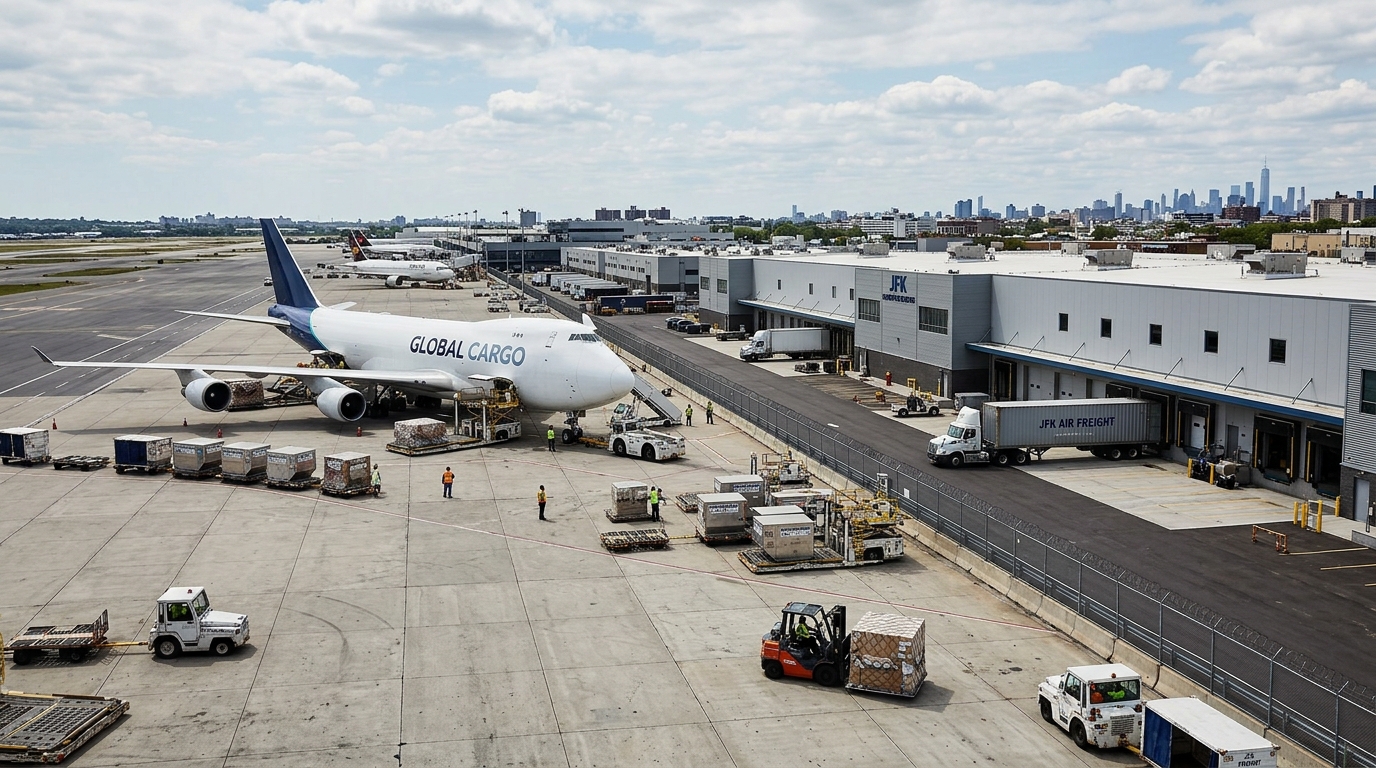
Warehouse rents wrapped around John F. Kennedy International Airport broke the $30-per-square-foot barrier, with industrial tenants inking almost 770,000 square feet of deals in JFK-adjacent submarkets in 2025, a 63.4% year-over-year jump. Triple-net asking rents hit $30.08 per square foot by year-end, per a Q4 report from Cushman & Wakefield. That is not a typo. It is also not a bubble.
The premium exists because proximity to the tarmac is not a convenience, it is an operating cost reduction. Transportation is often the largest cost line in logistics, while facility occupancy is typically a smaller slice, which means locating near airports can be cost effective. A shipper paying a 30% rent premium over a generic warehouse that sits 20 miles from the cargo apron is often still winning on total logistics spend.
Vacancy in the immediate JFK submarket sits at roughly 6.4%, leaving a very short list of modern spaces that sit a quick turn from the tarmac. New supply citywide does nothing for cargo operators who cannot afford the extra transit time. The scarcity is hyper-local, and landlords know it.
Realterm has built its entire business around this dynamic. The firm says it owns and manages the largest on-airport air cargo real estate portfolio in North America, with approximately 22 million square feet of property and developments at 40 airports. Its Northeast Cargo Campus at O’Hare encompasses 900,000 square feet, with parking for 13 jumbo freighters and support for approximately 2,200 cargo jobs on site. In July 2026, Realterm partnered with the Susquehanna Area Regional Airport Authority to develop a new cargo facility at Harrisburg International Airport in Pennsylvania, delivering up to 105,000 square feet of first-line cargo space sitting directly adjacent to the airfield apron, allowing aircraft to park at the building’s doors.
The Harrisburg play is the more interesting strategic signal. MKE, less than 70 miles from O’Hare, is also being marketed as a way to add Midwest air cargo capacity without trying to squeeze more growth out of a primary hub that is already built out. Developers are actively hunting secondary airports precisely because the primary hubs are constrained. There is nowhere left to expand at JFK.
The global version of this trend is accelerating too. FedEx broke ground on a fully automated air cargo hub at Navi Mumbai International Airport in February 2026, then announced plans in August 2026 for another $150 million facility at Delhi’s Indira Gandhi International Airport, with a proposed 230,000-square-foot hub designed to increase package-processing capacity from around 600 to 5,000 packages per hour.
The risk is not hard to identify. Air freight rates are rising partly due to renewed conflict in the Middle East, which has disrupted key airspace routes and reduced global cargo capacity sharply, including estimates of about 12% lost in the immediate shock. Any sustained normalization of routes would ease the urgency behind next-day air shipments and, with it, the premium tenants pay to be first off the plane. Long leases at record rents carry that exposure.
But the structural driver, e-commerce delivery windows compressing from days to hours, is not going away. As JFK’s redevelopment brings new cargo and passenger terminals online through 2030, industrial rents are expected to remain elevated, reinforcing the status of this market as a premium location for airport-linked users. The tarmac adjacency trade is expensive. Right now, it is also the one most hard to replicate.