September 30, 2026
Bonus Content: RTX’s $20.7 Billion AMRAAM Win Is Mostly Unfunded
Three shipments, fifty tonnes, and 4,405 ounces of silver
Fifty tonnes is about two truckloads. In 1907, 1916 and 1917 men carried roughly that much rock out by hand and by horse.
Government records put the grade between about 2,400 and 4,160 grams of silver a tonne, and the recovered silver near 4,405 ounces.
After 1917, silence for ninety years. Then in 2008 a loose rock from the same area assayed insane results. Enough to get the team mobilized.
See what modern mining technology is finding what was missed 100+ years ago..
RTX’s $20.7 Billion AMRAAM Win Is Mostly Unfunded
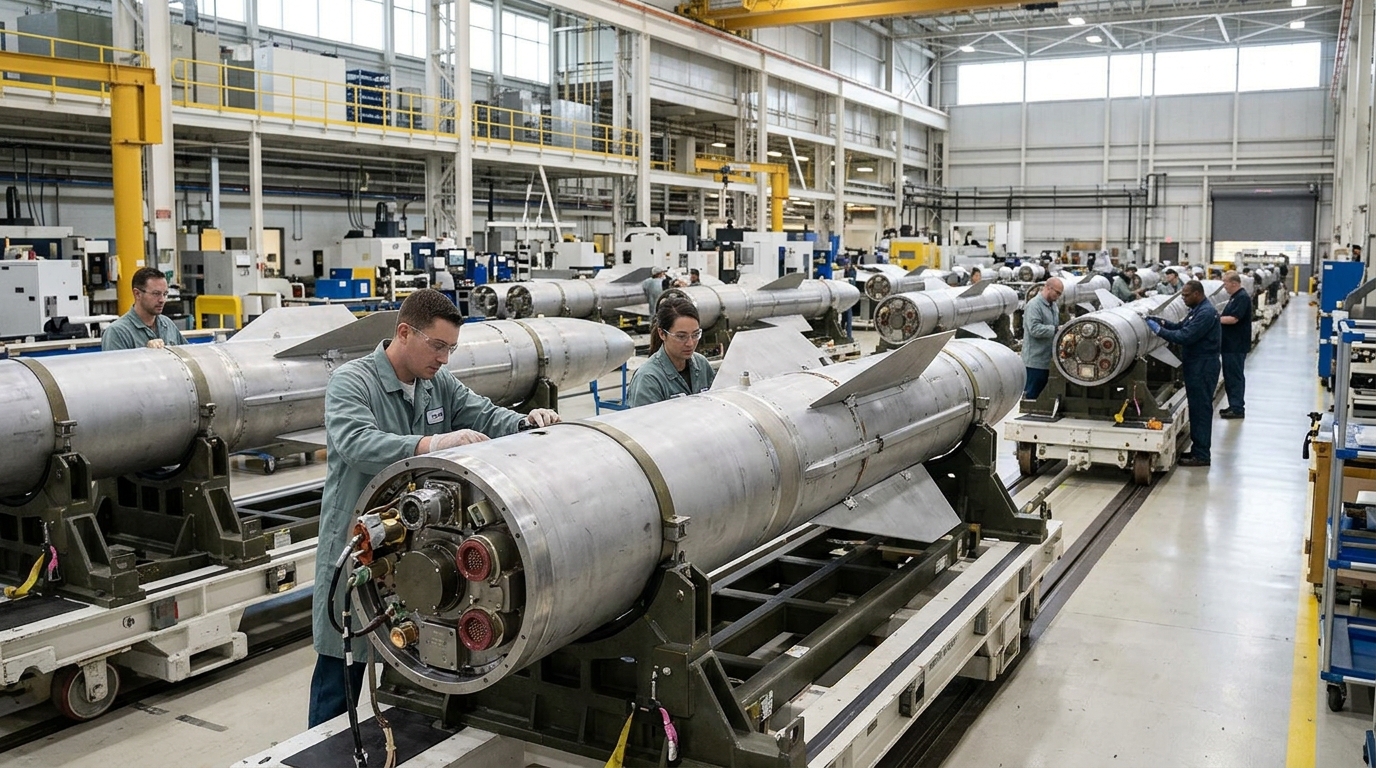
The headline number is staggering. The Defense Department awarded Raytheon a multiyear contract worth up to $20.7 billion to build Advanced Medium-Range Air-to-Air Missiles. The Pentagon said the deal will nearly double AMRAAM production, and the five-year contract is part of the Arsenal of Freedom campaign to bolster weapons production. By any measure, it is a generational commitment to one missile program. The part that should interest RTX shareholders is what was actually funded at signing.
The Business
RTX operates through three primary businesses: Collins Aerospace, Pratt & Whitney, and Raytheon. Raytheon makes the weapons. The same AIM-120 missile that NATO pilots launch from F-16s and F-22s is the baseline interceptor in NASAMS batteries from Washington to Kyiv. The missile can be launched from the NASAMS ground-based air defense system and is fielded by 44 countries. That dual-role demand, air-to-air and ground-based city defense, is what gives this program a customer base that spans nearly every U.S. ally with a serious air force.
Why Wall Street Is Paying Attention
RTX’s total backlog climbed to $289 billion, including $119 billion in defense orders, and CEO Chris Calio called demand “robust” with the backlog up 22% year over year. Raytheon posted the strongest growth of RTX’s three segments, with sales rising 18% to $8.269 billion, led by Patriot, Standard Missile, and AMRAAM programs. Q2 adjusted EPS rose 21% to $1.89. Management has raised full-year guidance twice. The AMRAAM contract is the institutional confirmation of what the backlog has been signaling for months.
What’s Driving the Opportunity
The contract structure is where the real investment case lives. Fiscal 2026 Air Force Weapons Procurement funds in the amount of $85,715 and Foreign Military Sales funds of $154,266,225 are being obligated at the time of award. That is about $154.4 million against a $20.7 billion ceiling. The Air Force obligated $85,715 in FY-26 weapons procurement funding at award, and that U.S. obligation is a fraction of the FY-26 AMRAAM resources identified in the service’s latest budget documents.
The $20.7 billion figure represents the maximum potential value of the agreement over the base period and option years, rather than an immediate payment. Defense contracts routinely start with lightweight obligations on multi-year vehicles: the real money flows as Congress appropriates year by year. The Air Force’s FY-27 budget justification shows an FY-26 AMRAAM spending plan totaling $680.7 million for 423 missiles. That is the funding pipeline sitting behind the $85,715 placeholder. The FY-27 budget request shows Air Force AMRAAM procurement rising to 1,317 missiles. RTX is already running at pace: the company says it nearly doubled AMRAAM production in 2025 compared to 2024.
The allied dimension matters just as much. The contract involves foreign military sales to Australia, Belgium, Canada, Czech Republic, Denmark, Finland, Germany, Italy, Japan, Kuwait, Netherlands, Norway, Poland, Sweden, Taiwan, and the United Kingdom, sixteen governments that face the same stockpile pressure as the Pentagon. Foreign Military Sales funding travels on a separate track; it does not always move on the same calendar as annual U.S. appropriations.
What Could Go Wrong
The risk is real and worth naming. RTX’s 52-week range runs from $155.64 to $226.88, and at roughly $187 today the stock sits about 17% below its annual high. Bernstein lowered its RTX price target to $223 from $232 and maintained a Hold-equivalent rating on September 23, citing execution and valuation concerns. A contract ceiling of $20.7 billion means nothing if annual appropriations disappoint or a budget continuing resolution delays obligation. Geopolitical de-escalation, however unlikely it looks today, would reduce urgency among allied buyers. RTX also carries a P/E above 33, which leaves limited tolerance for guidance misses at Q3 earnings, due in October.
The Bottom Line
RTX is not a trade on a contract announcement. It is a trade on a structural rearmament cycle where the contracts are now signed, the customers span four dozen countries, and the production ramp is already underway. Raytheon’s defense backlog stood at $86 billion as of June 30, 2026, and the division recorded $20 billion in bookings in Q2 alone. The $85,715 obligated at AMRAAM award is not a flaw in the thesis. It is precisely why the full $20.7 billion is not yet priced into a stock trading about 17% off its high. The market is waiting for appropriations to follow the contract. History says they will.