
September 10, 2026
Bonus Content: Lockheed Martin Is Down 22% From Its High. A $230 Billion Backlog Says That Is Wrong.
The AI Boom Is Creating A Copper Wake-Up Call

Critical metals are having a 2026 moment. And copper may be one of the biggest reasons why.
AI data centers need it. Power grids need it. Electrification needs it. So as demand rises, investors are starting to ask a much simpler question:
Where will the next supply come from?
In a world where critical mineral supply chains are getting more complicated, friendly copper stories are starting to matter more.
Future copper supply is not just about price. It is about location, access, permitting, funding, and whether a project can move forward in a world where new mines are getting harder to build.
That is where this small copper story comes in. It sits in one of North America’s most popular copper-gold regions. Plus, it has historical drilling and fresh exploration funding.
Copper is no longer just a commodity story. It is becoming a supply story.
Lockheed Martin Is Down 22% From Its High. A $230 Billion Backlog Says That Is Wrong.
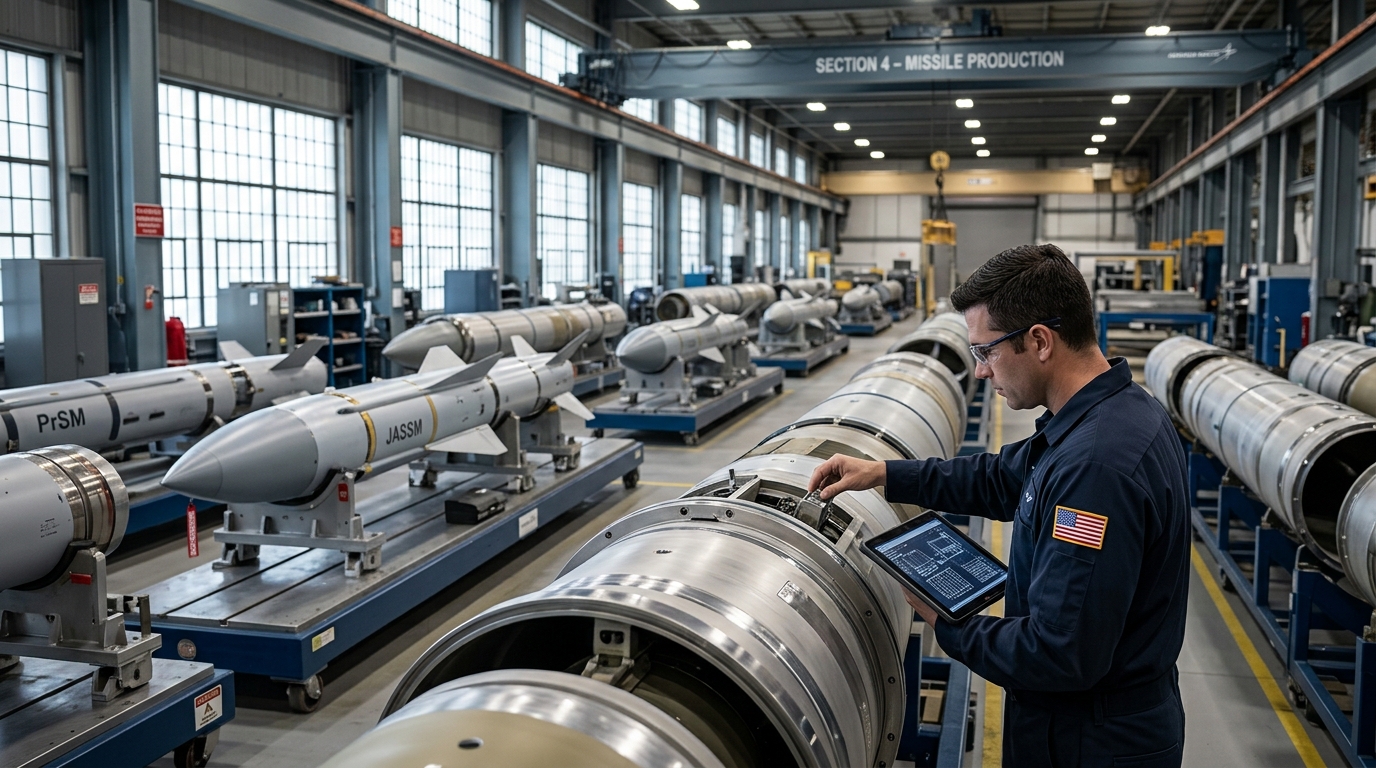
Lockheed Martin hit an all-time high near $692 on March 2, 2026. It has since fallen roughly 22%, to around $525. That pullback happened while the company was simultaneously signing some of the largest missile production agreements in its history and watching its backlog swell to about $230 billion.
Why This Stock Now
On September 8, UBS upgraded LMT to Buy from Neutral and raised its price target to $674, implying about 26% upside from recent trading levels. The bank’s thesis is simple: Lockheed is set to see growth across several business segments, with missiles and munitions, F-35 sustainment, the CH-53K helicopter, and the Trident program driving a 9% revenue compound annual growth rate through 2028, UBS wrote Tuesday. The UBS note also argued that this growth rate is above consensus and does not appear priced in given what it described as a roughly 15% valuation discount versus the S&P 500.
The Business
As of June 28, 2026, Lockheed’s ending backlog was $230.4 billion, the company reported with its second-quarter 2026 results. Management said the first-half increase was primarily driven by an undefinitized contractual action awarded for the THAAD program. That is not a forecast; it is committed future work already on the books.
The Missiles and Fire Control segment is the engine behind that backlog jump. In June, the U.S. government awarded Lockheed Martin a seven-year undefinitized contract action for up to $35 billion to quadruple production of THAAD interceptors, the company announced on June 24. In April, the U.S. government awarded a separate $4.7 billion undefinitized contract action to support accelerated production of PAC-3 MSE interceptors, Lockheed and the U.S. Army said at the time. Alongside those, framework agreements for other munitions programs are also in place. The broader point is that U.S. and allied forces have been rebuilding inventories after a period of unusually high consumption and heightened demand, which makes the near-term appetite for interceptors less hypothetical than in a normal budget cycle.
Why Wall Street Is Paying Attention
UBS drew a clear line between development programs, which carry engineering and cost risk, and multiyear production orders, which are more about scaling factories and supply chains that already function. The firm is effectively betting that the market still prices missile output as riskier than it is, and that this mismatch is a key driver of the upgrade.
UBS also pointed to an unusually strong recent bookings cadence and said it expects sales to grow about 9% annually over the next two to three years, with earnings growth in the double digits. In the same report, UBS projected adjusted earnings per share of $39.34 in 2028. UBS added that free cash generation could see temporary compression in 2027 due to pension funding, before recovering, with its model rising from $6.9 billion in 2025 to about $9.6 billion by 2030.
What Could Go Wrong
Market data compiled by LSEG and cited by CNBC show 13 of the 24 analysts who cover the stock rate it a hold, while another 10 assign buy or strong buy ratings. One analyst has an underperform rating. The skeptical majority is not ignoring the contracts; they are questioning execution. Fixed-price development work in Lockheed’s aeronautics segment has pressured margins, and a classified advanced program has been cited as a source of losses. The pension overhang is also real, requiring normalization of roughly $1 billion before free cash flow figures fully reflect earnings power.
There is also the concentration risk: an outsized portion of the bull case depends on sustaining missile production ramp speeds that require both supply chain cooperation and continued government appropriations.
The Bottom Line
UBS values LMT at about 11.8 times forward 12-month EV/EBITDA and argues the shares trade at a roughly 15% discount to the S&P 500, which it considers unjustified. With a $230 billion backlog, a $35 billion THAAD contract, accelerating PAC-3 production, and earnings estimates that may understate the missile ramp, the stock’s pullback from its high looks less like a risk signal and more like a delayed re-rating. The next earnings report, expected in late October 2026 (the company has not formally confirmed a date, though market calendars commonly estimate around October 20), is the next hard catalyst. LMT is the most specific defense opportunity in this market right now.