

September 10, 2026
Bonus Content: Intuit Is Down 55% From Its High. The Numbers Say the Selloff Missed the Story.
There might be no clear end in sight to the Iran war…
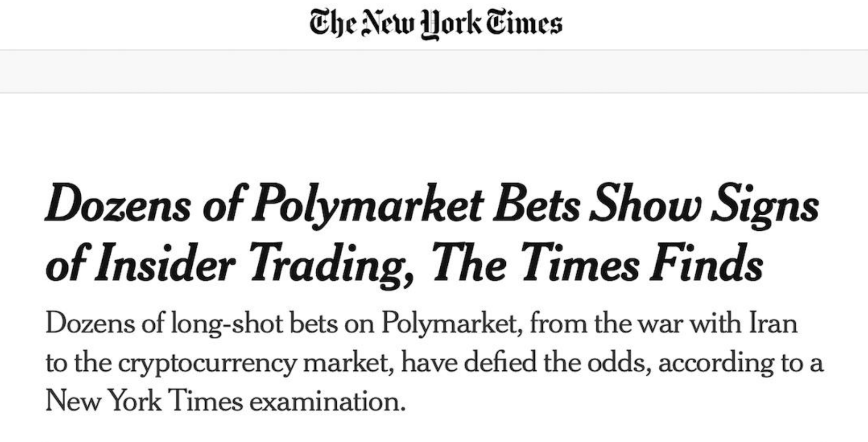
But this escalation is likely distracting you from a stunning pattern quietly heating up in the predictions market…
Corporate and Political insiders, folks with firsthand info on potential announcements, deals, policy changes coming up and more…
Have been making sneaky yet massive bets on platforms like Polymarket…
And quietly front-running the market in the process.
That’s why you’d have noticed news about this pattern flying around…
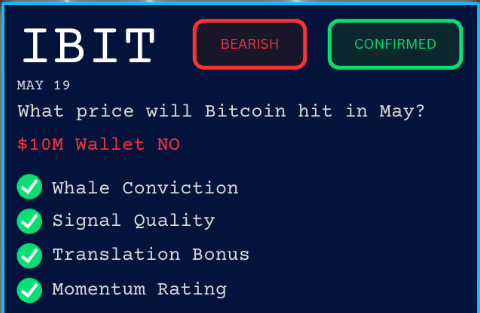
Out of the blue on May 19th this year…
I tracked a large bearish bet on Bitcoin from an account with over $10 million in volume…
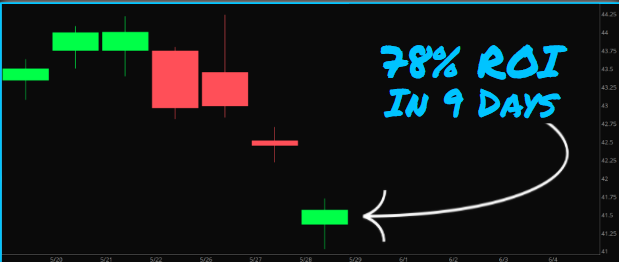
Days later… News came out that the SEC was delaying plans to further crypto innovations, obvious bad news for Bitcoin.
Acting on the bearish bet before the news came out with a quick trade locked in 78% in 9 days.
It doesn’t end there…
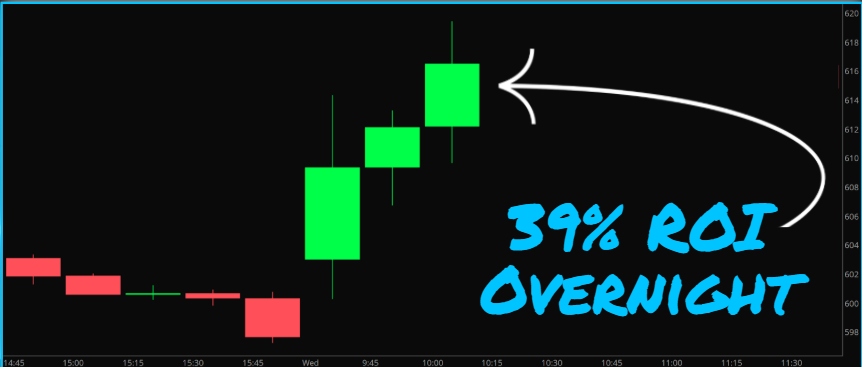
These massive insider bets also tipped off a 39% winner on META overnight.
And even 60% on TSM in 6 days.
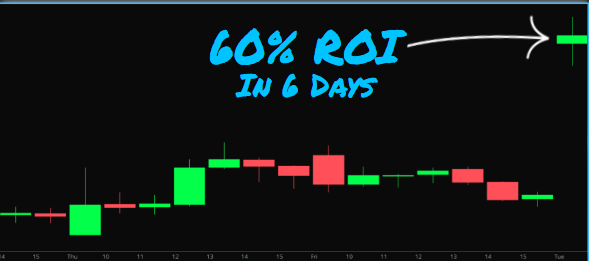
There were smaller wins and those that didn’t work and I won’t make reckless guarantees about the stock market…
But in the next few minutes…
I’ll show you the special secret I use to track these insider bets…
Better yet…
You’ll get FREE access to use this secret for yourself too… with no catch.
All you have to do is tap this link to get instant FREE access and start tracking these insider bets yourself.
To Better Trading,
Alex Reid.
Intuit Is Down 55% From Its High. The Numbers Say the Selloff Missed the Story.

Intuit’s stock has been treated like a company in distress. Over the past 52 weeks, INTU has traded between $252.84 and $705.08, and at recent prices it sits about 55% below its 52-week high. The operating results tell a different story.
That disconnect between price and fundamentals has drawn attention beyond this analysis. a separate look at Intuit’s 45% decline set against its 14% revenue growth reaches a similar conclusion: the selloff appears to have priced in a deterioration that the reported numbers do not yet support. Understanding why the market arrived at such a pessimistic valuation requires examining each of Intuit’s four business lines in turn.
Why This Stock Now
Intuit just closed its fiscal year. Full-year revenue grew 14% in fiscal 2026, and non-GAAP diluted earnings per share grew 20%. The company beat Q4 estimates on both lines, and repurchased $5.5 billion of stock during fiscal 2026, up 96% versus last year. The company has a remaining authorization of $7.9 billion. This is not a company conserving cash because it is worried about the future.
The Business
Intuit operates four franchises: QuickBooks, TurboTax, Credit Karma, and Mailchimp. Together they serve tens of millions of small businesses, consumers, and tax filers, most of whom renew annually and rarely defect. The company’s Big Bets, which include assisted tax, money, and mid-market, collectively grew 34% in fiscal 2026 and now represent 30% of total revenue.
The mid-market segment is becoming the growth engine that the stock price does not yet price in. Mid-market revenue grew 39%, with Intuit Enterprise Suite annualized revenue surpassing $145 million in Q4, a 4x increase from the prior year, and new-to-franchise mid-market customers grew over 30%. Enterprise Suite is Intuit’s push upmarket into the ERP replacement space. It is early but accelerating.
Why Wall Street Is Paying Attention
The AI-disruption thesis that crushed INTU assumes TurboTax is the whole business. It is not. Intuit’s fiscal 2027 outlook calls for 9% to 10% revenue growth and management continues to emphasize expanding free cash flow over time. AI risks are concentrated in low-end DIY tax, but TurboTax Live and mid-market segments are growing robustly. TurboTax Live, the human-assisted version, grew revenue 37% in fiscal 2026. That is the opposite of a business being disrupted.
Truist, Mizuho, and HSBC frame AI as an opportunity rather than a pure threat, citing early traction for Intuit’s AI-powered offerings and arguing that Intuit could be well placed to embed AI tools into existing platforms. Intuit has partnered with Anthropic to develop AI-powered financial intelligence tools and custom AI agents. Management has highlighted adoption of AI agents across its platform, but specific customer counts and time-savings claims vary by product and study.
The idea that AI can be a revenue multiplier rather than a disruptor is gaining traction across software platforms more broadly. how AI-driven traffic tripled orders for Shopify and changed its long-term revenue math offers a useful parallel: in both cases, the market initially priced AI as a threat while the underlying infrastructure told a different story. The pattern is worth keeping in mind as Intuit’s own AI agent adoption data begins to accumulate.
What Could Go Wrong
Fiscal 2027 revenue guidance of 9% to 10% reflects a deliberate deceleration as the company shifts its DIY tax pricing strategy and manages the continued migration from legacy desktop products. That deceleration spooked investors after the August 25, 2026 report. Management projected TurboTax revenue growth of just 2% to 3% for 2027, down from 7% in 2026, while Mailchimp revenue is expected to be flat to down 1%.
The valuation, while dramatically lower than a year ago, is not distressed-company cheap. At roughly $314 per share and a market cap near $87 billion, INTU still trades at a premium to the S&P 500 on a trailing basis. If online paying customer growth, which slowed to 3% in fiscal 2026, does not re-accelerate, the deceleration story becomes self-reinforcing.
The Bottom Line
Historically, Intuit has often traded at a meaningfully higher price-to-earnings multiple than it does today. The current level implies significant market pessimism about the company’s AI future. But if AI integration proves additive rather than disruptive, the multiples could re-rate meaningfully higher. A business that grew revenue 14% and non-GAAP EPS 20% last year, bought back $5.5 billion of its own stock, and raised its dividend is not behaving like a franchise in structural decline. The stock is pricing in a disruption that has not shown up in the results. That gap is the argument for INTU today.