September 8, 2026
Bonus Content: Lilly Is Building the Largest API Drug Factory in U.S. History
Copper is at record highs. Gold just blasted to $5K.
And while most juniors are forced to repeatedly raise money to keep the drills turning… this sub – $1 copper-gold explorer has one of the world’s largest gold producers funding the work.
That’s a huge advantage.
Meanwhile, shares still trade below $1.
And major-company-funded drilling is only the beginning.
Across two premier Australian mineral belts, drills are turning with plenty of firepower for what comes next:
✔ Major-company-funded exploration Down Under
✔ An aggressive new multi-project drill campaign
✔ Multiple paths to copper-gold discovery
✔ A strong treasury and tight share structure
✔ BONUS: Our exclusive interview with the CEO
That’s a lot of upside packed into a sub – $1 stock.
Click here to access our FREE online report… and discover why this under-the-radar copper-gold explorer has all the ingredients for a major breakout as the drills turn Down Under.
Lilly Is Building the Largest API Drug Factory in U.S. History
Eli Lilly is not just expanding capacity. It is executing a manufacturing land grab that may define the obesity drug market for the next decade, and the scale of the bet is worth understanding clearly.
Why This Stock Now
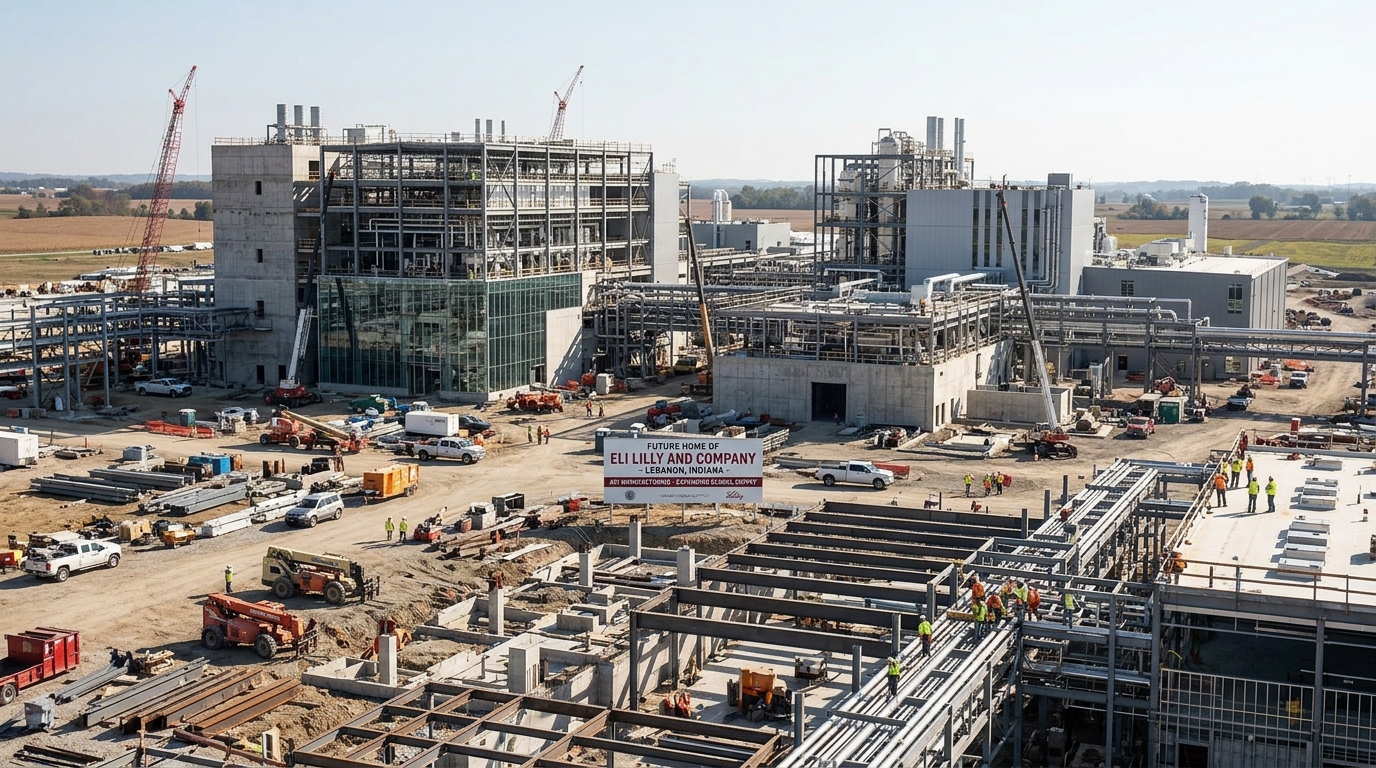
Lilly has committed an additional $4.5 billion to expand two of its three Lebanon, Indiana sites, pushing total Indiana capital expansion commitments beyond $21 billion since 2020. That figure alone would be notable. But the more important number is what the factory is for.
When the Lebanon API site opens in 2027, CEO David Ricks says it will be the largest active pharmaceutical ingredient production site in U.S. history. The previous record holder was also a Lilly facility. This is a company building its own ceiling and then raising it.
The Business
Zepbound revenue increased to $4.1 billion in Q1 2026, up 79% from $2.3 billion in Q1 2025. Worldwide revenue in Q1 2026 hit $19.8 billion, a 56% increase year over year driven by a 65% jump in volume. Those are the numbers justifying the construction spend.
But tirzepatide is only half the production story now. On April 1, 2026, the FDA approved Foundayo (orforglipron), a once-daily oral GLP-1 receptor agonist for adults with obesity (or overweight with at least one weight-related comorbid condition), and Lilly says it can be taken any time of day without food or water restrictions. Analysts have projected orforglipron could peak at $30 to $40 billion in annual sales, and crucially, its small-molecule chemistry is cheaper to manufacture and scale than peptide-based GLP-1 drugs.
What’s Driving the Opportunity
The manufacturing build-out spans the country. Lilly says its U.S. capital expansion commitments since 2020 total more than $50 billion, with projects in places including Indiana, Texas, and Puerto Rico. In January 2026 alone, the company committed more than $3.5 billion for a new facility in Fogelsville, Pennsylvania. That site is expected to manufacture injectable medicines and devices, including producing retatrutide, Lilly’s next-generation triple-acting GLP-1.
Analysts at Leerink have argued Lilly’s scale could become a competitive advantage as the market shifts toward a price-for-volume fight, enabling Lilly to hold up even if prices eventually come down. That is the core thesis: build enough factories that price compression does not break the model.
What Could Go Wrong
Orforglipron’s approval marks a significant expansion of oral options, but at least some clinicians have noted that oral GLP-1s may not match the weight-loss efficacy of leading injectable GLP-1 agents in practice. A product that underperforms on weight loss in head-to-head patient experience could cap Foundayo’s commercial ceiling well below the bull case.
The stock itself trades around $1,124 (as of September 8, 2026). That spread reflects genuine uncertainty: Lilly can generate extraordinary revenue, but the stock is pricing in a lot of that already.
The Bottom Line
Lilly’s fiscal year 2026 guidance has been raised since the initial forecast: as of the company’s Q2 2026 update, it expects revenue of $84.0 to $86.0 billion, with non-GAAP EPS guidance of $35.50 to $37.00 per share. The manufacturing investments are not a hedge against failure. They are how a company that already generates those numbers intends to stay ahead of a market it helped create. The factory in Indiana is the argument.