The BLS Employment Situation for August hit at 8:30 this morning, and the number you saw is only half the trade. The other half is who inside the Federal Reserve it moves.
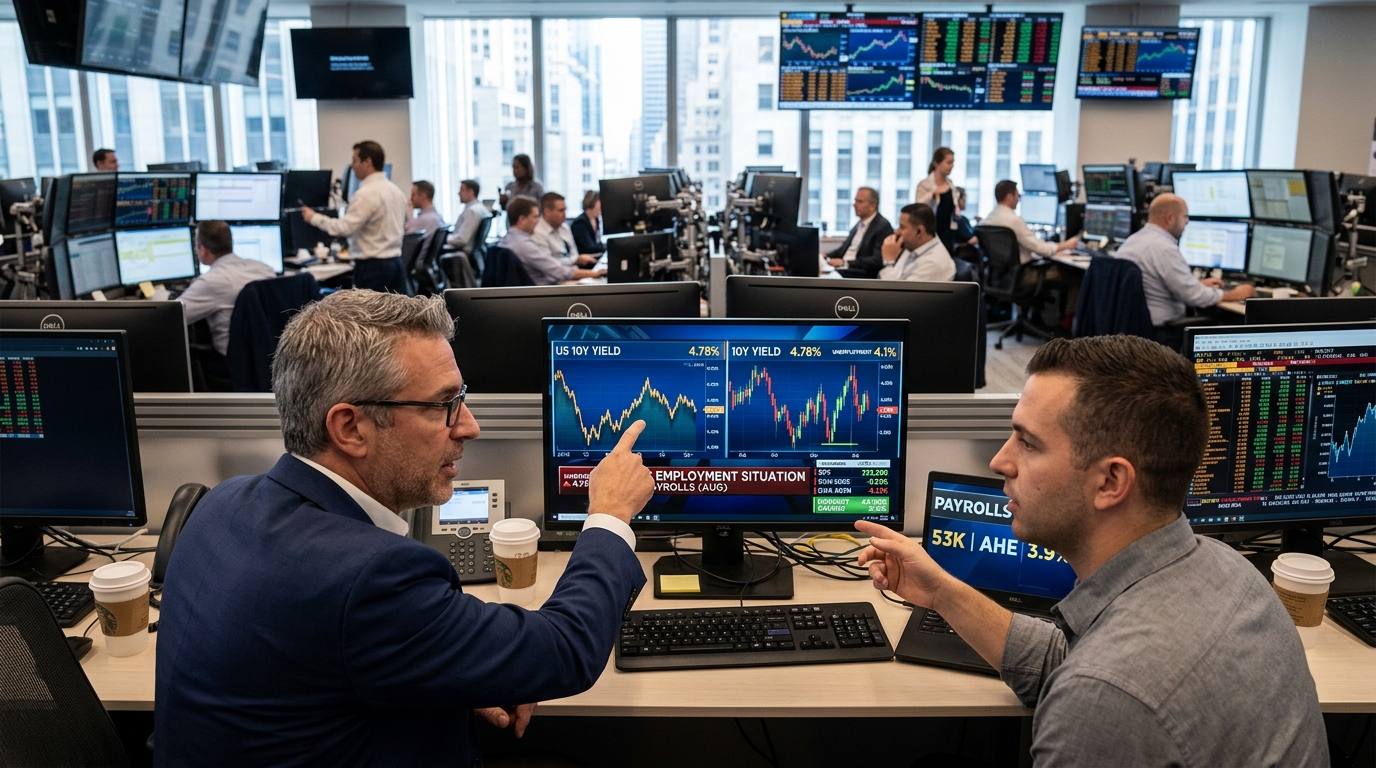
The Dow Jones consensus expected 53,000 in nonfarm payrolls, a modest rebound after a dismal July. That previous report showed payrolls fell 23,000, unemployment held at 4.1%, and prior months were revised down by a combined 103,000. That’s a three-month trend that has erased confidence in the headline number as a standalone signal. Wages cooled too: average hourly earnings rose 0.1% in July, with the annual rate at 3.2%, the softest year-over-year gain since May 2021.
That wage deceleration is what makes today’s average hourly earnings reading the fulcrum of the whole report. The 10-year Treasury yield closed Wednesday at 4.78%, elevated enough that a hot earnings figure, say 0.3% or better month over month, could push it toward the 4.82% area last touched in early September. That move resets the pressure on TLT, which has already been absorbing pressure since August. A soft earnings read, on the other hand, gives bond bulls the confirmation they’ve been waiting for and likely pulls the 10-year back toward 4.65%.
The Fed Divide Is Real, Not Theatrical
Fed Chair Kevin Warsh used his Jackson Hole speech to sharpen his inflation warning, delivering a more hawkish reading than he offered after the July meeting. That stance pushed September hike odds to about 57%, up from about 35% the day before, according to CME FedWatch.
Then came Thursday. Governor Christopher Waller said he is leaning toward keeping rates steady at the September meeting, provided there are no surprises from upcoming inflation data. In remarks that contrast with Warsh’s statements, Waller expressed confidence in current inflation trends, saying tariff impacts have likely been muted and higher energy prices haven’t substantially spread to other parts of the economy. Market-implied odds for a September hike dropped following his remarks.
That kind of swing in a single session tells you the committee is genuinely split. At the July meeting, three FOMC members dissented, arguing the bank should have raised rates rather than held them steady. Warsh wants to hike. Waller wants to wait. The September 15-16 decision is not settled.
Two Scenarios, Two Trades
The jobs-report reaction function is inverted from prior years. Through 2024 and 2025, weak payrolls meant cuts and a relief rally. In September 2026, a strong August print is the hawkish outcome, and a soft one takes hike risk off the table.
Scenario one: payrolls come in above 80,000 with hourly earnings at 0.3% or higher. September hike odds surge back toward 65%. The 10-year presses toward 4.85%, TLT retests its August lows, and SPY faces renewed pressure on rate-sensitive sectors. Waller’s hold thesis weakens considerably before CPI next week can rescue it.
Scenario two: payrolls print below 30,000 or earnings come in flat. The Waller camp gains credibility. September hike odds drop below 45%, the 10-year retreats, TLT bounces. VIX closed Thursday at about 14.3, which means options are not pricing a dramatic move. A relief rally in equities is plausible, but the ceiling is real: August CPI arrives September 11, and that report now carries as much weight as today’s.
Trader’s Action Plan
Wednesday’s ADP showed private payrolls rose by only 38,000 in August, below both July’s 46,000 and the 47,000 economists expected, which tilts the pre-report lean toward a softer BLS number. But ADP has missed badly in both directions this cycle, so treat it as context rather than confirmation.
Watch average hourly earnings first, payroll count second, and revisions third. A large downward revision to June or July shifts the trend even if August beats the headline consensus. Prior average hourly earnings stood at $37.62, up 3.2% annually, while a separate August benchmark revision indicated a 79,000 downward adjustment to the March 2026 nonfarm level. Any further benchmark creep deepens the hole.
The FOMC meets in eleven days. Whatever this number delivers, Warsh and the hawks still need August CPI to make their case. That keeps September a live meeting regardless of what the 8:30 number shows. Position sizes should reflect that the real volatility event may still be ahead.