
April 27, 2026
The Pipeline Stock That Quietly Became a Crisis Winner
Energy Transfer is doing something most energy stocks can’t — delivering yield and price appreciation at the same time
Oil above $100 a barrel. The Strait of Hormuz effectively shut to commercial traffic since late February. Twenty percent of the world’s seaborne oil suddenly rerouted — or stuck. It’s the most severe energy supply disruption in modern history, and it has reshuffled the entire energy investment landscape in ways that are still playing out.
Most investors instinctively reach for the oil majors. Chevron is up 37% year-to-date. ExxonMobil has delivered nearly 42%. Big moves, no question. But there’s a different kind of energy play that’s been working just as well — and carries a fraction of the commodity price risk.
That’s Energy Transfer LP (NYSE: ET).
Up more than 16% in 2026. Still yielding nearly 7%. Trading at roughly 15x normalized earnings. And 18 of 21 analysts surveyed by S&P Global rate it a Buy or Strong Buy. The part most people skip: this is a company whose core economics barely flinch when oil drops $20 overnight.
Your Free Options Book Is About to Vanish
In case you missed it… make sure you get your free “Simple Options Trading For Beginners” book before your link expires.
I eventually plan to charge money for this training, so do yourself a favor and download it now…
That way, no matter what it costs in the future, you’ll have a free copy.
Sound good?
The Toll Road Model
Here’s the thing about Energy Transfer — it doesn’t actually need $100 oil to win. About 90% of the company’s adjusted EBITDA comes from contract fees, not commodity prices. Its business operates like a toll road: what matters isn’t the price of oil, it’s the volume of oil moving through its pipes.
The Strait of Hormuz crisis has directly increased demand for U.S. oil and gas. When Middle East supply gets choked off, buyers scramble for alternative sources — and that means more volume flowing through American pipelines. More volume benefits Energy Transfer directly.
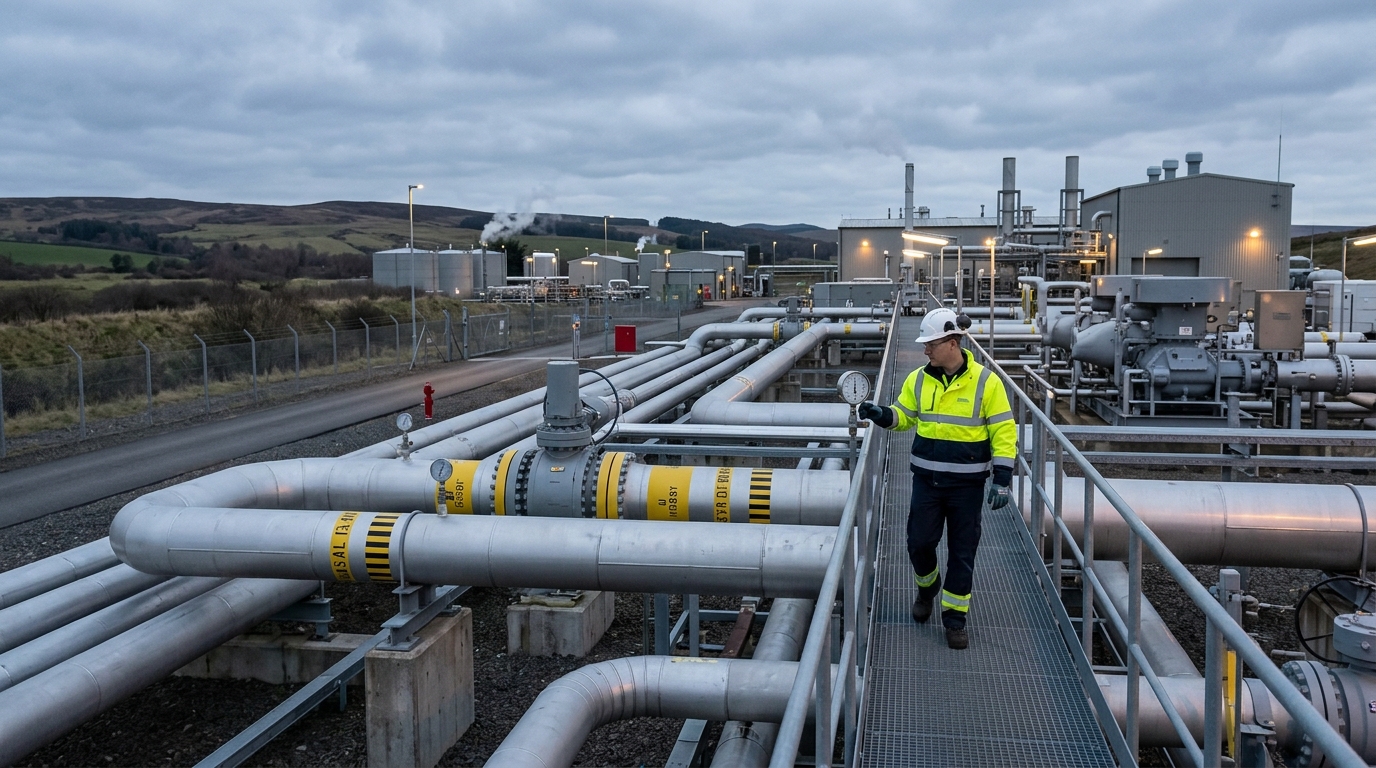
The scale here is genuinely impressive. The company owns more than 140,000 miles of pipeline spanning the U.S., transports around 32 million BTUs per day of natural gas and 7 million barrels per day of crude oil, and fractionates roughly 1.1 million barrels per day of NGLs. This is one of the largest midstream footprints in North America — a network that took decades to build and can’t easily be replicated.
Slight tangent, but it matters: that 140,000-mile figure spans 44 states and touches virtually every major production basin in the country — Permian, Haynesville, Marcellus, Eagle Ford. When U.S. production ramps up to fill the void left by Middle East disruptions, ET’s pipes are the path of least resistance for that incremental volume. The company isn’t chasing the next barrel. It’s already sitting underneath it.
The Income Angle
Revenue for the most recent quarter was $25.32 billion, up 29.6% year-over-year. The company generated approximately $8.2 billion in distributable cash flow in 2025. And that quarterly distribution of $0.335 per unit? It’s nearly double what it was paying back in early 2022.
At a current yield around 6.9%–7.1%, Energy Transfer offers income that’s genuinely hard to find. Ten-year Treasuries are yielding 4.2%. High-yield savings accounts are around 4%. The Schwab U.S. Dividend ETF yields 3.4%. ET sits well above all of them — and management expects distribution growth of 3%–5% annually going forward.
It also trades at a price-to-earnings ratio of roughly 15x, and a price-to-sales ratio of 0.77. For context, that’s a consumer staples-level valuation on a company with direct leverage to the energy supply crisis defining the macro environment right now.
What’s interesting is how the distribution coverage looks. ET’s distributable cash flow comfortably covers its payout — the coverage ratio has stayed above 1.8x, meaning the company generates nearly twice the cash it needs to pay distributions. That’s not a yield that’s stretched thin. It’s a yield with room to keep growing.
The Demand Shift Nobody Fully Priced In
Beyond the crisis, there’s a longer-term demand picture building. U.S. LNG exports have been running near record levels as European and Asian buyers lock in supply away from the Middle East. That gas has to travel from wellhead to export terminal — and a significant chunk of that journey runs through ET’s infrastructure.
Then there’s the data center angle, which is newer and worth flagging. Natural gas demand from AI-driven power consumption is accelerating faster than the grid can absorb it. ET has already signed agreements to supply gas directly to data center campuses — a demand category that essentially didn’t exist in its customer base three years ago. These are long-term, fee-based contracts with the kind of counterparties that don’t miss payments.
The company has outlined growth capital spending of approximately $5.0–$5.5 billion in 2026, much of it tied to natural gas pipeline expansions serving exactly these markets. That’s not a company milking a legacy asset. That’s a company actively positioning for the next phase of energy infrastructure demand.
Public Law 63-43: Trump’s Secret Weapon to Win the Midterms?
Most pundits are predicting the coming midterm elections will be a disaster for Republicans.
But the 112-year-old little-known law you see below could save Trump from this disaster.
Because Public Law 63-43 could also have a huge impact on your wealth in 2026 – starting on May 15th.
What to Watch
The risk picture is real and worth naming. Energy Transfer’s leverage ratio and its history of operational stumbles — including the Q4 2025 earnings miss on EPS ($0.25 vs. $0.34 expected) — mean this isn’t a clean, flawless story. Its acquisitive nature has occasionally led to overpaying for assets. And a swift resolution to the Hormuz standoff could soften volume tailwinds faster than expected.
But the structural setup here may outlast any near-term ceasefire. UBS expects Brent crude to remain above $90 even if peace is reached soon. Many analysts believe it could take months for shipping flows to normalize after a deal, given the time needed to restart shut-in production and repair damaged infrastructure.
And even after the geopolitics fade, Energy Transfer still has a 7% yield, a fortress-scale pipeline network, a multibillion-dollar growth capex program, and growing U.S. LNG export demand — none of which goes away when peace talks succeed.
The energy sector is on fire right now. Not everything in it is worth owning. But a pipeline toll-collector paying you 7% — while simultaneously building out the infrastructure for the next decade of gas demand and signing data center supply deals — that’s a setup that doesn’t come along often.
Start here.