
May 3, 2026
The Power Constraint is Not Theoretical
Power demand, capital expenditure cycles, and cooling technology are where the next wave of AI monetization pressure surfaces
First a message from our friends at Investor Place Media
Editor’s Note: Elon’s next launch will be bigger than SpaceX, Tesla and xAI combined, says the man voted America’s #1 stock picker in 2020. Get the full story from my colleague while there’s still time.
Dear Reader,
I recently paid $5,000 to be in a room with Elon Musk in Los Angeles.
And what he said in that room, confirmed everything my 15+ years in the tech industry had been telling me.
Most people see the rockets, the cars, the headlines and think they understand Elon.
But what they don’t realize every single thing Elon does is years… sometimes even decades… in the making.
And it’s all connected in ways we’re only just starting to see.
But I believe what Elon is launching right now – a project 27 years in the making – could be his biggest move yet.
And make you more money than anything he’s ever touched.
If you buy just one stock in 2026, I urge you to make it the one I’m giving away for free here.
Best,
Luke Lango
Senior Investment Analyst, InvestorPlace
P.S. My readers have had the chance to see gains as high as, AMD +8,500%… Nvidia +5,000%… Tesla +3,500%… GameStop +2,700%… IonQ +1,400%… Shopify +1,400%… Netflix +1,200%… Palantir +1,200%… AppLovin +800%… Apple +890%… Meta +850%… and Rocket Lab +1,250%.
FEATURED READ
The AI Infrastructure Bill Is Coming Due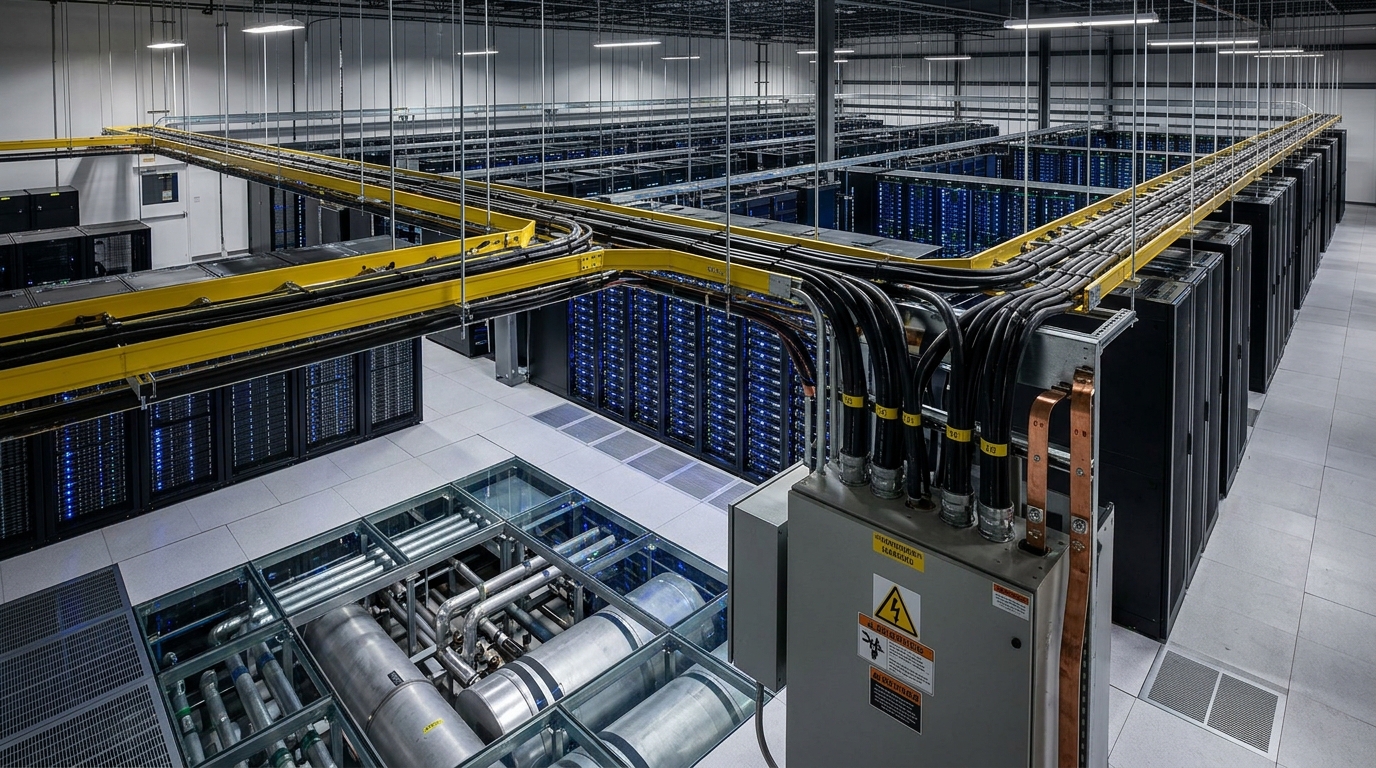
The AI infrastructure buildout has been framed almost entirely as a demand story. More compute, more GPUs, more data center square footage. What that framing consistently obscures is the supply-side constraint that is quietly becoming the binding variable: electrical power and thermal management. The next week brings a convergence of earnings, utility load data, and capital expenditure disclosures that will force the market to reckon with the true cost structure of the AI era.
The Power Constraint Is Not Theoretical
Data center electricity consumption in the United States is projected to reach 12% of total national grid demand by 2027, up from approximately 4% in 2023, according to Lawrence Berkeley National Laboratory estimates. That is not a rounding error. It is a structural shift that affects grid operators, industrial REITs, cooling technology companies, and power equipment manufacturers simultaneously.
The critical question heading into the week of May 25 is whether the market has fully priced the capital intensity required to sustain the current AI buildout pace – or whether earnings season is about to deliver a revised cost reality.
Vertiv Holdings (VRT): Thermal Management in Focus
Vertiv, which produces power and cooling infrastructure for data centers, is one of the most direct expressions of AI infrastructure demand that does not carry GPU-level valuation risk. The stock has appreciated roughly 38% year-to-date, but forward earnings revisions have tracked higher alongside it. Revenue guidance for fiscal 2026 stands at $9.1 billion, with analysts modeling 18% growth. IV rank near 58 reflects options market uncertainty ahead of its next major investor day commentary. For traders who believe infrastructure spending continues to expand, defined-risk bull structures with strikes positioned above $130 reflect the asymmetry in play.
Eaton Corporation (ETN): The Quiet Beneficiary
Eaton’s electrical systems segment – which produces switchgear, transformers, and power distribution equipment – has become a primary beneficiary of hyperscaler buildout spending. Q1 2026 results already confirmed 14% year-over-year growth in electrical Americas revenue. The forward order book, which management has described as extending 18 to 24 months, provides unusual earnings visibility in an uncertain macro environment. IV rank sits near 41, meaning options are relatively inexpensive for a company with this level of catalyst density. Defined-risk structures on both the bull and neutral side carry favorable cost-to-exposure ratios at current implied volatility levels.
The Risk the Market Is Not Discussing
Capital expenditure cycles have a well-documented history of overshooting and then correcting violently. The AI infrastructure cycle is not immune to this dynamic. If hyperscaler revenue growth from AI services fails to justify the pace of infrastructure spending – a scenario that becomes more plausible with each quarterly earnings call – the correction will be felt most acutely in the companies supplying the picks and shovels, not the companies selling the end product.
This is not a prediction of collapse. It is a structural risk that defined-risk positioning exists precisely to manage. The week of May 25 will add another data layer to this evolving equation.
All figures represent analyst consensus estimates and publicly available data as of May 2, 2026. This content is analytical in nature and does not constitute investment advice.