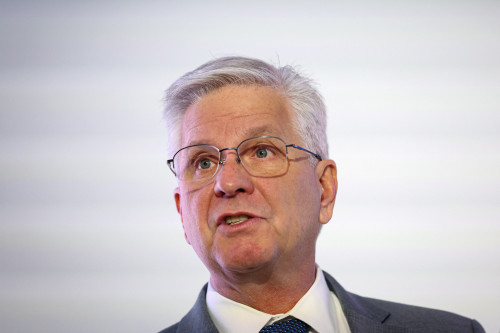
April 21 (Reuters) – Federal Reserve Governor Christopher Waller on Tuesday laid out options for revamping the operational structure of the Fed system’s 12 regional banks, calling for consolidation of key business functions like human resources, finance, procurement and technology rather than leaving them under the local direction of each bank.
Waller, who heads the Fed board’s committee for regional reserve bank oversight, floated two models for reshaping these functions, arguing the central bank needed to act with speed in the face of rapid technological change including such forces as artificial intelligence.
“We need to do more to centralize our operations into national lines of business and move away from having individual Reserve Banks managing operational infrastructure from a Bank mindset instead of a System mindset,” Waller said in remarks prepared for an appearance at the Brookings Institution in Washington.
Waller did not comment on the outlook for the economy or interest rates with officials now in the blackout period ahead of next week’s monetary policy meeting.
Waller’s remarks added his voice to an active discussion about the size and scope of the Fed system and came on the same day that Kevin Warsh, President Donald Trump’s nominee to become the next Fed leader, argued that “regime change” was needed around how the Fed conducts its separate monetary policy functions.
To be sure, Waller’s remarks did not touch on changes to how the Fed pursues its interest rate policy, arguing that each bank’s president should continue to have an independent voice at meetings of the rate-setting Federal Open Market Committee.
Regarding the 12 banks’ core daily operations, the first option worth considering is “standardization with centralized System leadership,” Waller said, which would leave the current footprint of the regional banks intact but the major support functions for HR, IT, finance, procurement, vendor management, and facilities would be placed under central leadership.
That approach would leave local staffing levels largely as they are.
The second approach, which Waller favors, would push it further and would centralize those functions more broadly.
“An obvious implication of this second model is that some Reserve Banks may face lower levels of employment in the future,” Waller said. “As happened with the closing of Branches when check clearing went away, I believe we will need to rethink the physical footprint of the Reserve Banks going forward.”
The 12 regional banks currently employ about 20,000 people across the country, Waller said.
(Reporting By Dan Burns; Editing by Chris Reese)