By John Irish, Andrew Gray and Humeyra Pamuk
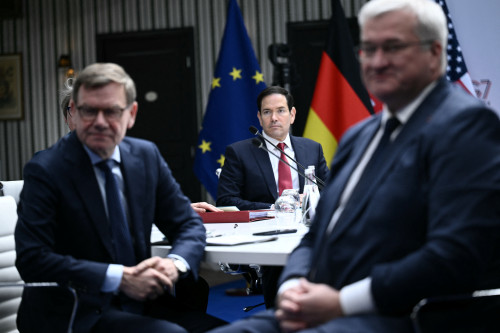
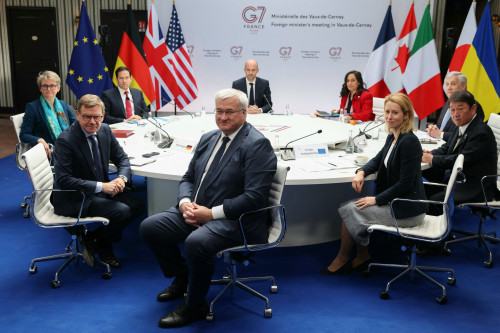
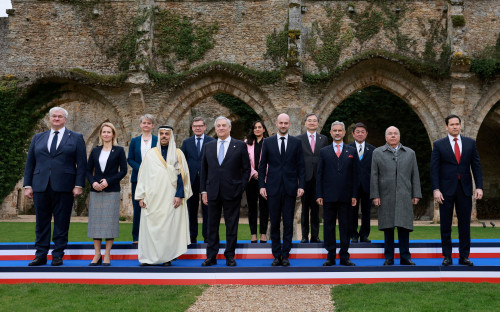
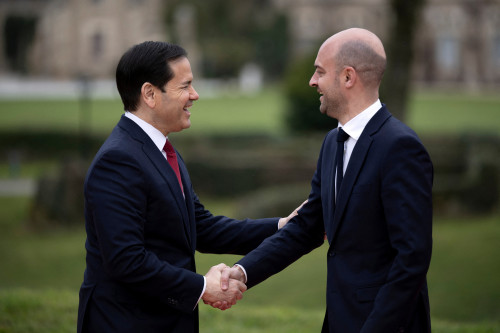
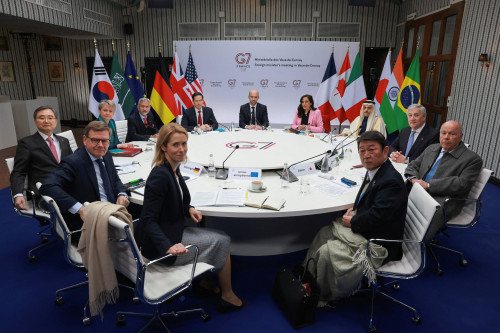
VAUX-DE-CERNAY, France, March 27 (Reuters) – European foreign ministers on Friday used a G7 meeting with U.S. Secretary of State Marco Rubio to press the case that Russia was helping Iran target U.S. forces in the Middle East war.
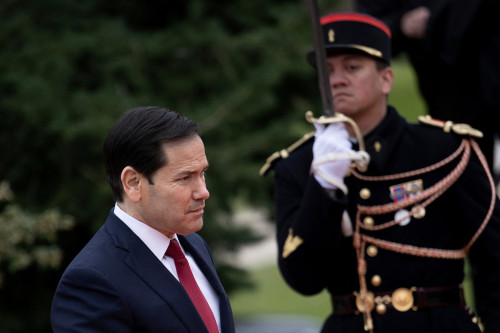
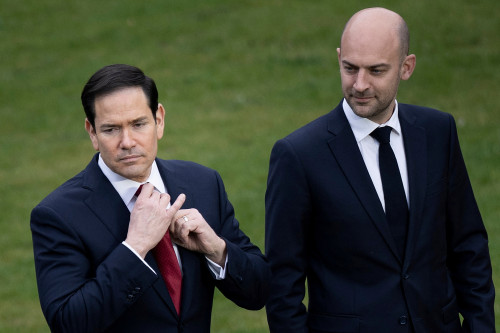
Rubio joined the second day of the gathering of ministers of leading Western democracies, taking place amid wars in Iran and Ukraine, economic uncertainty and mounting unease over unpredictable U.S. foreign policy under Donald Trump.
The ministers are also expected to discuss the Strait of Hormuz, the critical Gulf waterway for the transport of oil and gas which Iran has effectively blocked, spiking energy prices and roiling financial markets.
Two Western security sources and a regional official close to Tehran told Reuters that Moscow has been providing satellite imagery to Tehran and also helped Iran upgrade its drones to emulate the equivalent versions used by Russia against Ukraine.
Other media outlets have also reported that Russia is aiding Iran in the conflict with the United States and Israel, just as Tehran has helped Moscow in its war against Ukraine.
“We’re deeply concerned about the links between Russia and Iran that have been longstanding in terms of shared capabilities – for example, drones provided to Russia by Iran that have been involved in the conflict in Ukraine,” British foreign minister Yvette Cooper said.
“We have also seen support from Russia provided to Iran in the Middle East conflict,” Cooper told reporters at the meeting in Vaux-de-Cernay abbey near Paris. “As G7 countries, we have a shared interest in coming together to discuss these issues.”
On Thursday, EU foreign policy chief Kaja Kallas said Russia was “helping Iran with intelligence to target Americans, to kill Americans” and supporting Tehran with drones so it could attack neighbouring countries and U.S. military bases.
Before heading to Europe, Rubio appeared to play down concerns about the accusations against Moscow.
“I think Russia is primarily concentrating on the war they have going on right now. Beyond that, I don’t have anything to add right now,” he said.
RUSSIA DISMISSES INTELLIGENCE-SHARING ACCUSATIONS
Speaking to Reuters at the G7, Ukraine’s Foreign Minister Andrii Sybiha said the two conflicts were interlinked and that while Kyiv was still trying to determine exactly what assistance Russia was providing to Iran, they believed it was intelligence, probably spare parts and drones.
“We have all this intelligence data that Russia started to supply intelligence data and also weaponry to Iran,” he said.
In an interview with France 2 television broadcast on Thursday evening, Russian Foreign Minister Sergei Lavrov reiterated Moscow’s denials of the intelligence-sharing accusations.
“We have supplied Iran with military equipment, but we cannot accept the accusations being made against us that we are passing intelligence to Iran,” he said, according to France 2’s translation of his remarks.
Two European diplomats said ministers aimed to raise the issue of Russian-Iranian cooperation during the talks on Friday, hoping to press the U.S. to take a tougher line against Moscow.
“Russia is evidently supporting Iran with information about potential targets,” German Foreign Minister Johann Wadephul told reporters, echoing earlier comments by France’s Foreign Minister Jean-Noel Barrot.
ALLIES HOPE FOR CLARITY FROM RUBIO ON IRAN WAR AIMS
Washington’s partners are also hoping to get greater clarity on the U.S. and Israeli military operations and on whether any meaningful diplomatic channel exists to end the conflict.
Since the U.S. and Israel attacked Iran on February 28, Iran has launched strikes against Israel, U.S. bases and Gulf states, as well as effectively blocking Middle East fuel exports via the Strait of Hormuz.
Highlighting efforts to show Washington that they are stepping up, France on Thursday organised a videoconference call with some 35 militaries from around the world as it sought partners and proposals for a mission to reopen the Strait once the U.S.-Israeli war with Iran ends.
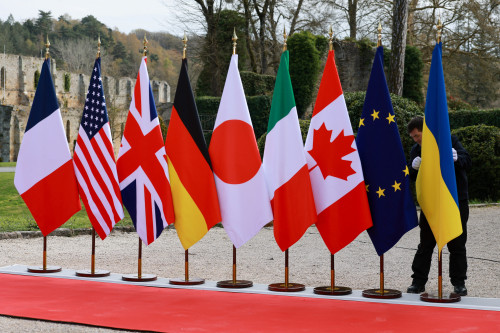
The two-day gathering brings together ministers from the G7 – Britain, Canada, France, Germany, Italy, Japan and the U.S. – alongside the European Union.
(Additional reporting by Parisa Hafezi in Dubai, Humeyra Pamuk and Simon Lewis in Washington;Editing by Sudip Kar-Gupta, Bill Berkrot and Sharon Singleton)